

Discover how Gotham typeface shaped presidential campaigns, influenced political design, and became the visual voice of political power and hope. Explore the politics of typography.
My name is Lalit Adhikari and we are at LTY. Let’s begin!
Table of Contents
Introduction: When Typefaces Win Elections
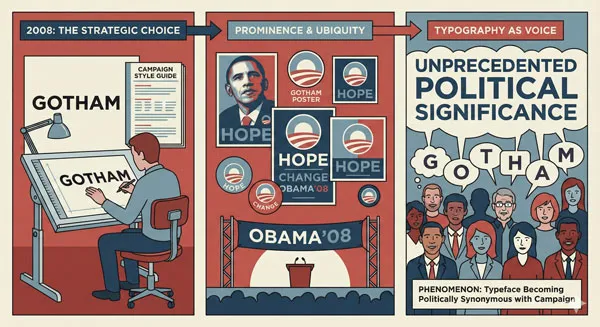
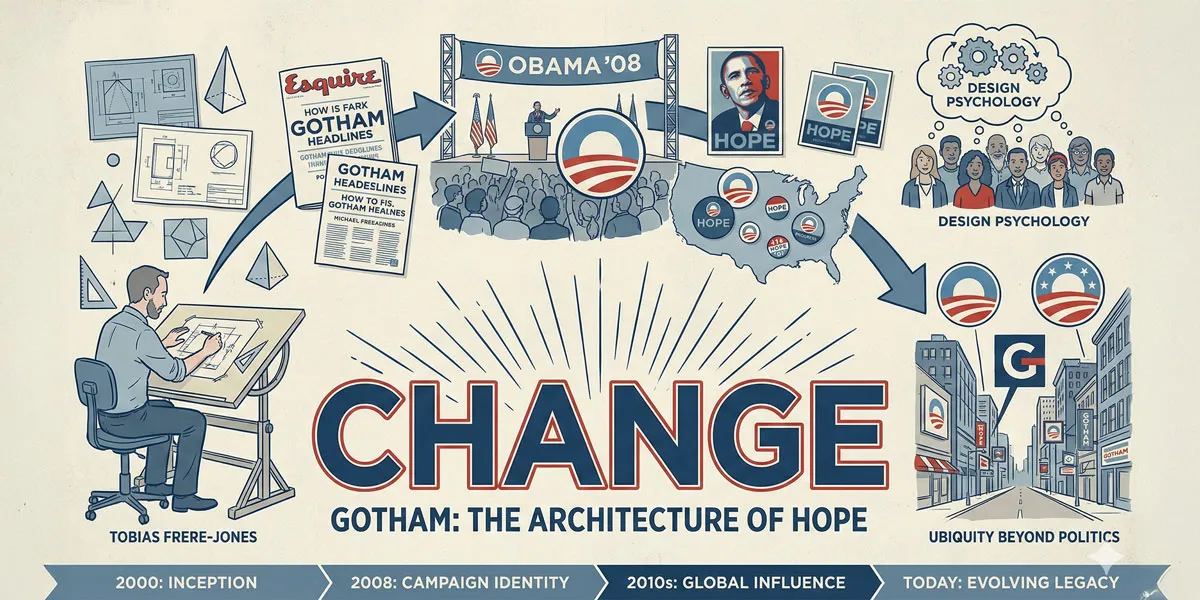
Typography rarely shapes electoral history. Yet Gotham, a geometric sans-serif typeface designed by Tobias Frere-Jones in 2000, became the typeface of political power, hope, and change. Gotham achieved something almost no typeface ever accomplishes: it became directly associated with a political movement and a candidate who won the highest political office.
When Barack Obama launched his 2008 presidential campaign, Gotham was chosen as the campaign’s primary typeface. Gotham appeared on campaign materials, posters, websites, and communications. The typeface became visually synonymous with Obama’s campaign message of “hope” and “change.” Gotham became the typeface of the Obama presidency.
This connection between Gotham and Obama’s presidency created something unprecedented in American politics: a typeface that became culturally and politically significant. Gotham transcended its role as mere communication tool to become a symbol of political identity, political power, and political possibility.
The story of Gotham’s political rise reveals profound truths about design, typography, and politics. Typography is not neutral. Typeface selection communicates values, identity, and meaning. Design choices shape how political messages are received. Typography can amplify political messages or undermine them.
The Gotham-Obama connection also reveals how design can amplify political narratives. Gotham’s geometric clarity and contemporary character aligned perfectly with Obama’s modernizing message. The typeface reinforced campaign narratives of change, progress, and contemporary vision.
However, this political success also demonstrates design’s double-edged nature. The same typeface that amplified Obama’s message was subsequently adopted by other political campaigns, corporations, and institutions. Gotham’s political association became diluted as the typeface proliferated in diverse contexts.
This comprehensive exploration examines Gotham’s design and creation, traces the typeface’s political adoption in Obama’s campaign, analyzes how typography shapes political meaning and perception, considers the broader implications of design and politics, explores Gotham’s subsequent political influence, and ultimately asks:
- what does Gotham’s political trajectory reveal about design, power, and political communication?
Gotham’s Creation: Geometric Modernism in Contemporary Design
Tobias Frere-Jones and Design Philosophy
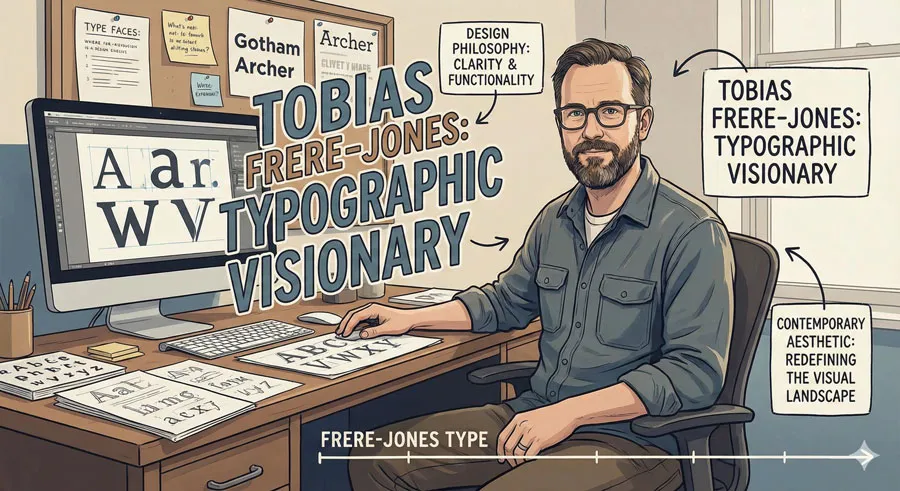
Tobias Frere-Jones is a renowned type designer whose work emphasizes clarity, functionality, and contemporary relevance. Frere-Jones studied typography and design, and developed deep commitment to typeface design excellence.
Frere-Jones’ design philosophy emphasizes geometric clarity and functional beauty. His typefaces typically feature clean, contemporary aesthetics reflecting modernist principles while remaining accessible and readable. His work demonstrates commitment to balancing design sophistication with practical functionality.
Geometric Modernism and Contemporary Aesthetics
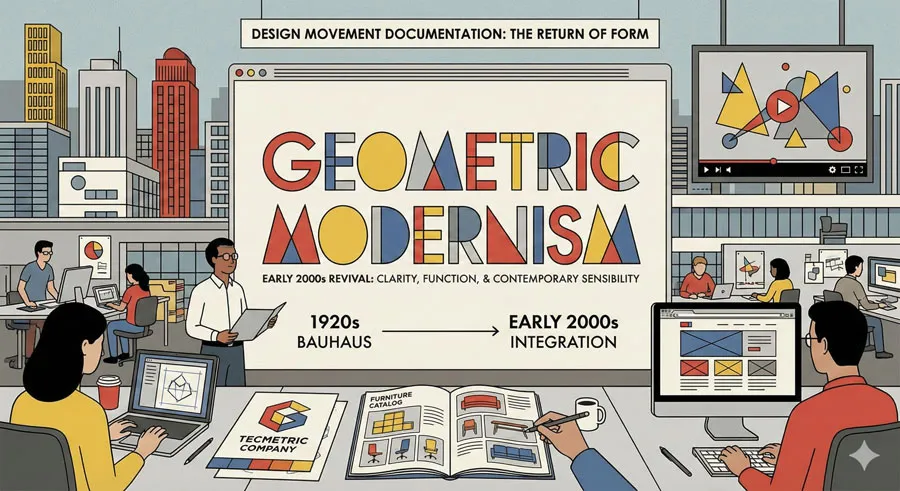
Gotham was designed during period when geometric sans-serif typefaces were gaining renewed prominence. Contemporary design culture was rediscovering modernist principles and geometric clarity after periods emphasizing postmodern playfulness.
Frere-Jones recognized opportunity to create typeface that embodied contemporary geometric aesthetic while incorporating design refinements and contemporary sensibilities. The goal was to create typeface suitable for diverse contemporary applications.
Design Brief and Development Process
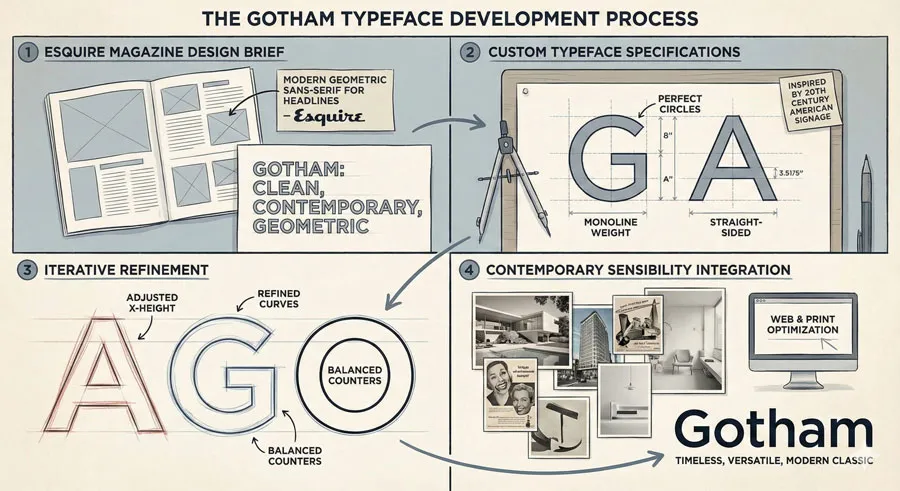
Gotham was designed for Esquire magazine as custom typeface for the magazine’s visual identity. The magazine sought typeface reflecting contemporary aesthetic while maintaining editorial sophistication.
Frere-Jones developed Gotham through extensive refinement process. The typeface features carefully proportioned letterforms inspired by geometric principles and mid-century American geometric sans-serifs. However, Gotham incorporates contemporary sensibilities and design refinements.
Typeface Characteristics
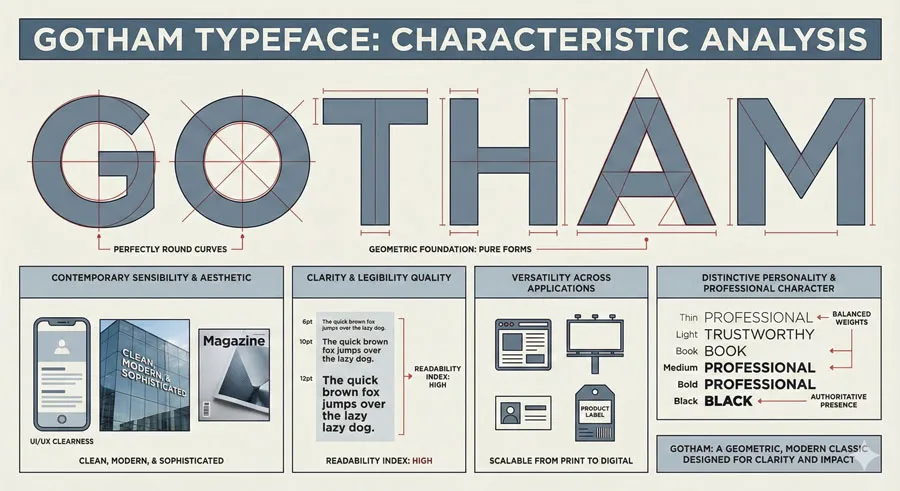
Gotham features distinctive characteristics:
- Geometric foundation – Letterforms based on geometric principles and relationships
- Contemporary sensibility – Design reflects contemporary aesthetic rather than historical pastiche
- Clarity and legibility – Clean, unambiguous letterforms supporting readability
- Versatility – Works effectively across diverse sizes and applications
- Personality – Distinctive character distinguishing Gotham from other geometric sans-serifs
- Professional character – Appropriate for professional and institutional contexts
Gotham’s Rise to Prominence: From Magazine to Ubiquity
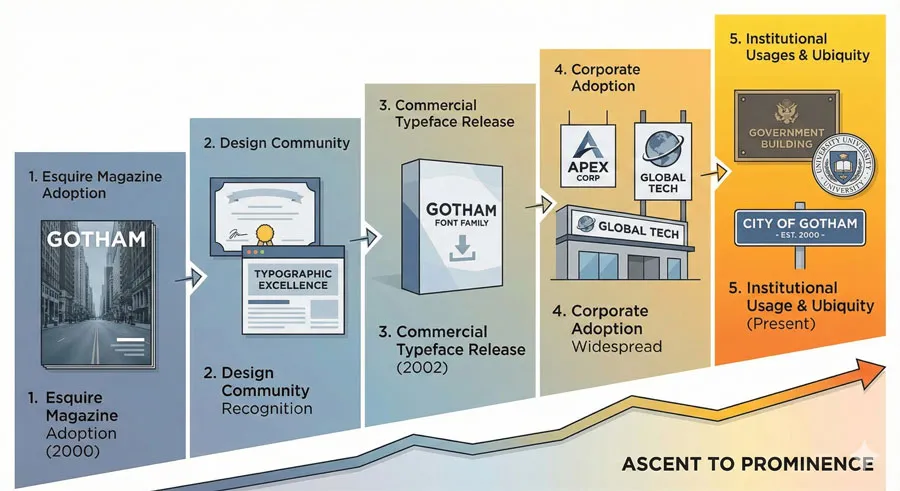
Initial Design and Esquire Adoption
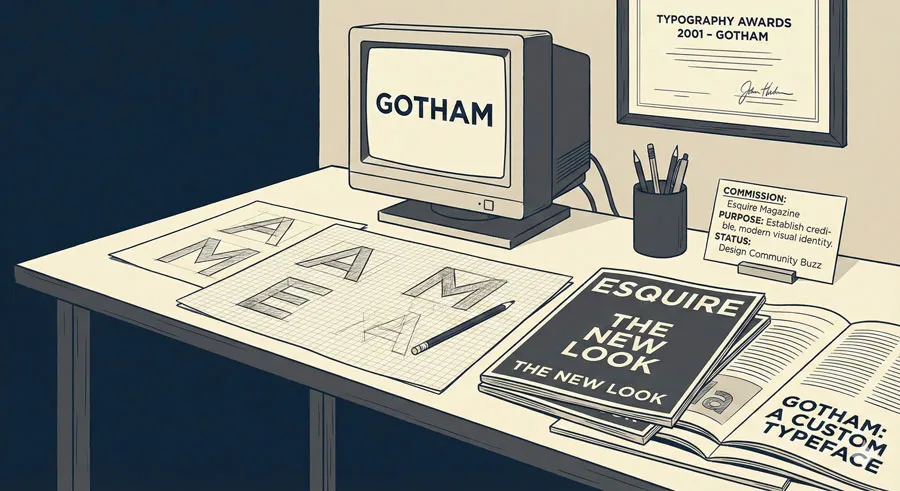
Gotham was initially designed as custom typeface for Esquire magazine. The magazine adopted the typeface for its visual identity, and Gotham appeared in Esquire’s design, promoting the typeface among design professionals.
Esquire’s adoption of Gotham gave the typeface credibility and visibility among design culture. Design professionals recognized the typeface’s quality and contemporary relevance.
Commercial Release and Design Adoption
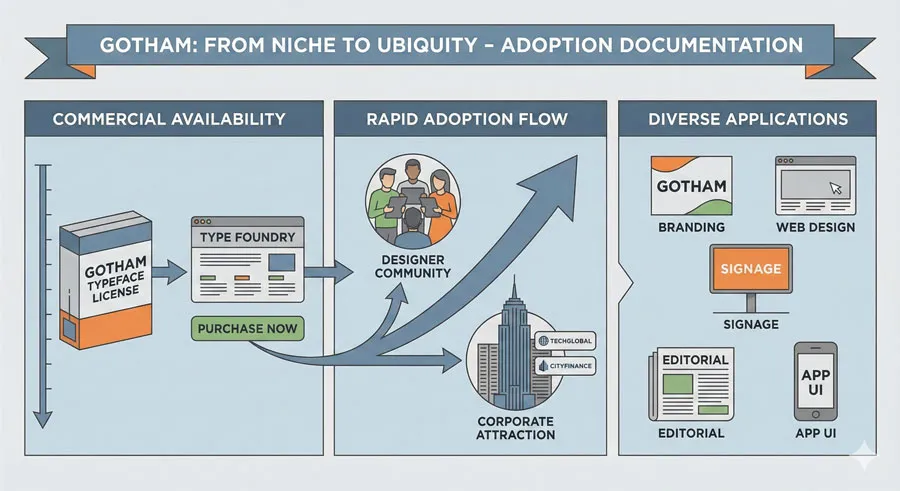
After its success with Esquire, Gotham was commercially released as typeface available for licensing and purchase. The typeface gained rapid adoption among designers, corporations, and institutions.
Gotham’s geometric clarity and contemporary character made it attractive for diverse applications: corporate branding, institutional design, editorial design, advertising, web design, and numerous other contexts.
Corporate Branding and Institutional Adoption
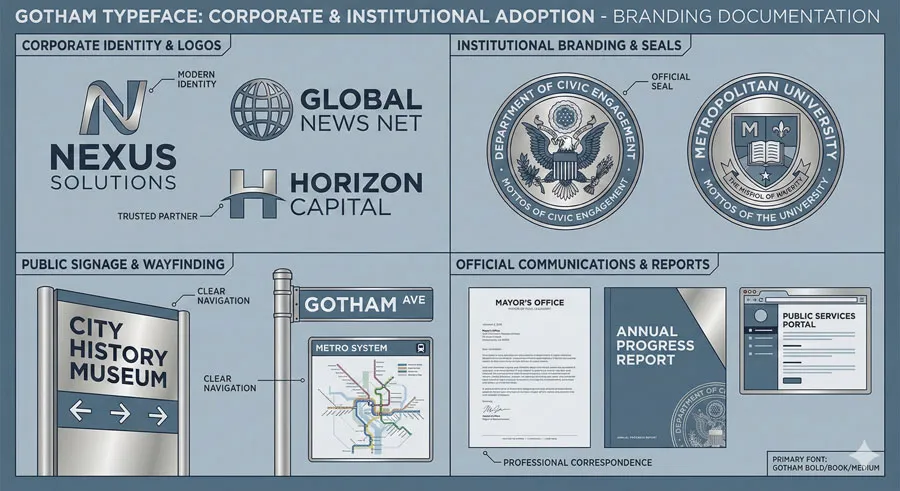
Major corporations and institutions adopted Gotham for branding and visual identity. The typeface appeared in corporate logos, signage, and communications. Educational institutions, government agencies, and cultural organizations adopted Gotham for official communications.
This institutional adoption reflected recognition of Gotham’s quality and appropriateness for professional and institutional contexts. The typeface became standard choice for organizations seeking contemporary, professional aesthetic.
The Obama Campaign: Typography and Political Power
Campaign Design Strategy and Brand Identity
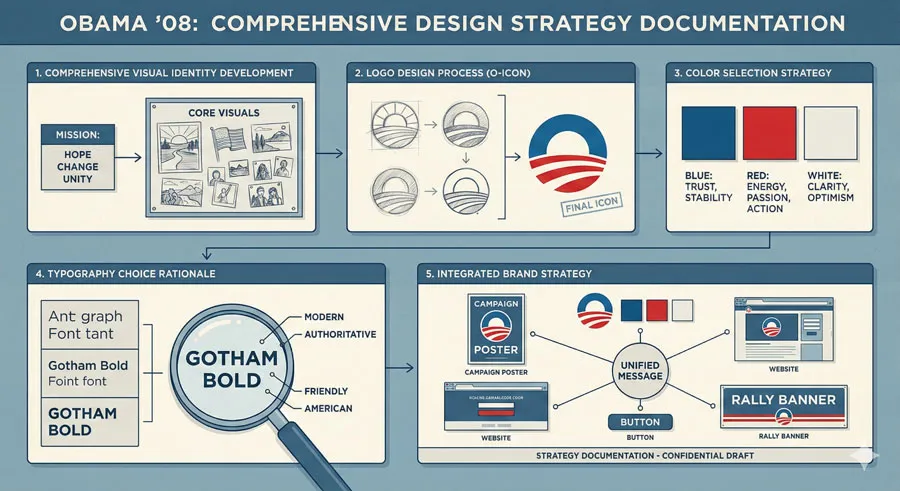
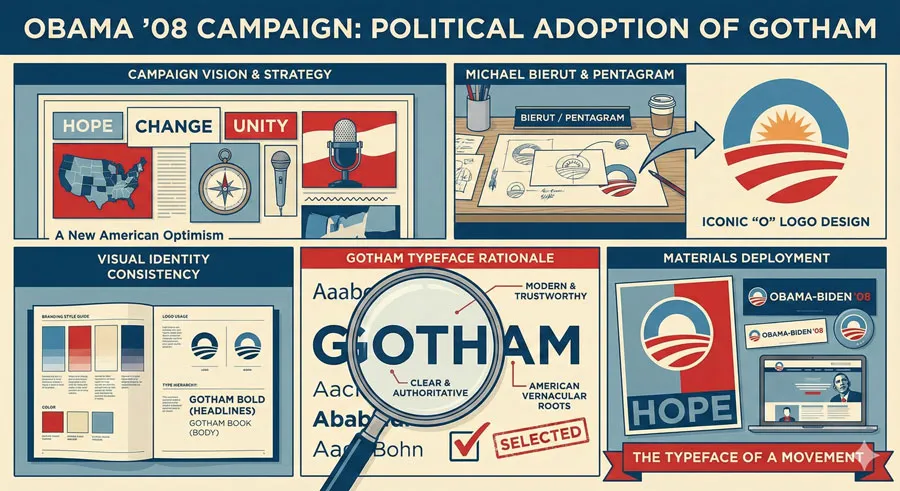
When Barack Obama launched his 2008 presidential campaign, his campaign team made strategic design choices reflecting campaign values and messaging. The campaign developed comprehensive visual identity communicated through logo, colors, and typography.
Campaign designer Michael Beirut of Pentagram designed the iconic Obama “O” logo. The campaign adopted Gotham as primary typeface for campaign communications. This combination created powerful visual identity.
Gotham’s Political Meaning and Symbolism
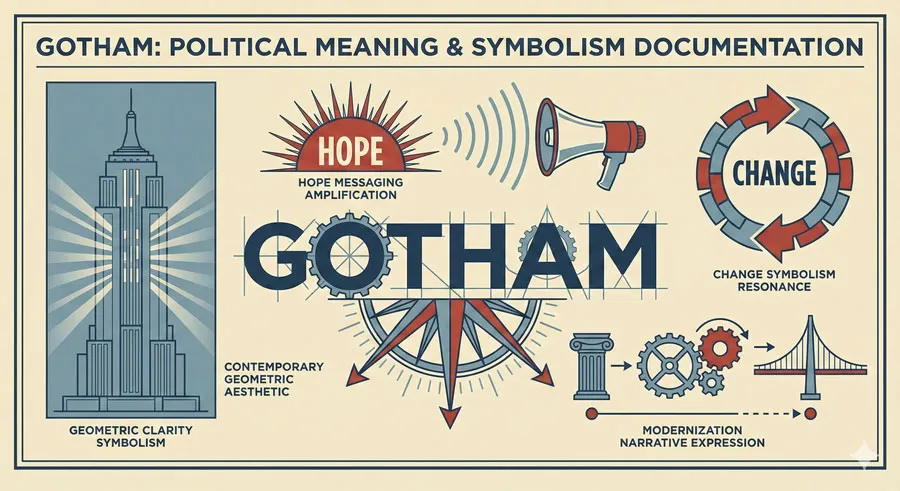
Gotham’s adoption for Obama campaign was not accidental. The typeface’s geometric clarity aligned with campaign messaging of clarity and change. Gotham’s contemporary aesthetic reflected Obama’s positioning as forward-looking, modernizing candidate.
Gotham’s distinctiveness and geometric elegance communicated sophistication and contemporary vision. The typeface reinforced campaign narratives about change, hope, and contemporary political possibility.
Visual Consistency and Brand Reinforcement
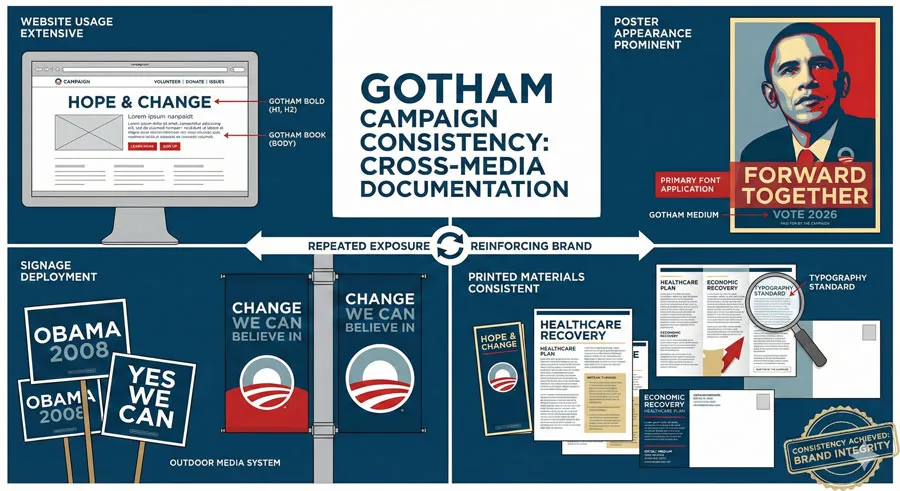
Gotham appeared consistently across Obama campaign materials: websites, posters, yard signs, printed materials, event signage. This consistent deployment reinforced brand identity and message reinforcement.
Repeated exposure to Gotham in campaign context created strong association between typeface and campaign. Gotham became visually synonymous with Obama’s campaign identity.
Emotional Impact and Design Psychology
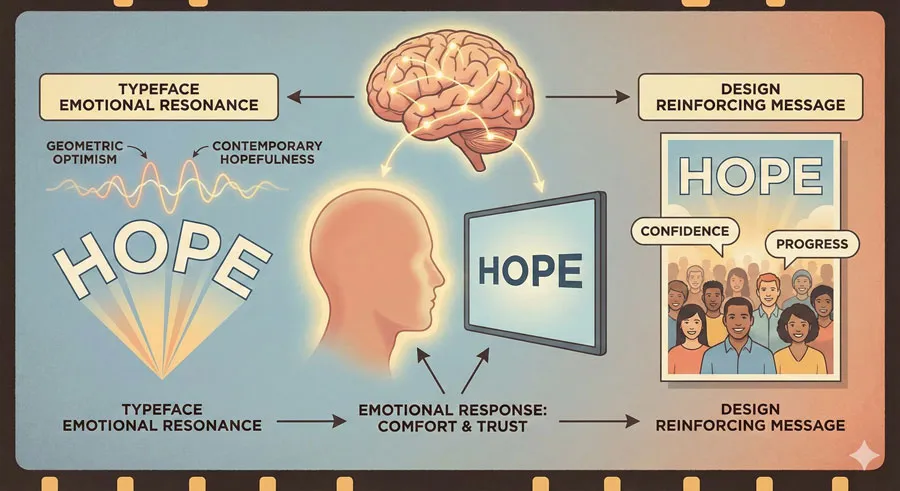
Beyond its visual characteristics, Gotham’s adoption in Obama campaign created emotional resonance. The typeface’s contemporary, optimistic character aligned with campaign emotional messaging. Design choices amplified emotional response to campaign messaging.
Typography shapes emotional response to communication. Gotham’s geometric clarity and contemporary sensibility created visual impression of clarity, modernity, and hopeful change—precisely aligned with campaign messaging.
How Typography Shapes Political Meaning
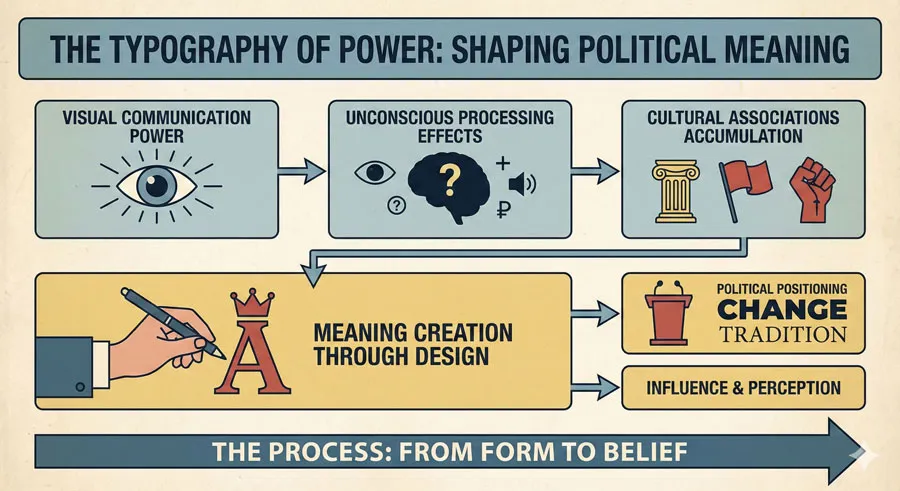
Visual Communication and Unconscious Processing
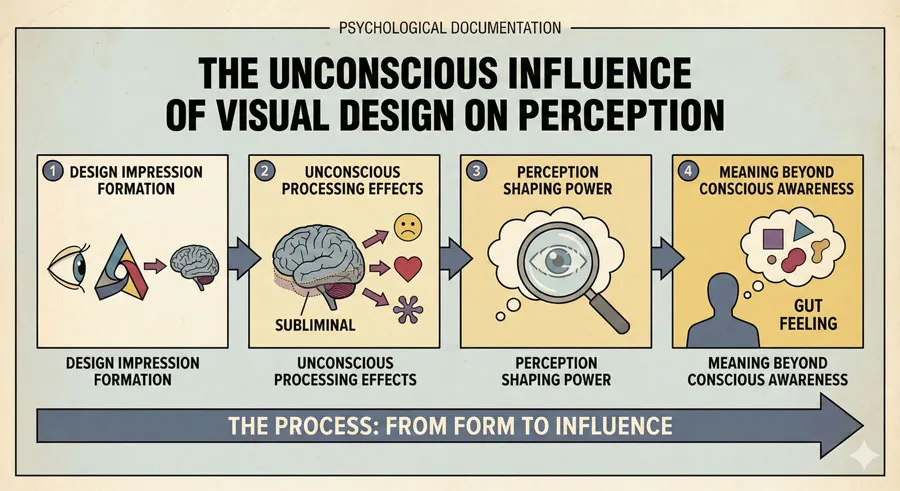
Most people do not consciously analyze typeface choices. However, visual design creates unconscious impressions influencing how messages are received and interpreted.
Typeface choices communicate meaning through design associations. Geometric sans-serifs communicate contemporary, modern aesthetic. Serif typefaces communicate traditional, established aesthetic. Decorative typefaces communicate playfulness or creativity.
Design Choices and Political Narrative
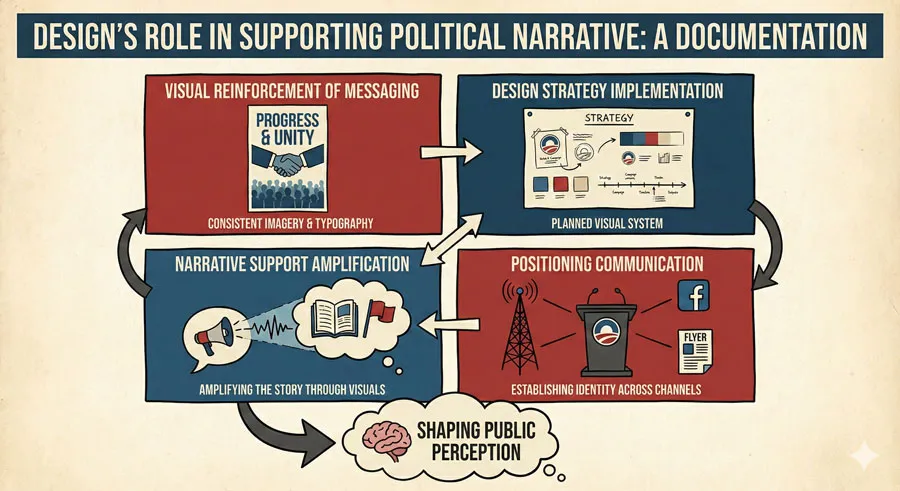
Political communication relies on careful management of visual and verbal narrative. Design choices reinforce political messaging. Typeface selection is part of comprehensive design strategy communicating political identity and values.
Obama campaign’s adoption of Gotham reinforced narrative of contemporary change. Alternative typeface choices would have created different impressions and narrative reinforcement.
Cultural Associations and Typeface Meaning
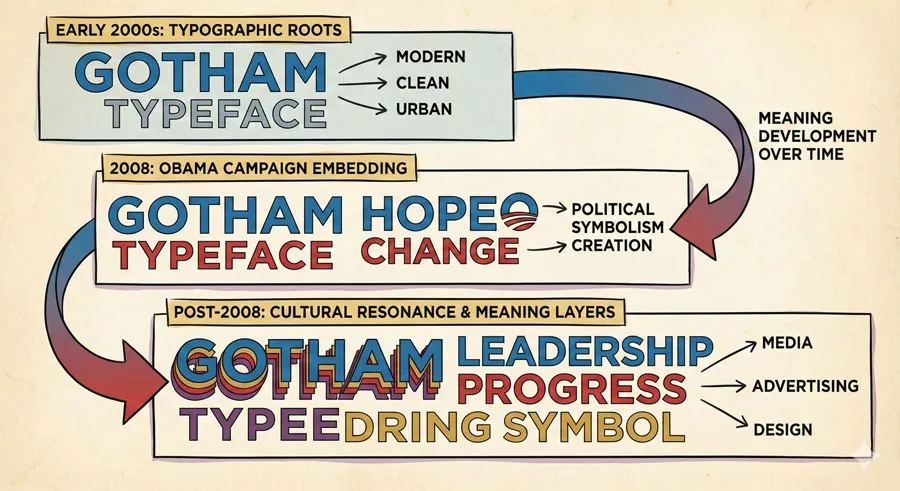
Typefaces accumulate cultural associations over time. Gotham’s association with Obama campaign and presidential victory created political associations. The typeface became symbolically connected with Obama administration and Democratic politics.
This demonstrates how design accumulates cultural meaning over time. Typefaces are not neutral vessels but carriers of cultural and political association.
Political Design Implications and Analysis
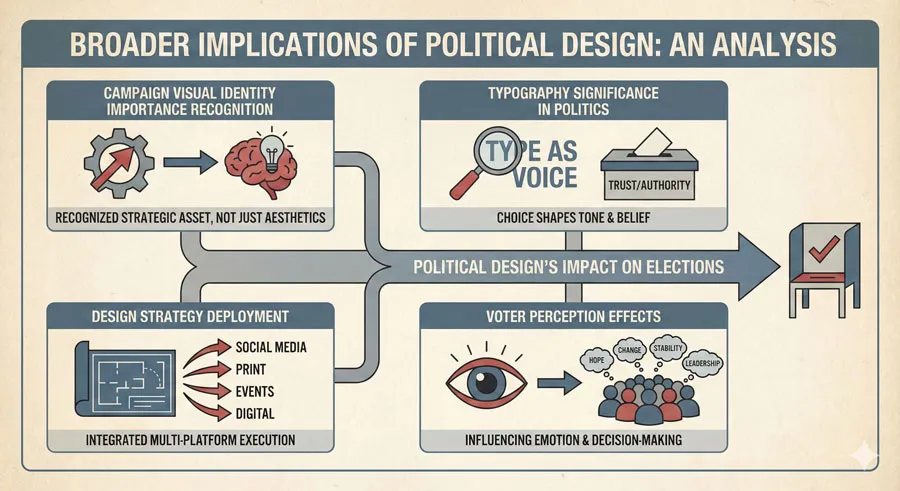
Presidential Campaigns and Visual Identity
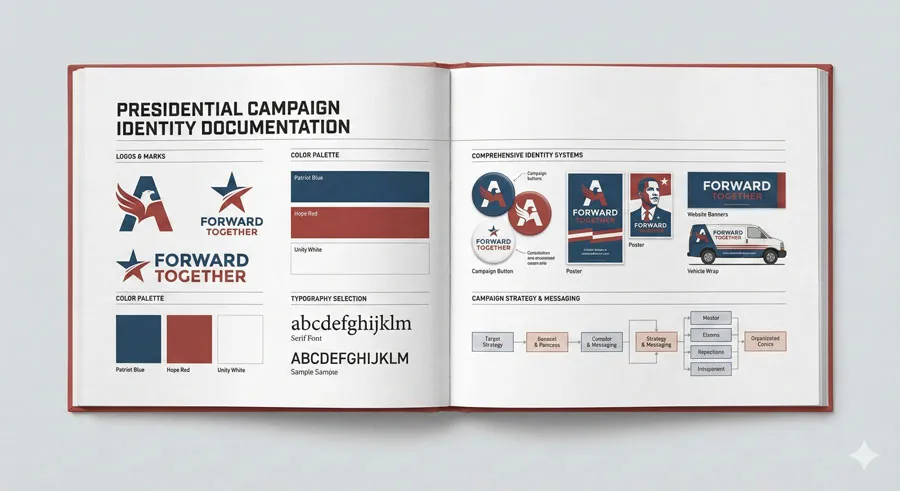
Presidential campaigns increasingly recognize importance of comprehensive visual identity. Campaigns develop distinctive logos, color schemes, and typography communicating campaign values and identity.
Campaign design reflects campaign strategy and messaging. Visual design choices reinforce verbal messaging and campaign narrative.
Typography and Political Positioning
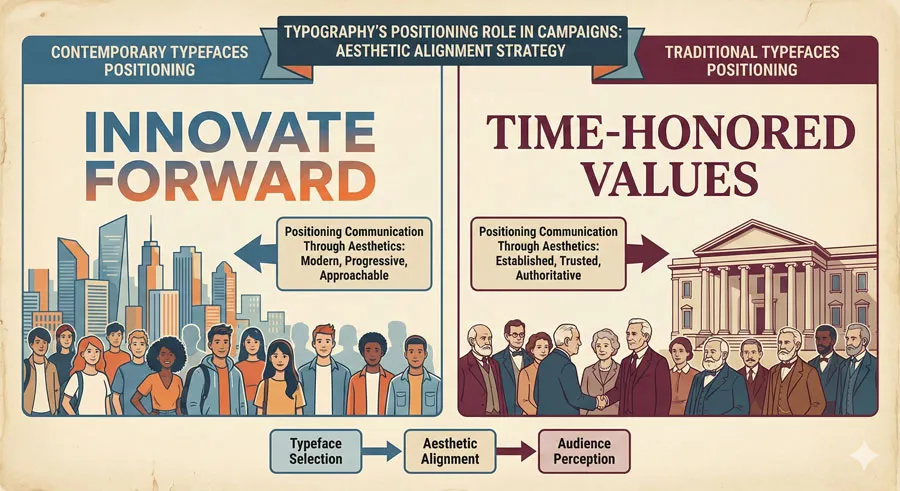
Typeface choices communicate political positioning. Progressive campaigns might adopt contemporary, geometric typefaces communicating forward-looking aesthetic. Conservative campaigns might adopt traditional typefaces communicating stability and continuity.
Gotham’s geometric modernity positioned Obama as forward-looking, contemporary candidate contrasting with more traditional political aesthetics.
Branding in Political Context
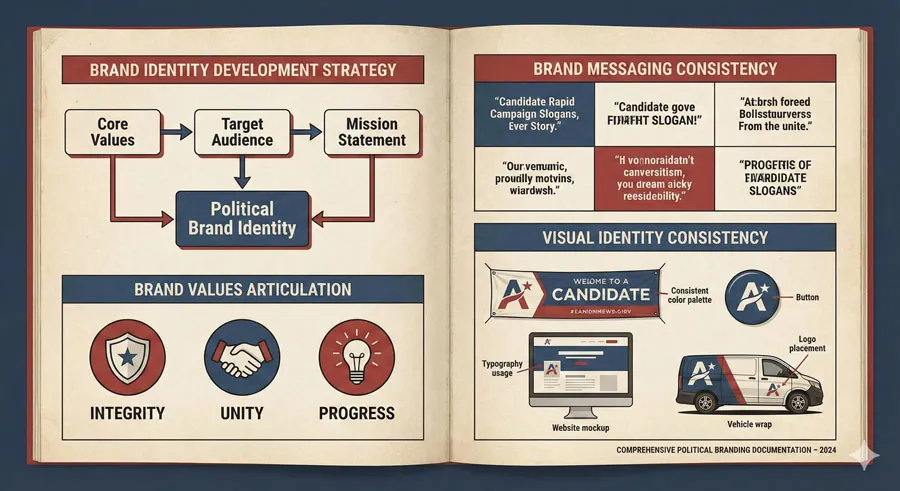
Presidential campaigns function as brands. Candidates develop brand identity, brand values, brand messaging. Visual design including typography is integral to brand identity development.
Gotham’s adoption by Obama campaign reflected sophisticated understanding of political branding and visual identity importance.
Design and Voter Perception
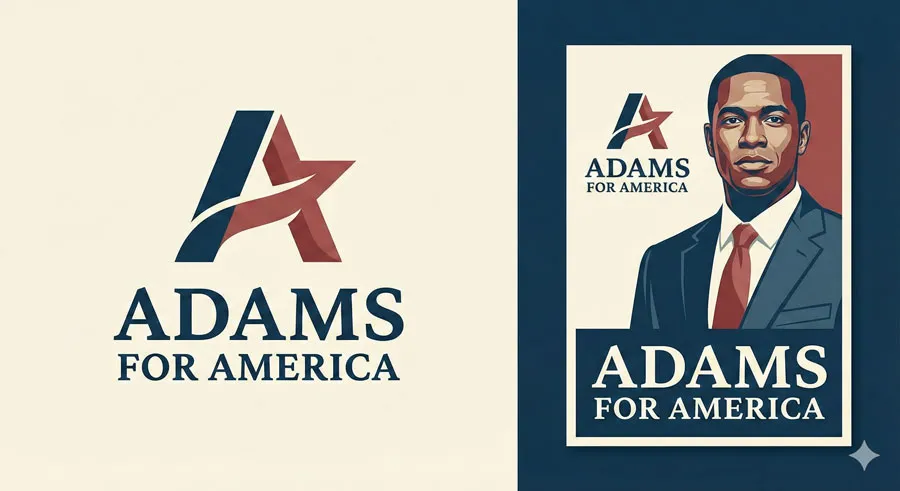
Design influences voter perception and campaign communication reception. Professional, sophisticated design creates impression of competence and seriousness. Poor design undermines campaign credibility.
Obama campaign’s investment in professional design, including Gotham adoption, contributed to campaign’s professional image and communication effectiveness.
Gotham After Obama: Political Legacy and Cultural Impact
Gotham’s Continued Political Prominence
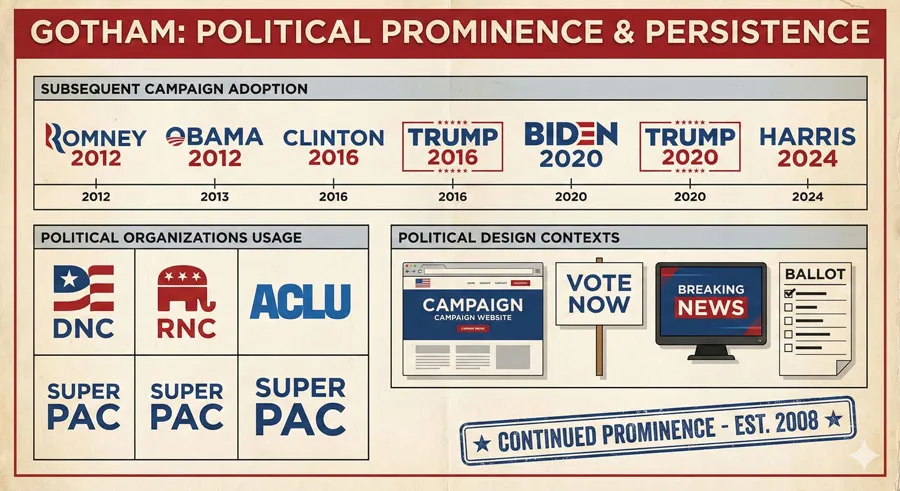
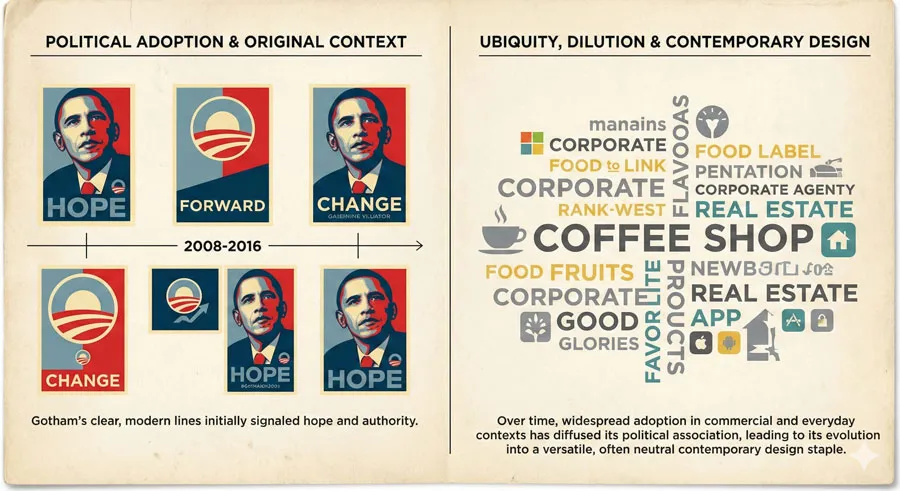
Following Obama’s election, Gotham remained prominent in political design. Subsequent campaigns, politicians, and political organizations adopted Gotham recognizing its political associations and effectiveness.
Gotham’s association with successful, contemporary political campaign made the typeface attractive for political communications seeking similar associations.
Dilution of Political Meaning Through Ubiquity
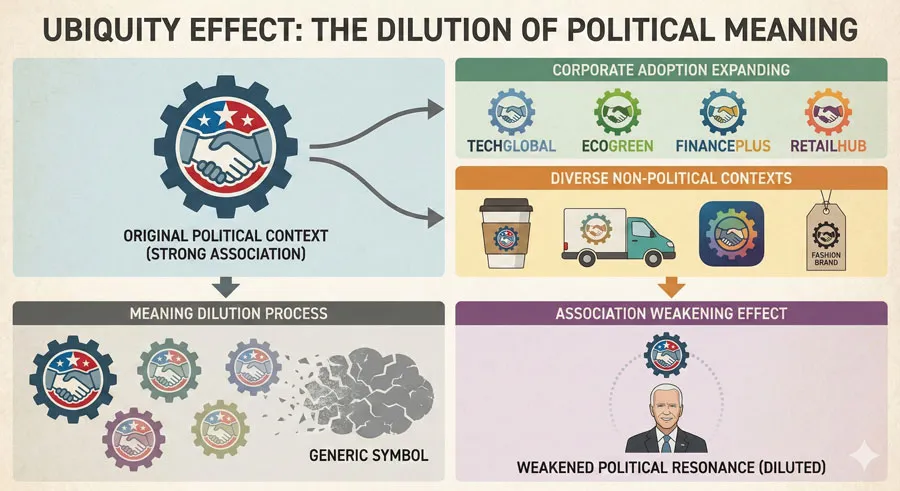
As Gotham became more widely adopted across diverse contexts—corporate branding, institutional design, commercial advertising—the typeface’s specific political associations became diluted.
However, Gotham retained associations with contemporary political aesthetic and Democratic/progressive political culture among those familiar with political design history.
The “Obama Font” Phenomenon
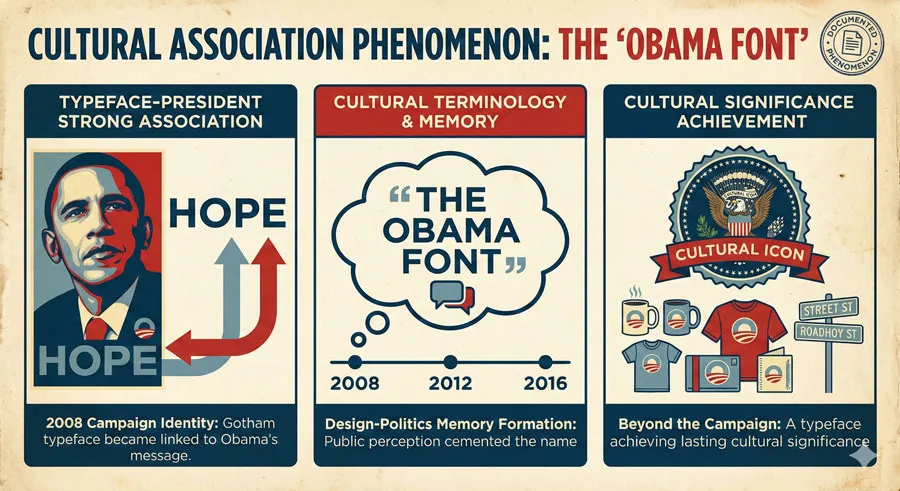
Some designers and observers referred to Gotham as “Obama font” reflecting strong association between typeface and presidency. This reflected how powerfully design became connected with political identity.
This phenomenon demonstrated design’s potential to shape cultural memory and association.
Contemporary Political Design Evolution
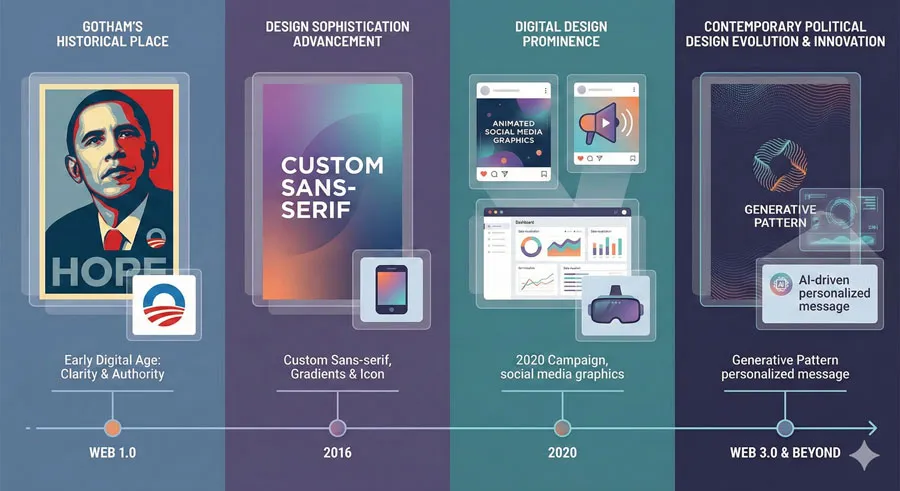
Contemporary presidential campaigns continue sophisticated visual identity development. While Gotham remains used in political contexts, campaigns develop distinctive visual identities reflecting their particular strategies and values.
However, Gotham’s precedent established recognition of typography and design importance in political communication.
Design, Politics, and Cultural Influence
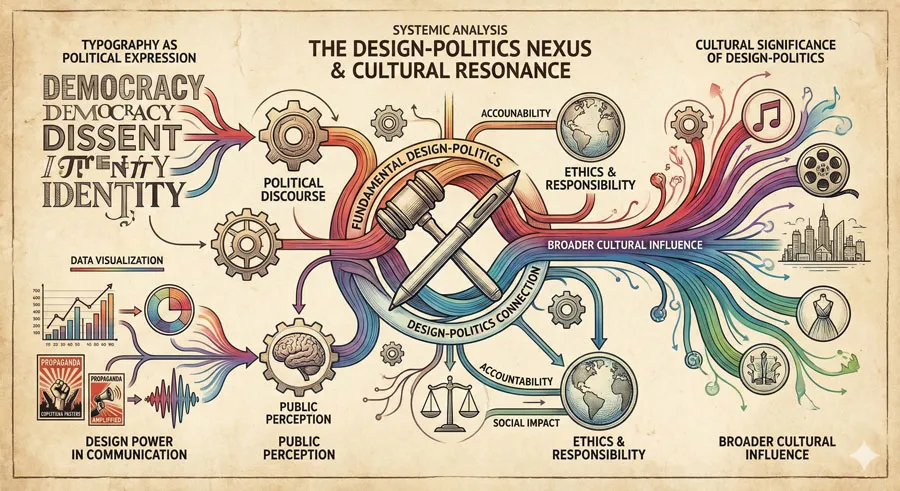
Typography as Political Expression
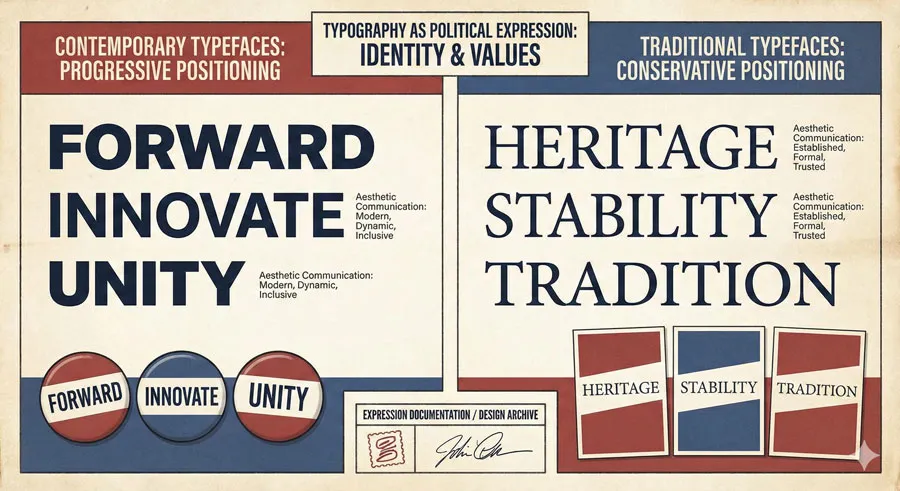
Gotham’s political trajectory demonstrates that typography is not neutral. Typeface choices communicate values, identity, and political meaning.
Progressive campaigns might adopt contemporary typefaces. Conservative campaigns might adopt traditional typefaces. These choices communicate political identity through visual design.
Design’s Power in Political Communication

The Gotham-Obama case demonstrates that design choices significantly influence political communication. Professional design, including thoughtful typography, enhances campaign credibility and communication effectiveness.
Political campaigns increasingly recognize design’s importance and invest in comprehensive visual identity development.
Responsibility and Ethics in Political Design

Design’s power to influence perception and communication raises ethical questions. Political designers bear responsibility for honest visual communication. Design should not manipulate through deception.
Gotham’s effectiveness in Obama campaign reflected alignment between visual design and authentic campaign messaging rather than design manipulation.
Cultural Significance of Design-Politics Connection
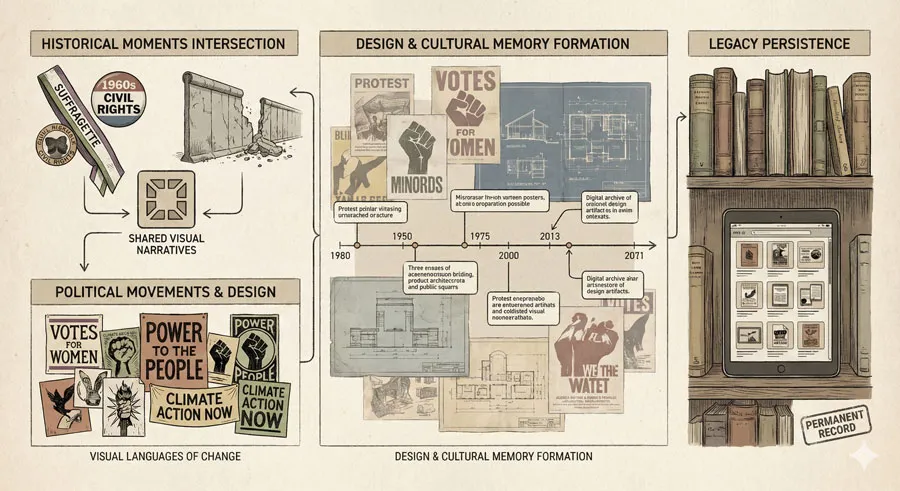
The Gotham-Obama connection demonstrates how design can achieve cultural significance through association with historical moments and political movements.
Design history includes numerous examples of typefaces and design movements becoming historically significant through political and cultural associations.
FAQ: Common Questions About Gotham and Political Design
Q: Did Gotham actually help Obama win the election?
A: No single design element determines election outcomes. However, professional design including Gotham contributed to Obama campaign’s professional image and communication effectiveness.
Q: Is Gotham still associated with Obama?
A: Gotham retains association with Obama presidency among those familiar with political design history. However, widespread adoption across diverse contexts has diluted specific political association.
Q: Can other candidates use Gotham?
A: Yes. Gotham is commercially available typeface that any campaign can license and use. However, it has weaker association with other campaigns than with Obama.
Q: What typeface should political campaigns use?
A: Typeface choice should reflect campaign values and positioning. Contemporary campaigns might adopt geometric sans-serifs. Conservative campaigns might adopt traditional typefaces. Choice should align with campaign identity.
Q: Does typeface choice influence voter perception?
A: Design influences unconscious perception and impression formation. Professional design contributes to campaign credibility. Typeface choice is part of overall design strategy influencing perception.
Q: Why hasn’t another candidate’s campaign created equally iconic typeface association?
A: Several factors: Obama campaign’s unprecedented visual design investment, cultural moment of 2008, Gotham’s particular aesthetic alignment with campaign messaging, and subsequent ubiquity of the typeface.
Q: What is the most important element of political visual identity?
A: All elements work together: logo, colors, typography, imagery. Comprehensive visual identity is more important than individual elements.
Q: Can design bias perception?
A: Yes. Design influences perception through unconscious associations and psychological responses. This is why design choices matter in political communication.
Q: Is design manipulation in politics ethical?
A: Designers have ethical responsibility for honest communication. Design should enhance message understanding, not deceive voters through visual manipulation.
Q: What is the future of political design?
A: Digital design is increasingly important. Campaigns invest in comprehensive digital visual identity. Video, animation, and interactive design are becoming more prominent alongside typography.
Conclusion: Design, Typefaces, and Political Power
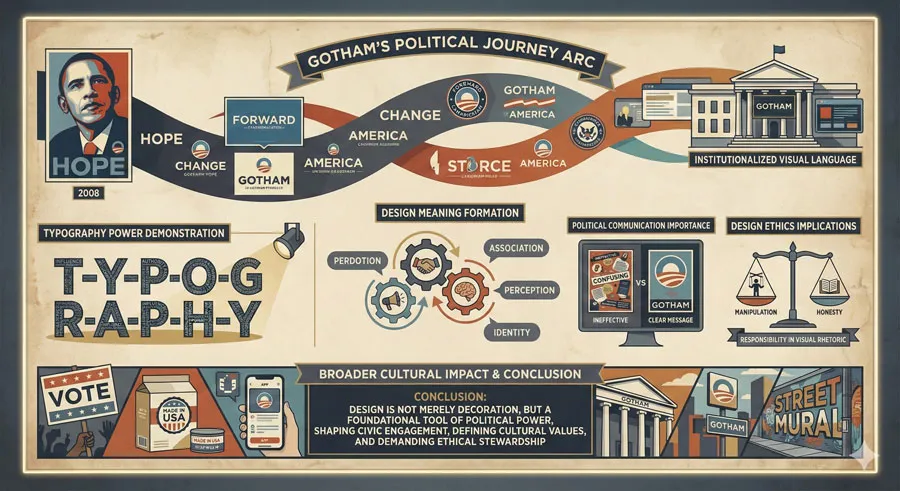
Gotham’s journey from contemporary typeface to political icon demonstrates typography’s power to shape communication and meaning. The typeface was not designed with political intention, yet it achieved unprecedented political significance through its adoption in a successful presidential campaign.
Gotham’s political trajectory reveals that typography is fundamentally connected to meaning and cultural association. Typeface choices communicate values, identity, and positioning. Typography is not neutral but actively shapes how messages are understood and received.
The Obama campaign’s sophisticated design strategy, including Gotham adoption, contributed to campaign’s professional image and communication effectiveness. Design reflected campaign values and reinforced campaign messaging.
However, Gotham’s story also illustrates how design meaning becomes diluted through ubiquity. As Gotham was adopted across diverse contexts, the typeface’s specific political association weakened. No single design element maintains exclusive cultural meaning across all contexts.
Gotham’s political significance also reflects particular cultural moment. The 2008 presidential campaign occurred at moment when design and visual identity were increasingly recognized as important political elements. Contemporary campaigns now routinely invest in comprehensive visual identity development.
The broader implication is that design matters in politics. Visual communication influences voter perception and campaign effectiveness. Typography, logos, colors, and overall visual design shape how political messages are received.
This raises important questions about design ethics and responsibility in political contexts. Designers working on political campaigns bear responsibility for honest visual communication. Design should clarify and reinforce authentic messaging, not manipulate through deception.
Gotham’s political journey suggests that design has achieved greater cultural and political significance. Future political campaigns will likely continue investing in sophisticated visual design. The Gotham precedent established recognition that typography and design are integral to political communication.
Ultimately, Gotham demonstrates that seemingly technical design choices—selecting one typeface over another—connect to broader questions of power, communication, and cultural meaning. A typeface chosen for its contemporary geometric clarity became the visual voice of a political movement. Typography matters more than most people recognize.
About the Author
Lalit M. S. Adhikari is a Digital Nomad and Educator since 2009 in design education, graphic design and animation. He’s taught 500+ students and created 200+ educational articles on design topics. His teaching approach emphasizes clarity, practical application and helping learners.
Learn more about Lalit Adhikari.
This guide is regularly updated with the latest information about Adobe tools and design best practices. Last Updated: Mar 2026