


Learn how to research your ideal audience, position yourself as the perfect fit and build a product design portfolio that speaks directly to hiring managers and companies.
Table of Contents
Introduction: Your Portfolio Is a Marketing Message
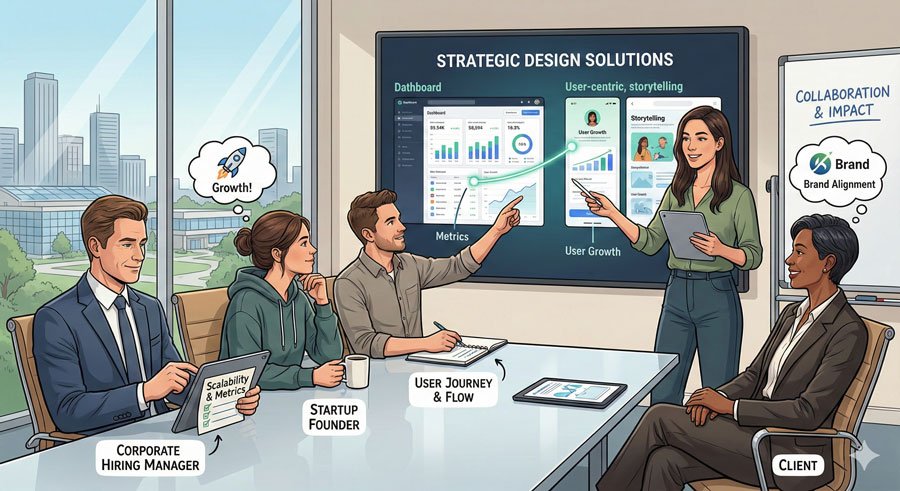
You’ve mastered your craft. You’ve defined yourself with clarity and authenticity. Now comes the final critical piece: understanding your audience.
Your portfolio and case studies aren’t created in a vacuum. They’re created for a specific person—the hiring manager, start-up recruiter, product leader or client who will review your work. Understanding that person, what they care about and what problems they’re trying to solve is essential to positioning yourself effectively.
This final article in the series covers the third critical area for breaking into product design: understanding your audience and strategically positioning yourself as the ideal candidate for the opportunities you want.
Related Topics:
- The Ultimate Guide to Becoming a Product Designer: Your Complete Career Roadmap
- The Three Critical Areas for Breaking Into Product Design: Master Your Craft
- Defining Yourself: Crafting Your Unique Value Proposition as a Product Designer
Three Steps to Understanding Your Audience
Step 1: Niche Down and Define Your Target Industry

First and most important: choose an industry. This isn’t forever—you can pivot later. But for building a compelling portfolio, you need to focus. Companies are looking for designers who understand their specific domain.
Industries to Consider:
- HealthTech – Designing for patients, providers, and healthcare systems
- FinTech – Financial services, banking, investment, insurance technology
- EdTech – Educational technology, learning platforms, training
- SustainTech – Environmental and sustainability-focused technology
- Elderly Care – Technology for aging populations and senior living
- Marketplace – E-commerce, peer-to-peer, sharing economy platforms
- SaaS/Enterprise – Software for business operations and workflows
- Social/Community – Social networks, community platforms, communication
- Creator Economy – Tools for content creators, artists, influencers
- AI/ML Applications – Consumer or enterprise applications of artificial intelligence
Choose an industry because:
- You have genuine interest in it
- You have domain knowledge or can develop it
- You can access users and understand their problems
- You’re excited about its future impact
Your industry choice guides everything that follows.
Step 2: Research Your Audience Before Creating Projects
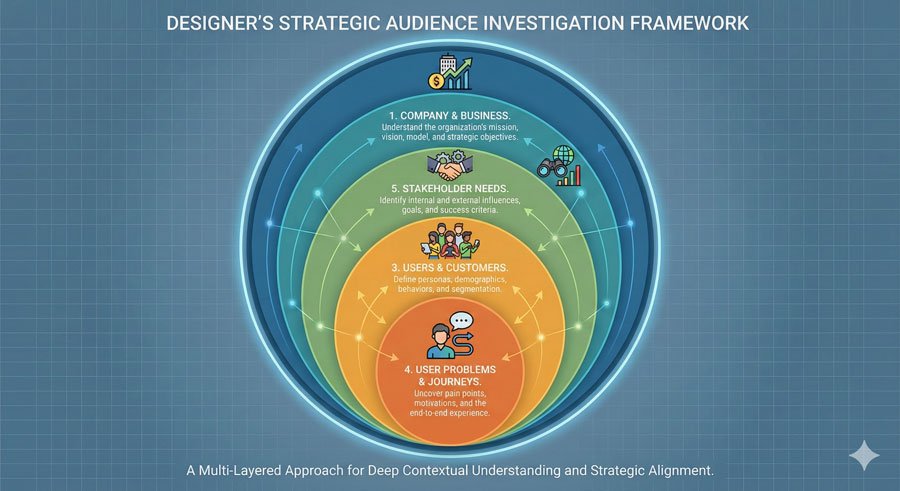
Most designers create their projects in isolation, then try to figure out who to market them to. Do the opposite.
Research your audience BEFORE you invest significant time in creating case studies. Here’s why: once you understand the specific problems your audience faces, you can create projects and case studies that speak directly to those problems.
Understanding the Hiring Manager’s Perspective
Put on the lens of a hiring manager or recruiter. Ask yourself:
About the Company:
- What industry are they in?
- What stage are they at (early, growth, mature)?
- What’s their business model?
- Who are their users/customers?
About Their Problems:
- What problems are they trying to solve?
- What are their competitive challenges?
- What’s their biggest technical or user experience challenge?
- What kind of designer would help them win?
About Their Users:
- Who are the end users of their product?
- What problems do those users face?
- What’s the user’s journey?
The B2B/B2C Complexity
Here’s something often overlooked in bootcamp education: many companies have competing stakeholder groups.
Example: An elderly care platform might have:
- B2C Users (Primary): Elderly patients struggling to find quality in-home care
- B2B Customers (Payer): Medicare/insurance companies paying the platform to provide this service
As a designer, you need to understand BOTH problem sets. Can you show that you grasp how the patient needs in-home care, but Medicare needs cost-effective service delivery? Can you show that you understand the tension between these two constituencies and can design solutions that serve both?
This deeper understanding is what separates designers who get hired for commodity roles from designers who get hired to lead design in strategic areas.
Step 3: Create Targeted Projects That Demonstrate Perfect Fit
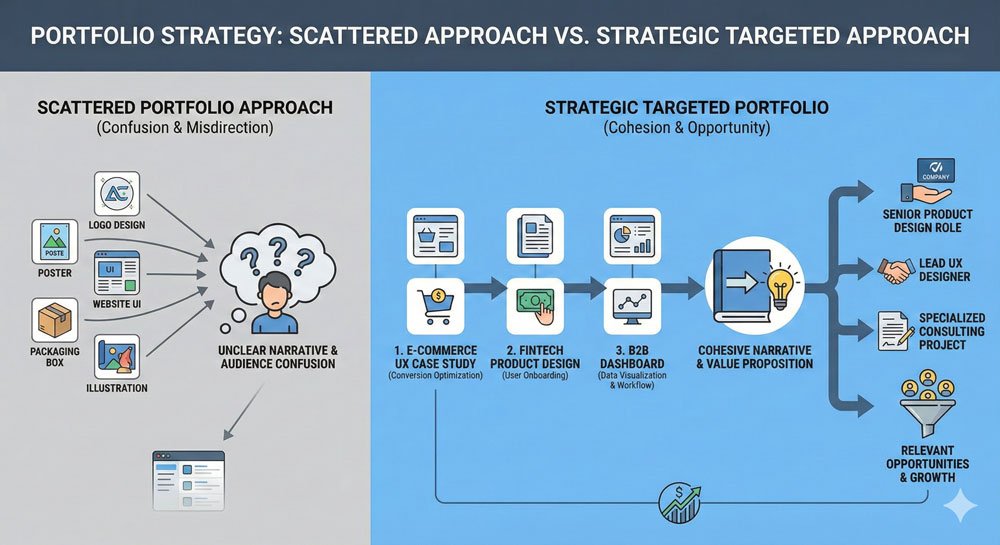
Here’s the key principle: do not create random design challenges or practice projects for your portfolio.
Sure, practice with challenges and projects while you’re learning. But when you create case studies, be strategic and intentional. Every project should demonstrate that you’re the ideal fit for the types of roles you want.
This is where your research becomes actionable.
Strategic Project Questions:
- Does this project address a real problem in my target industry?
- Does it showcase my unique perspective and approach?
- Does it demonstrate that I understand both business goals AND user needs?
- Could a hiring manager in this industry see themselves in this project?
- Does it showcase skills that are in demand in this specific industry?
Creating even three to four strong, targeted case studies is far more effective than ten generic ones.
The Time Investment Reality:
A truly strong case study takes significant time to create—often 40-60 hours of work (research, design, iteration, documentation, writing). That’s why you can’t create ten of them. Be selective. Be intentional.
Showing ROI and Business Value
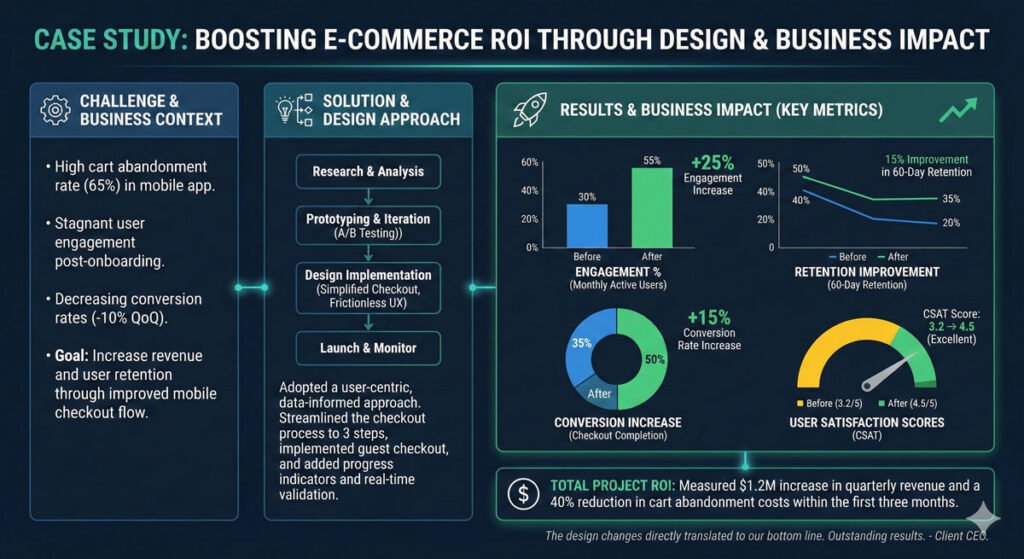
This is critical and often overlooked: companies want to know what return they get on investing in you as a designer. Your case studies should articulate the following:
The Business Impact
- Did engagement increase? By how much?
- Did user retention improve? By what percentage?
- Did conversion rates improve?
- Did customer satisfaction scores increase?
- Did you reduce support tickets?
- Did you accelerate task completion?
Where possible, use numbers. “Improved user satisfaction” is vague. “Improved task completion time from 8 minutes to 3 minutes” is concrete and compelling.
The Process Impact
- Did you reduce design-to-development time?
- Did you increase team efficiency?
- Did you improve cross-team collaboration?
- Did you create reusable systems that accelerated future work?
The Strategic Impact
- Did your design work help achieve a business goal?
- Did you identify a new market opportunity?
- Did you solve a competitive problem?
- Did you position the product differently in the market?
This business acumen is huge, especially in interviews. It demonstrates that you’re not just a maker of pretty interfaces—you’re a strategic partner who understands that design is an investment, not an expense.
Alignment Framework: Making Sure Everything Matches
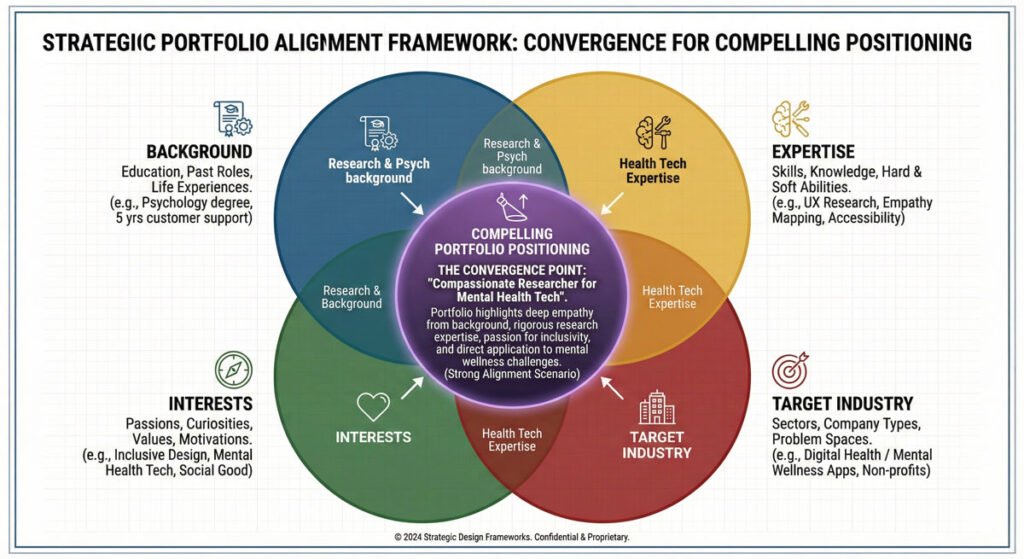
The goal of your entire portfolio strategy is alignment:
Your background + Your expertise + Your interests + The industry you want to work in = The needs of companies looking to invest in a designer
When these align perfectly, opportunities follow. When they don’t align, you face rejection or worse—getting hired for the wrong role.
Creating Your Personal Alignment Statement
Work through this framework:
1. Your Background and Strengths
- What unique experience do you bring?
- What are your genuine strengths?
- What comes naturally to you?
2. Your Interests and Passion
- What problems get you excited?
- What industries align with your values?
- Where do you want to make impact?
3. Your Target Industry and Audience
- Which industry(ies) are you targeting?
- What companies in that industry do you want to work with?
- What problems are they trying to solve?
- What designer qualities do they need?
4. Your Positioning
- What makes you the perfect fit for this industry?
- How does your background uniquely position you for these problems?
- What can you bring to the table that few other designers can?
5. Your Portfolio Projects
- Do your projects demonstrate mastery of problems in this industry?
- Do they show you understand the user base?
- Do they show you understand business context?
- Do they collectively tell a story of alignment?
Industry Deep Dive: Case Study in Positioning
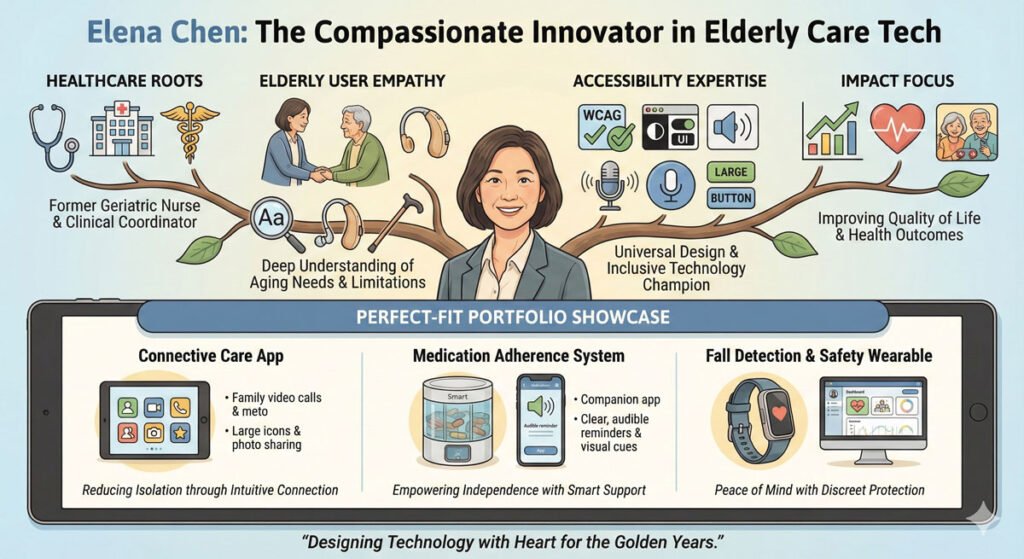
Let’s use elderly care technology as a concrete example.
The Industry Context
Elderly care technology is addressing a massive demographic shift. As populations age globally, there’s unprecedented need for technology supporting elder care delivery, caregiver management, and family communication.
The Audience Profile
Hiring Manager Profile:
- Works at a healthtech startup focused on elderly care
- Trying to improve either: (a) user experience for elderly patients, (b) operational efficiency for care providers, or (c) family coordination
- Frustrated with current products being too complex for elderly users
- Looking for a designer who understands elderly populations AND healthcare operations
Perfect Fit Designer Profile
A designer with:
- Background in healthcare OR elderly care
- Understanding of aging population psychology and needs
- Experience designing for less tech-savvy users
- Understanding of healthcare compliance and regulations
- Ability to balance accessibility with modern design
- Genuine interest in elder wellness
Portfolio Strategy for This Industry
Projects should demonstrate:
- One end-to-end project designing an app or system for elderly users, showing accessibility thinking, simplicity, and deep user understanding
- User research documentation showing you understand elderly users’ needs, pain points, and behaviors (not stereotypes)
- One project showing healthcare/provider workflows understanding the operational side
- Case study articulating ROI – show how improved UX increased adoption among elderly users or improved health outcomes
This portfolio tells a coherent story: “I understand elderly populations, I understand healthcare, I can design for accessibility, and I’m genuinely passionate about this problem space.”
The Power of Strategic Clarity
When you’ve done this work—when you know your industry, understand your audience, have researched their specific problems, and created targeted projects—something shifts.
You’re no longer hoping to get noticed. You’re strategically positioned to be exactly what companies are looking for. You’re no longer one of a thousand generic designers—you’re a specific, deliberate choice.
Companies and hiring managers can feel that alignment. It comes through in your work, your case studies, your resume, and your interviews. And it leads to better opportunities, better jobs, and a more fulfilling career because you’re working on problems you genuinely care about in industries where you can add real value.
Putting It All Together: The Three Critical Areas
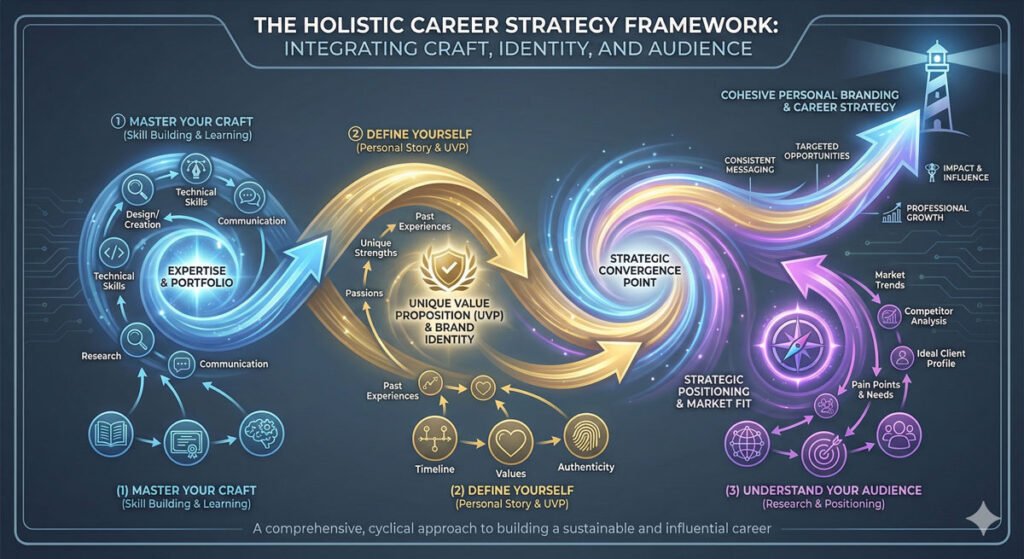
Let’s recap the three critical areas you’ve now mastered:
1. Master Your Craft
- Learn systematically with awareness of your learning style
- Build strong foundational knowledge
- Practice through real projects
- Work on your weaknesses
- Understand all the disciplines, methodologies, and soft skills required
2. Define Yourself
- Know your unique background and transferable skills
- Tell compelling stories about your work
- Articulate your unique value proposition
- Show honest process and outcomes
- Embrace the paradox of specificity
3. Understand Your Audience
- Choose a target industry strategically
- Research companies and hiring managers
- Understand their problems and needs
- Create targeted projects that demonstrate perfect fit
- Show ROI and business value
- Achieve alignment between who you are and what companies need
The Foundation for Long-Term Career Success
This three-part framework isn’t just for getting your first product design job. It’s the foundation for building a long-term, sustainable, fulfilling design career.
Designers who follow this approach:
- Get hired for better roles at better companies
- Command higher compensation
- Work on problems they’re genuinely passionate about
- Build distinctive expertise and reputation
- Create more impact through their work
- Enjoy greater career satisfaction
Next Steps: Building Your Design Career
Now that you understand the complete framework, here’s what to do:
Immediate Actions:
- Assess Your Craft – Honestly evaluate where you are in mastering design fundamentals
- Choose Your Path – Decide how you’ll develop your skills (bootcamp, courses, mentorship, self-directed)
- Reflect on Identity – Complete the exercises to understand your background, skills, and interests
- Research Your Industry – Pick one or two industries that excite you and begin research
- Plan Your Portfolio – Map out 2-3 strategic projects that demonstrate perfect fit
Medium-Term (3-6 months):
- Execute Projects – Create 3-4 strong case studies demonstrating your positioning
- Build Your Portfolio – Document your work compellingly
- Network Strategically – Connect with people in your target industry
- Refine Your Story – Practice articulating your unique value proposition
Long-Term (6-12 months):
- Build Your Platform – Create content or resources in your niche
- Develop Thought Leadership – Share insights about your industry
- Create Opportunities – Reach out directly to companies that align with your positioning
- Iterate and Evolve – Continuously refine your positioning based on feedback and learning
Conclusion: You’re Ready to Build Your Design Career
The journey to becoming a successful product designer isn’t mysterious or complicated. It’s systematic. It’s intentional. And it’s absolutely achievable.
By mastering your craft, defining yourself authentically, and understanding your audience strategically, you position yourself not just to get a job as a product designer, but to build a distinctive, fulfilling, impactful career.
The designers who succeed aren’t just the most talented. They’re the ones who are intentional, strategic, and clear about who they are and what value they bring.
They’re the ones who understand that design is about solving real problems for real people—and they position themselves to do exactly that.
You have everything you need. Now go build your design career.
About the Author
Lalit M. S. Adhikari is a Digital Nomad and Educator since 2009 in design education, graphic design and animation. He’s taught 500+ students and created 200+ educational articles on design topics. His teaching approach emphasizes clarity, practical application and helping learners.
Learn more about Lalit Adhikari.
This guide is regularly updated with the latest information about Adobe tools and design best practices. Last Updated: July 2026