

Ultimate guide to becoming a product designer. Learn career paths, skills needed, industry insights, and proven strategies to transition into product design successfully.
Table of Contents
Introduction: Why Product Design Matters Today
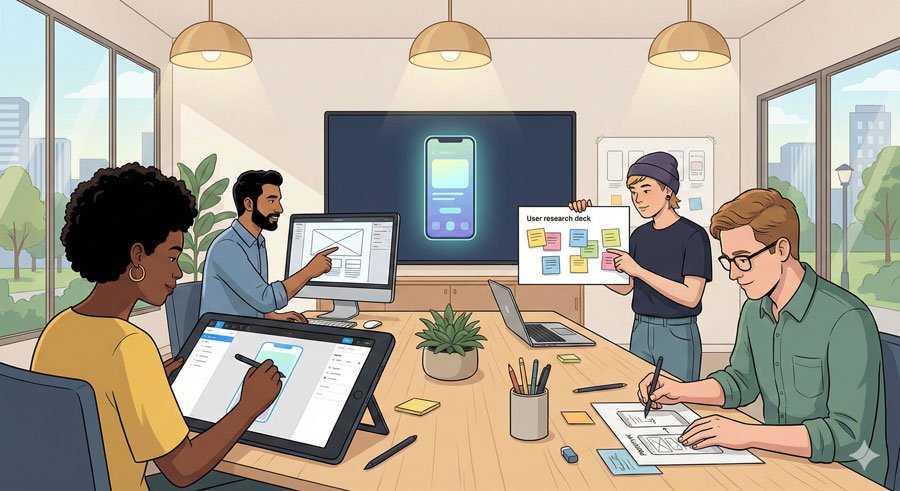
In today’s digital landscape, product designers are the architects of experiences that millions of people use daily. Whether you’re considering a career shift or starting fresh, understanding what it takes to become a product designer is crucial.
This comprehensive guide will walk you through everything you need to know about the industry, the roles available, and the exact steps you can take to build a successful career as a product designer.
The field of product design has evolved from a niche specialization to one of the most in-demand careers in technology. Companies across industries—from fintech to healthcare to e-commerce—are actively seeking talented product designers who can solve complex user problems while balancing business objectives.
If you find yourself asking “How can I create or contribute to solutions that make more things better for more people?”—you’re already thinking like a designer.
Related Topics:
- The Three Critical Areas for Breaking Into Product Design: Master Your Craft
- Defining Yourself: Crafting Your Unique Value Proposition as a Product Designer
- Understanding Your Audience: Strategic Positioning for Product Design Success
Understanding the Product Design Landscape
The Difference Between UI/UX Designer vs Product Designer
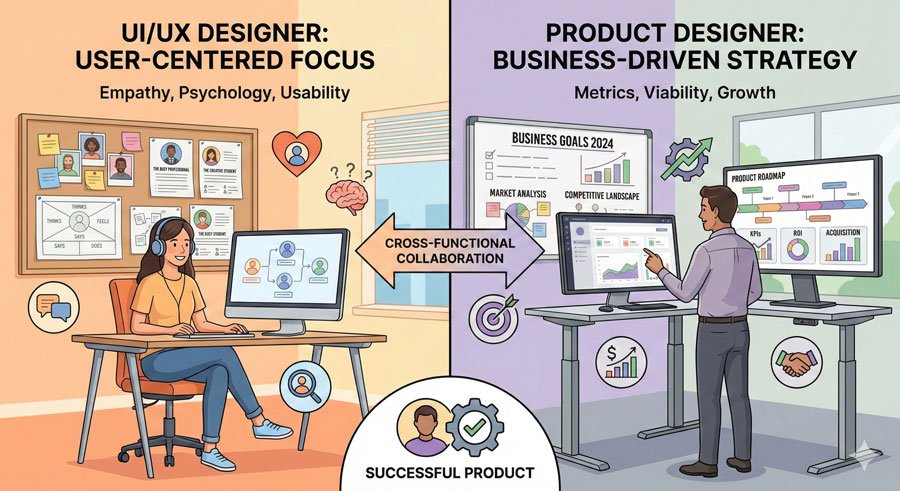
One of the most common questions aspiring designers ask is: “What’s the difference between a UI/UX Designer and a Product Designer?” While these terms are often used interchangeably, there are important distinctions that shape your career path and daily responsibilities.
UI/UX Designer: The User Advocate
A UI/UX Designer primarily acts as a user advocate first. Their core focus is on understanding users deeply and mapping visual symbols and interactions to users’ mental models and psychology.
These designers spend considerable time conducting user research, creating personas, and building empathetic solutions that truly resonate with the people using the product.
Product Designer: The Product Advocate
Conversely, a Product Designer functions as a product advocate first. Their primary focus lies in understanding business goals and translating them into features and user/customer journeys while navigating the constraints and requirements of the organization.
Product designers must balance user needs with business objectives and revenue goals, making them critical business strategists as well as creative professionals.
The key differentiator between these roles is their primary focus and where they spend their time. However, there’s significant overlap in tasks, duties, and disciplines. What truly matters is recognizing that both are essential to creating successful digital products.
Why Designer Means So Much More Than “Creative Professional”
The term “designer” has historically been associated with creative and visual professionals, but its meaning has evolved dramatically. Today, designers are visual strategists, digital storytellers, critical thinkers, artists, scientists, and problem solvers who create technology solutions.
This evolution is crucial to understand because it means that if you come from a technical background, or from business, marketing, or even unrelated fields, you have valuable skills to bring to product design.
You’re not just learning how to make things look pretty—you’re learning to solve complex problems using strategy, research, psychology, and creative thinking.
At the heart of professional product design is the concept of mindful design and interaction—doing everything with awareness and intention about what you’re doing and why you’re doing it.
This philosophical approach transforms designers from mere executors of ideas to strategic partners in creating meaningful products.
The Three Pillars of the Product Design Industry
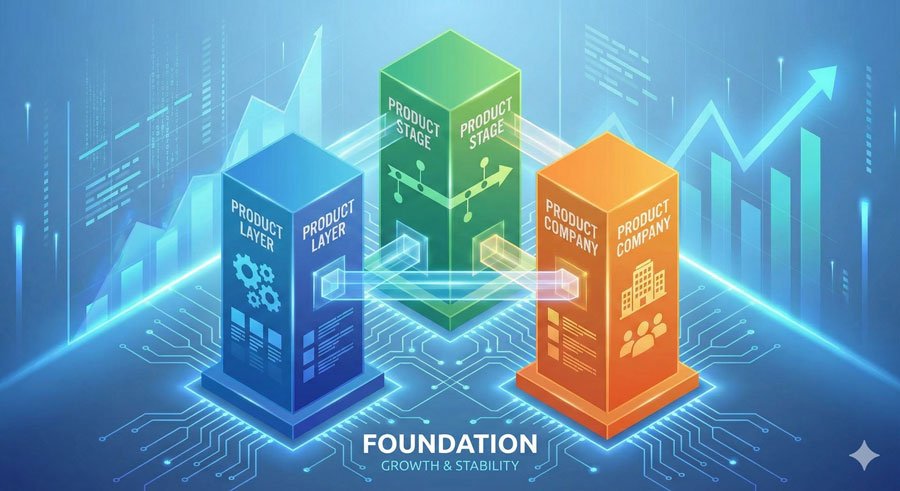
To understand where you’ll fit in the product design industry, you need to comprehend three interconnected dimensions that shape every digital product and every design role. These three pillars work together to create the unique requirements and skill sets for different job positions.
Pillar 1: Product Layer – Understanding Design Depth
The Product Layer represents the vertical depth of product design—the different levels at which design decisions must be made. Understanding this framework, developed by Jesse James Garrett, founder of Adaptive Path, helps you see that a digital product has five main layers, regardless of whether it’s a SaaS application, mobile app, fintech solution or healthcare platform.
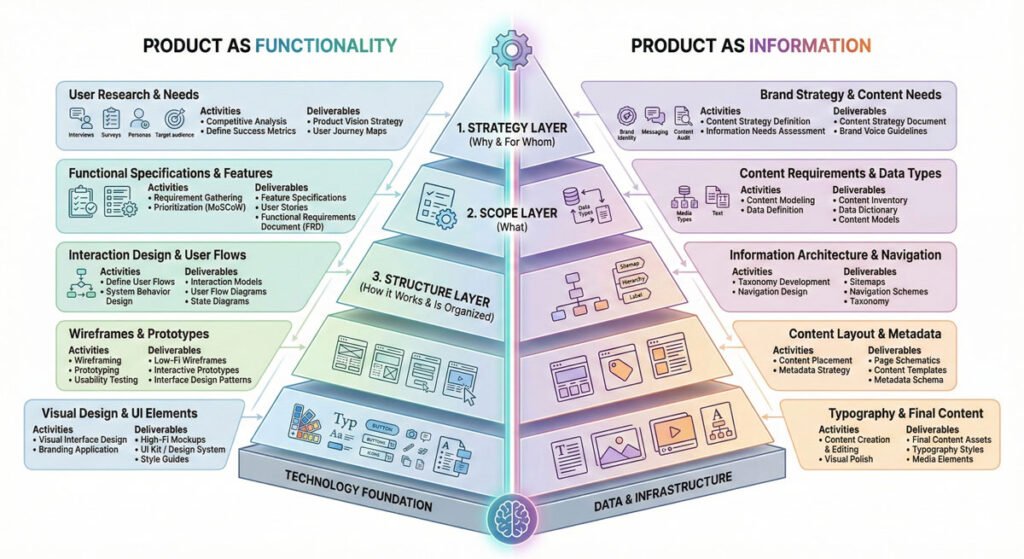
The Five Layers of Digital Product Design:
- Strategy Layer (The Foundation) – This foundational layer focuses on user needs and site objectives. Here, UX research, problem exploration, and definition take place. Designers conduct extensive user research to understand pain points, goals, and opportunities.
- Scope Layer – Moving upward, this layer defines the features, functional requirements, and content specifications. Designers work on functional specs and content requirements, determining what the product will actually do.
- Structure Layer – The middle layer involves Interaction Design (IxD) and Information Architecture (IA). Designers determine how tasks and flows should be orchestrated and how they should connect within the system.
- Skeleton Layer – Here, designers create the wireframes, sitemaps, and low-fidelity prototypes that blueprint the user experience before high-fidelity design work begins.
- Surface Layer – The final layer is where visual design comes to life. Designers apply colors, typography, and polished visuals to create high-fidelity designs ready for implementation.
The Functional vs. Informational Divide:
The model is split down the middle into two distinct perspectives:
- Product as Functionality (left side): Work focuses on how the product works, responds, and connects. This is the technical and interaction-focused side.
- Product as Information (right side): Work focuses on defining things, extracting insights, and making information visually meaningful and understandable.
Different designers may specialize in one side or layer, while others move fluidly across the entire model. As you advance in your career, these lines blur, and you may find yourself thinking bigger picture while still contributing to specific specialties.
Pillar 2: Product Stage – Timing and Context
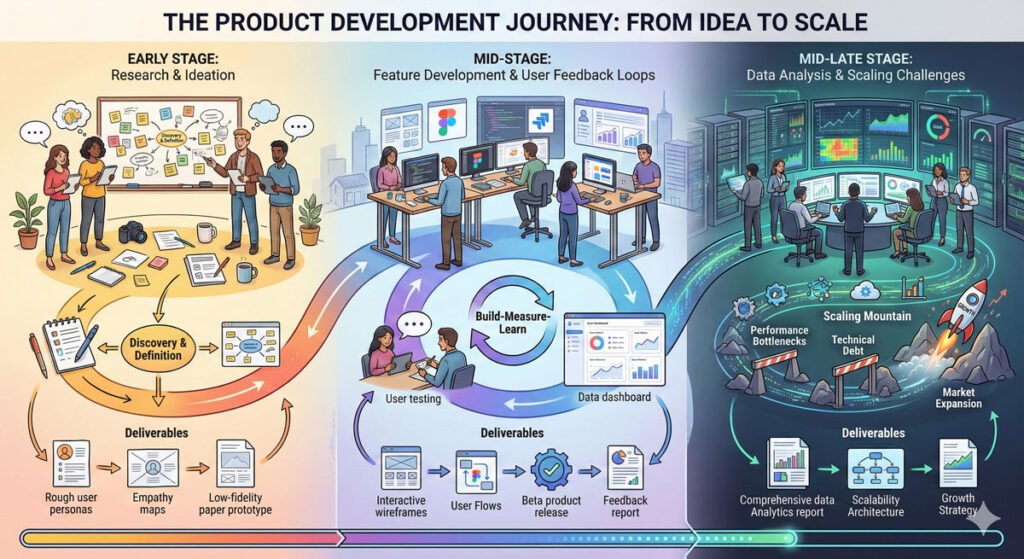
The Product Stage dimension acknowledges that products evolve over time, and the design challenges at each stage are fundamentally different. Recognizing which stage a product is in helps you understand what skills and expertise you’ll need to bring to the role.
Early Stage: Conception and Idea Validation
At the early stage, you’re forming the foundational idea and learning about your users’ potential problems. The design process starts from scratch, and neither the product nor its users exist yet. Your focus involves extensive user research, ideation, and problem definition. This stage rewards designers who are comfortable with ambiguity, speculation, and creative exploration.
Mid-Stage: Building Momentum and Features
During mid-stage development, you’re building a user base and actively receiving feedback. The primary design challenge involves adding new features or improving existing ones based on real user data. You’re validating assumptions against actual behavior, making this a stage where designers need strong research and iteration skills.
Mid-Late Stage: Scaling and Optimization
By the mid-late stage, you have substantial user data to analyze. The design focus shifts to making changes, fixing bugs, conducting usability testing, and dealing with scaling challenges. This stage requires designers who excel at data analysis, optimization, and managing complexity as products grow.
Different designers thrive at different stages. A designer who loves pure ideation and persona work might excel at early-stage start-ups, while another designer might prefer the analytical challenges of optimizing features for millions of users. Recognizing your preference helps you choose companies and projects that align with your strengths.
Pillar 3: Product Company – Organizational Context
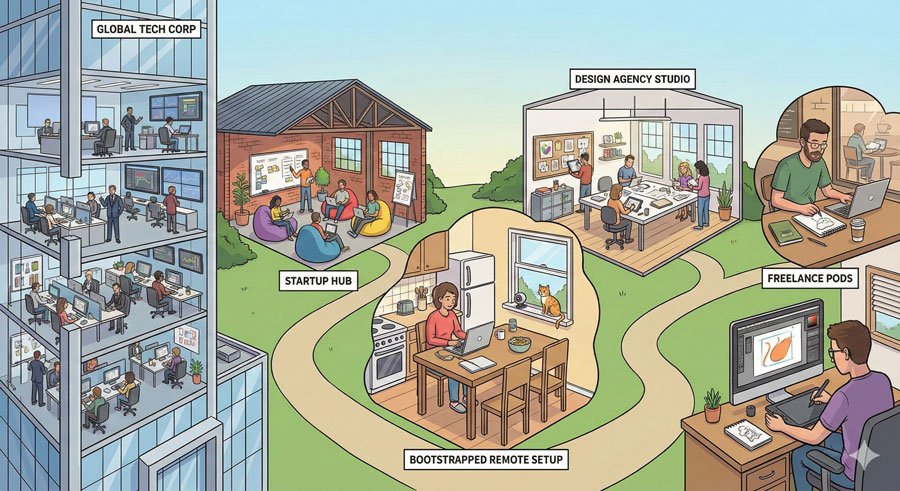
The third dimension is Product Company—recognizing that different organizations have completely different structures, business models, and design needs. Every company is unique with different business goals, constraints, and opportunities.
Types of Product Organizations:
- Large B2B or B2C Companies – Established corporations with substantial resources, complex organizational structures, and often legacy systems to work within.
- Small Startups – Lean, nimble organizations with limited resources but tremendous flexibility and impact potential.
- Bootstrapped Companies – Self-funded ventures with significant constraints but complete autonomy over product decisions.
- Agency Work – Design agencies serving multiple clients with different industries and needs.
- Freelance/Consultant – Working independently with various clients and projects.
- Your Own Product – Building and owning your own digital product.
The company type significantly influences your day-to-day work, the tools you’ll use, the teams you’ll work with, and the problems you’ll solve.
A designer at a Fortune 500 company might focus on scaling for millions of users and navigating organizational politics, while a start-up designer might be designing, building, and potentially even marketing their product.
How These Three Pillars Create Opportunity
The beautiful truth is that all three pillars blend together to create unique requirements and skill sets for job positions. This is why you’ll see completely different requirements and duties for the same title across different companies.
While this might seem confusing at first, it’s actually liberating—it means there’s room for you to carve out a unique space that matches your specific skills, interests, and working style.
Conclusion: Your Next Step
Now that you understand the landscape of product design—from the differences between roles to the structural frameworks that define the industry—you’re ready to explore how to build a career in this field.
The next article in this series will dive deep into the three critical areas you must master to successfully transition into product design: mastering your craft, defining yourself, and understanding your audience.
The product design industry is vast, diverse, and full of opportunity. Your unique background, perspective, and approach to problem-solving are exactly what the industry needs.
About the Author
Lalit M. S. Adhikari is a Digital Nomad and Educator since 2009 in design education, graphic design and animation. He’s taught 500+ students and created 200+ educational articles on design topics. His teaching approach emphasizes clarity, practical application and helping learners.
Learn more about Lalit Adhikari.
This guide is regularly updated with the latest information about Adobe tools and design best practices. Last Updated: July 2026