


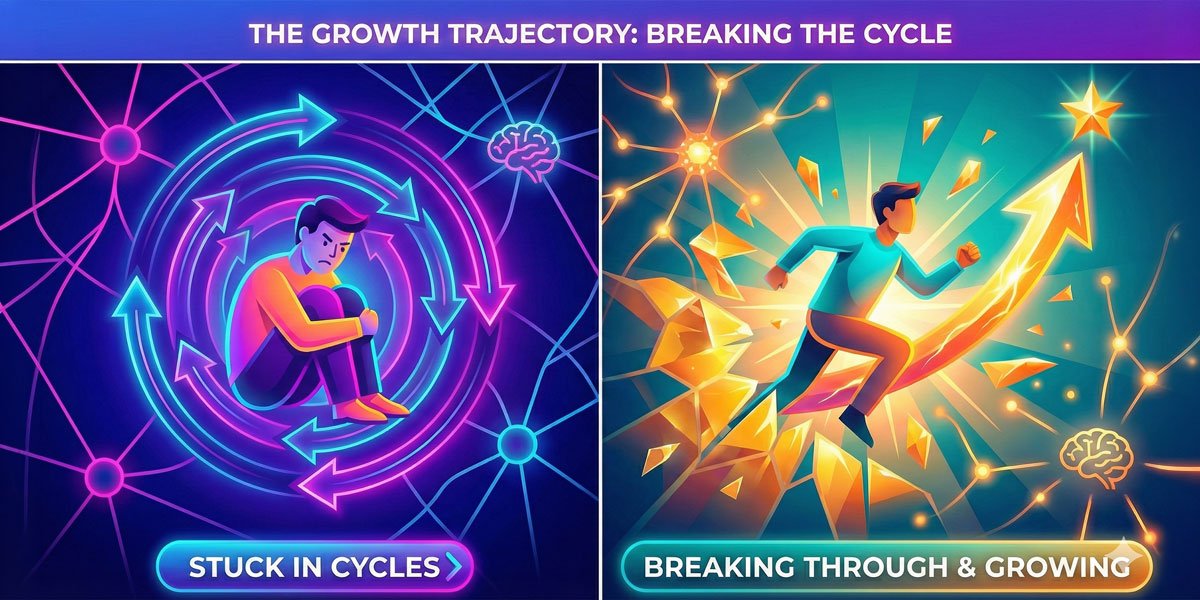
Discover how your beliefs shape your life patterns. Learn the science of growth mindset vs fixed mindset, and how neuroplasticity proves you can change your abilities.
My name is Lalit Adhikari and we are at LTY. Let’s begin!
Table of Contents
Introduction
Are you stuck in a loop? You know the feeling—the same career challenges resurface, the same relationship patterns repeat, and the same obstacles block your path forward.
If this resonates with you, you’ve uncovered something powerful: your life patterns aren’t random. They’re controlled by your beliefs.
The question isn’t why these things happen. It’s why they keep happening. And the answer lies deeper than circumstance—it lies in your mindset.
Related Topics:
- Einstein’s Mind Palace: How E=mc² and Pure Imagination Changed Our View of the Universe
- Life Lessons from Martial Arts: How Bruce Lee‑Style Training Builds Courage and Resilience
- Depression: The Silent Global Epidemic We Can’t Ignore
Understanding Life Patterns and Repetition
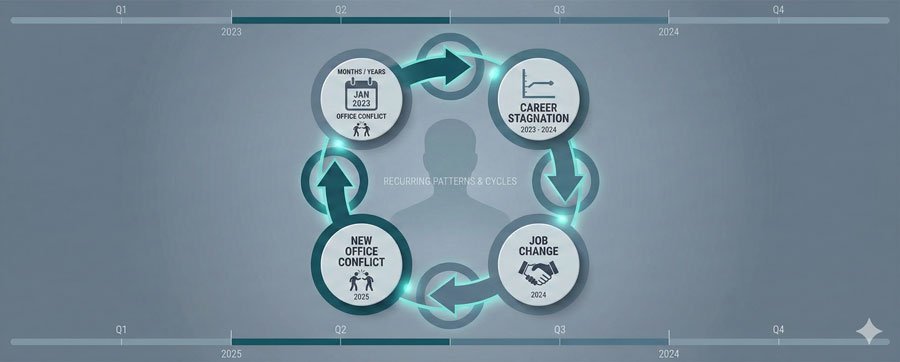
Why Do We Repeat the Same Mistakes?
Think about your last few years. Notice anything? The same type of career setbacks. The same toxic dynamics with colleagues. The same financial challenges. These aren’t coincidences.
When you zoom out and examine your life objectively, you’ll discover repeating patterns of action. And here’s the crucial part: these patterns exist because your core beliefs haven’t changed.
The Root Cause: Your Subconscious Beliefs
You’ve likely heard of the subconscious mind—that mysterious part of your brain that drives your behavior without your awareness. But here’s what most people don’t realize: your subconscious mind is in complete control.
Every decision you make. Every action you take. Every emotion you feel. They all originate in your subconscious mind.
And your beliefs? They live here too. They’re the invisible scripts running your life’s operating system.
Related Topics:
- How to Master Body Language: 5 Techniques to Boost Confidence & Presence
- Innovation in Entrepreneurship: How Creative Thinking Drives Business Success
- Healing After Heartbreak: Turn a Broken Heart Into Strength
Where Do Your Beliefs Come From?
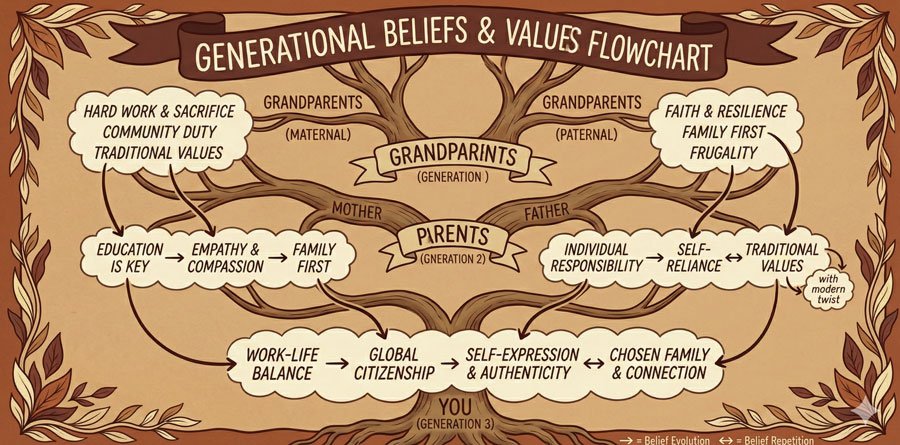
The Generational Inheritance of Beliefs
Here’s what might surprise you: most of your core beliefs aren’t even original to you.
Your parents taught you certain beliefs because their parents taught them the same beliefs. This chain extends back generations. It’s belief inheritance—a psychological legacy passed down through families.
Some of these inherited beliefs are gold:
- Be kind
- Work hard
- Be honest
- Treat others with respect
But many others? They’re just what you think is “normal” or “right”—without ever questioning whether they actually serve you.
Related Topics:
- Life Lessons from Superheroes: How Fear Makes Us Brave
- Creativity Is a Journey, Not a Destination
- Why Winning Is Not Everything: Redefining Success Beyond the Rat Race
The Belief-Success Connection
What Really Determines Success?
Ask people the secret to achieving goals and you’ll hear the usual suspects:
- Hard work
- Focus
- Persistence
- Dedication
But these are surface-level answers. If you dig deeper, you’ll discover something more fundamental: all of these are byproducts of something else—your core belief system.
Famous martial artist and chess player Joshua Waitzkin understood this deeply. He said:
“The moment we believe that success is determined by an ingrained level of ability, we will be brittle in the face of adversity.”
This single statement reveals why some people bounce back from failure while others spiral downward.
Related Topics:
- Self-Pity vs. Responsibility: How to Stop Playing the Victim and Reclaim Your Life
- How to Break Through Creative Blocks as an Artist
- The Journey to Your Authentic Self: Why Self-Discovery Is Your Most Valuable Investment
Fixed Mindset vs. Growth Mindset
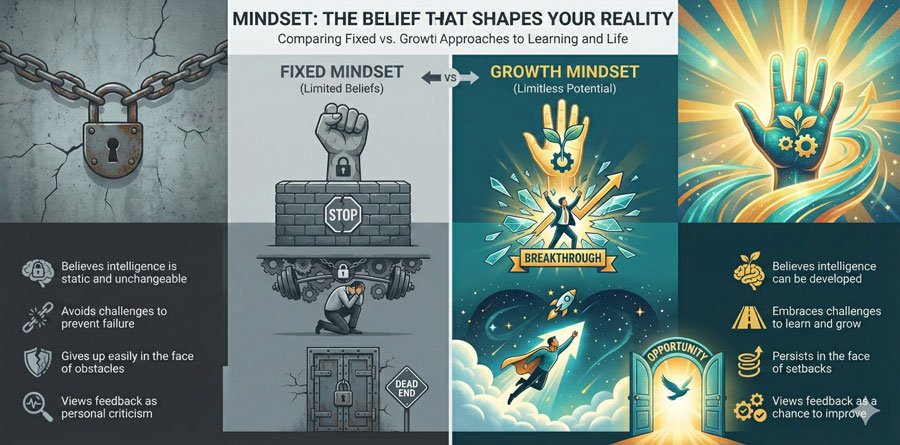
The Two Mental Models That Define Your Future
There are fundamentally two ways people view their abilities:
Fixed Mindset
People with a fixed mindset believe that:
- Intelligence and ability are static
- You’re either talented or you’re not
- Effort is pointless if you’re not naturally gifted
- Failure means you’re incapable
Growth Mindset
People with a growth mindset believe that:
- Abilities can be developed through effort
- Intelligence is malleable
- Effort is the pathway to mastery
- Failure is information, not a verdict
These two mindsets lead to dramatically different behaviors and life outcomes.
The Science Behind Mindsets
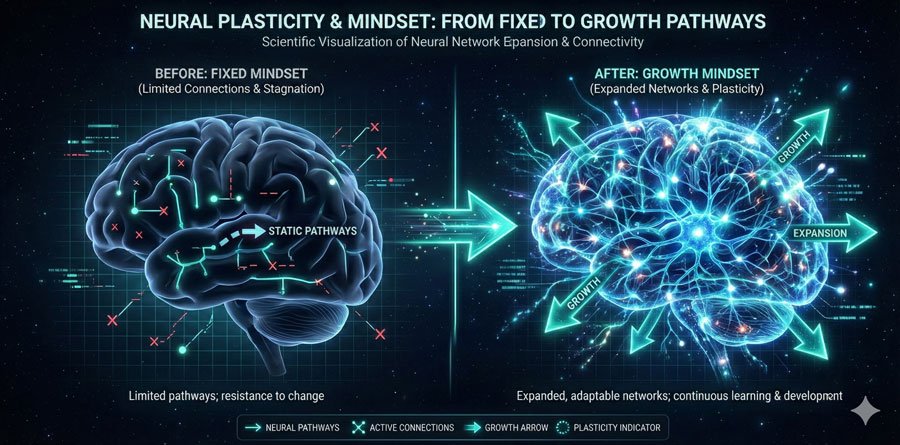
Research-Backed Evidence: Why Mindset Matters
The power of mindset isn’t just motivational theory—it’s scientifically validated.
Dr. Lisa Blackwell’s groundbreaking study at Columbia University examined young students and their beliefs about intelligence. The results were striking:
Students who believed they could grow their intelligence:
- Increased their grades over time
- Showed improved academic performance
- Developed stronger study habits
- Reported higher motivation
Students with fixed mindsets:
- Showed stagnant performance
- Made minimal academic progress
- Avoided challenging work
- Quit more easily when facing difficulty
This wasn’t about natural ability. It was purely about what they believed about their ability to change.
The Brain’s Plasticity: Your Superpower
Neuroscience reveals something extraordinary: your brain is malleable. This isn’t metaphorical—it’s biological fact.
Your brain physically rewires itself based on:
- What you practice
- What you focus on
- What you believe about yourself
- The effort you invest in growth
You are not chained to your current capabilities. You can change. Your brain can change. This is called neuroplasticity.
The Behavioural Differences
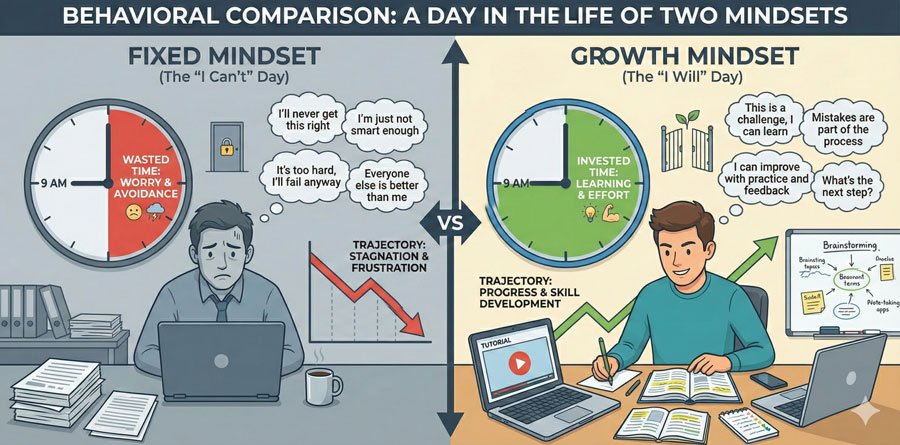
How Mindsets Manifest in Everyday Behaviour
Mindsets aren’t abstract—they show up in concrete behaviours. Here’s how people with different mindsets respond to the same situations:
| Situation | Fixed Mindset Response | Growth Mindset Response |
|---|---|---|
| Facing Challenges | Avoidance; see it as threat | Engagement; see it as opportunity |
| Experiencing Failure | “I’m incapable” | “I haven’t learned it yet” |
| Receiving Criticism | Defensive; feels like attack | Curious; sees as feedback |
| Others’ Success | Threatened; comparison | Inspired; sees as proof of possibility |
| Effort Required | Sign of weakness | Sign of growth |
| Feedback Loop | Loss of motivation | Increased motivation |
The Judgment Factor
There’s another crucial difference:
People with fixed mindsets worry deeply about judgment:
- How am I being perceived?
- Will this make me look bad?
- What will people think if I fail?
- Am I smart enough to be here?
This constant worry about judgment consumes mental energy that could be directed toward actual learning and growth.
People with growth mindsets focus primarily on learning:
- What can I learn from this?
- How can I improve?
- What skills do I need to develop?
- How can I get better?
The Success Stories That Prove It
Remarkable People Who Built Their Abilities
You might think the world’s most accomplished people were born gifted. In reality, many of history’s greatest achievers were initially doubted:
Charles Darwin
Considered an underachiever in school, yet became the foundation of modern biology through persistent study and observation.
Thomas Edison
Labeled a failure after thousands of failed experiments, but he viewed each “failure” as data. He invented the light bulb through sheer persistence.
Wolfgang Amadeus Mozart
Practiced obsessively from childhood. While talented, his mastery came through relentless effort—not innate genius alone.
Albert Einstein
Struggled in school, had difficulty with rigid educational systems, yet became the mind that transformed physics through curiosity and unconventional thinking.
The Pattern: Every one of these achievers had a growth mindset. They built their abilities rather than relying on innate talent.
Mindset’s Physiological Impact
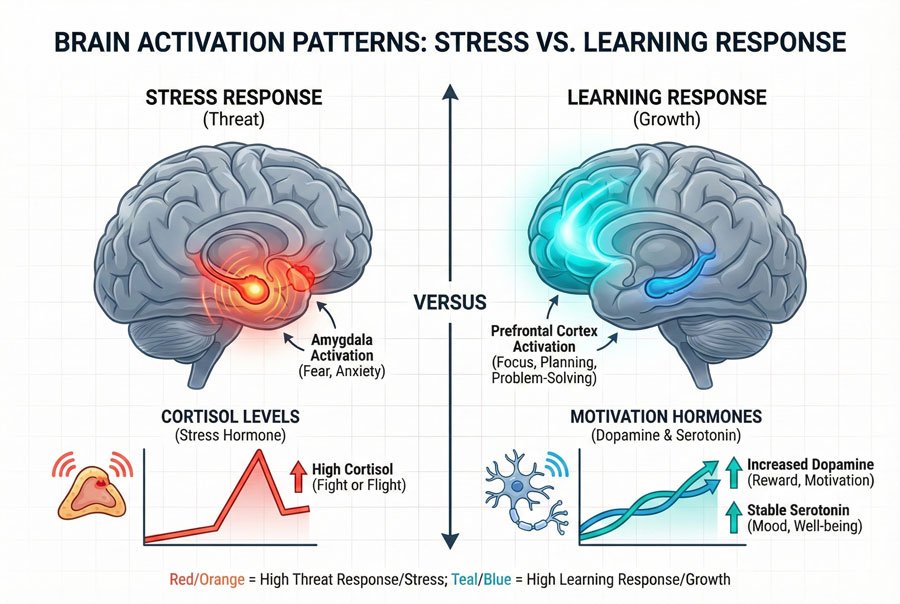
Your Beliefs Literally Change Your Brain and Body
This is where it gets remarkable: your beliefs don’t just affect your psychology—they affect your physiology.
The Stress Response
People with fixed mindsets experience more stress when facing challenges because they perceive challenges as threats to their identity.
People with growth mindsets experience challenges as learning opportunities, triggering a more beneficial neurological response.
The Motivation System
Fixed mindsets activate your threat-detection system (amygdala), which promotes defensive, avoidant behavior.
Growth mindsets activate your learning and reward systems (prefrontal cortex, dopamine pathways), which promote exploration and persistence.
The Resilience Factor
When setbacks occur, they literally affect brain chemistry differently based on your mindset:
Fixed mindset → Amygdala activation → Fear response → Withdrawal
Growth mindset → Prefrontal activation → Learning response → Adaptation
What Happens When You Hit a Setback
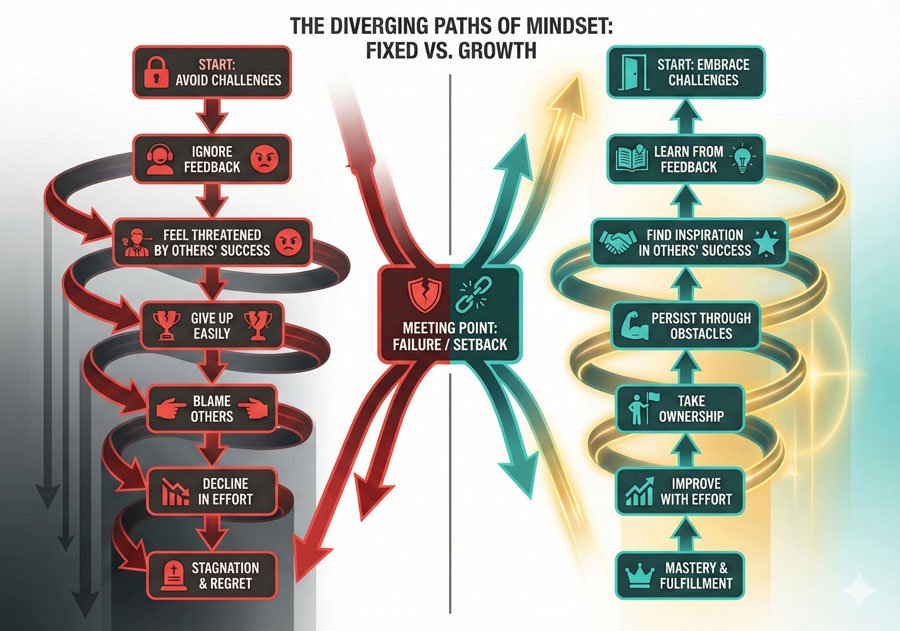
How Your Mindset Determines Your Bounce-Back
This is the true test of mindset. When failure arrives—and it will—your belief system determines what happens next.
The Fixed Mindset Spiral
- Encounter setback or failure
- Interpret it as proof of inability
- Conclude: “I’m not good at this”
- Experience shame and self-doubt
- Lose motivation
- Avoid future challenges in this area
- Stagnate
Result: Learned helplessness. This looks like lack of motivation, but it’s actually a logical response to fixed beliefs.
The Growth Mindset Response
- Encounter setback or failure
- Interpret it as incomplete learning
- Think: “I haven’t mastered this yet”
- Feel curiosity about what to do differently
- Increase effort and try new strategies
- View failure as valuable feedback
- Persist toward growth
- Build resilience and capability
Result: Continuous improvement. What looks like motivation is actually a logical response to growth-oriented beliefs.
Building Your Growth Mindset
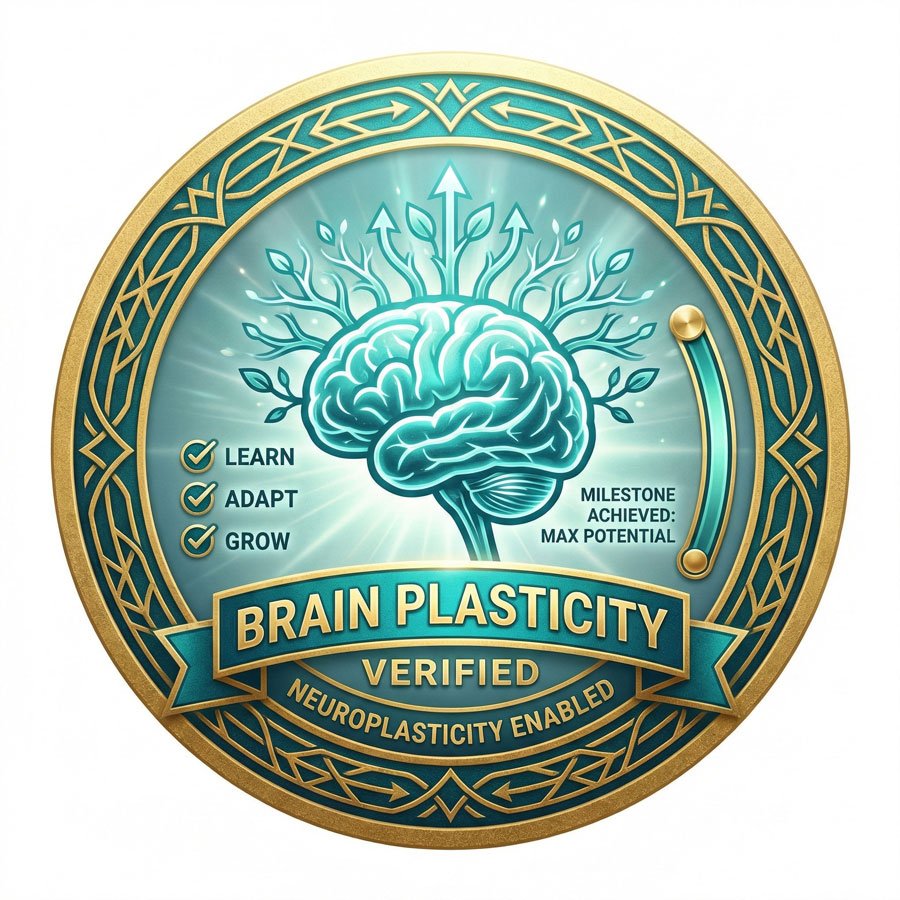
How to Develop a Growth Mindset (Actionable Steps)
Understanding is the first step. Action is everything.
Here are two fundamental things anyone can do to instill a growth mindset:
Step 1: Recognize the Science is Real
This is your foundation. Understand that:
- ✓ The brain is scientifically proven to be malleable
- ✓ Neuroplasticity is neurobiological fact, not wishful thinking
- ✓ Effort literally changes brain structure
- ✓ Practice rewires neural pathways
- ✓ You’re not stuck with your current abilities
Why this matters: When you know growth is scientifically possible, your beliefs shift. You stop seeing effort as futile and start seeing it as the mechanism of change.
Step 2: Learn How to Develop Your Abilities
Knowledge creates conviction. When you understand how growth happens, you stop relying on motivation and start relying on systems.
Learn:
- How the brain learns (repetition, spacing, retrieval practice)
- How skills develop (deliberate practice, feedback loops)
- How to leverage neuroplasticity (focused practice over time)
- How to set growth-oriented goals (process goals, not outcome goals)
Why this matters: Understanding the mechanism of growth strengthens your conviction that you’re in control of your abilities.
You stop being a passive victim of genetics and start being an active architect of your own capabilities.
Spreading Growth Mindset to Others
Teaching Others to Believe in Growth
The power of growth mindset multiplies when you teach it to others—your friends, family, colleagues, and students.
When you help someone shift from fixed to growth mindset, you’re not just changing their beliefs—you’re changing their life trajectory.
How to do this:
- Model growth mindset through your own behavior and language
- Praise effort, not talent (“You worked really hard” vs. “You’re so smart”)
- Normalize struggle as part of learning
- Share growth stories of people who built abilities
- Reframe failure as information, not verdict
Conclusion: You Are Not Chained to Your Current Self
Here’s what we’ve covered:
- Your life patterns repeat because your beliefs haven’t changed
- Your beliefs come from generational inheritance and subconscious conditioning
- Success depends on mindset more than natural ability
- The difference between achievement and stagnation is often fixed vs. growth mindset
- Science proves your brain is malleable and changeable
- When you adopt growth mindset, your behavior transforms
- The most accomplished people built their abilities through persistence
- You can deliberately develop growth mindset through belief and education
The most important realization: You’re not stuck. You’re not limited by your past. You’re not destined to repeat the same patterns.
Your beliefs can change. And when your beliefs change, your entire life changes.
The power isn’t in wishful thinking. It’s in understanding how your brain works and leveraging that understanding to deliberately build the life you want.
The question isn’t whether you can change. Science says you can.
The question is: will you?
About the Author
Lalit M. S. Adhikari is a Digital Nomad and Educator since 2009 in design education, graphic design and animation. He’s taught 500+ students and created 200+ educational articles on design topics. His teaching approach emphasizes clarity, practical application and helping learners.
Learn more about Lalit Adhikari.
This guide is regularly updated with the latest information about Adobe tools and design best practices. Last Updated: Mar 2026















Great. Thank you, its something I needed right now.