


Have you ever noticed how a single glance, a firm handshake, or even the way someone stands can completely change the way you feel about them? Body language is a silent yet incredibly powerful form of communication that shapes how others perceive us — and how we perceive ourselves.
Whether it’s an awkward interaction at a party, a warm smile from a stranger, or a contemptuous glance from a colleague, nonverbal cues carry more weight than most people realise.
In this guide, you’ll discover how to harness the power of body language to project confidence, command respect and transform your personal and professional life.
Learn how to master body language with 5 science-backed techniques including power poses, breathing exercises, and pacing tips. Boost your confidence, project authority, and transform your personal and professional presence.
Table of Contents
Why Body Language Matters More Than Words

When we think about communication, most of us focus on what we say. But social scientists have spent decades studying the effects of nonverbal behaviour on people’s judgments — and the results are eye-opening.
We constantly make sweeping judgments and inferences based on other people’s body language. These snap decisions can predict meaningful life outcomes, including who gets hired, who earns trust, and even who faces legal consequences.
The Nalini Ambady Study: First Impressions Are Everything
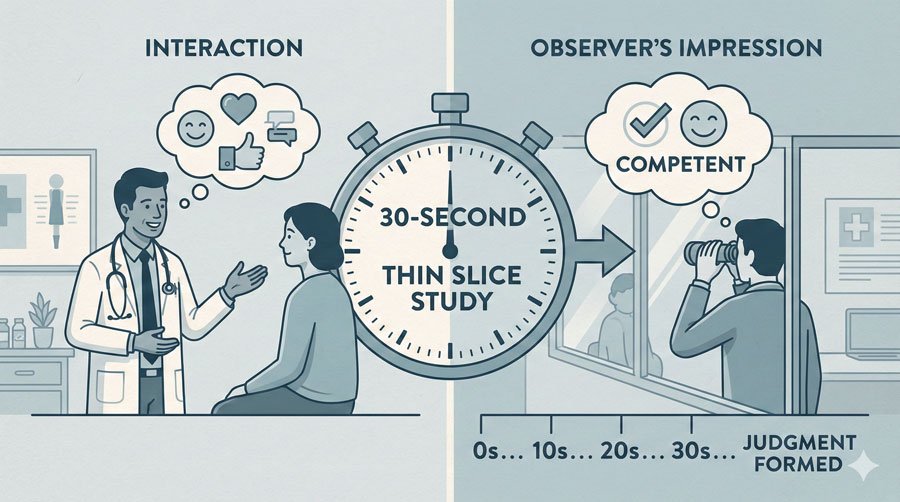
A groundbreaking study conducted by Nalini Ambady, a researcher at Tufts University, demonstrated just how powerful nonverbal cues can be. In her research on psychology and body language, participants watched 30-second soundless clips of real physician-patient interactions.
Remarkably, viewers’ judgments of the physician’s warmth and niceness predicted whether or not that physician would be sued for malpractice.
It had little to do with the physician’s actual competence — it was all about how likeable and approachable they appeared through their body language.
This tells us something profound: people form lasting impressions based not on what you say, but on how you carry yourself.
Related Topics:
- Innovation in Entrepreneurship: How Creative Thinking Drives Business Success
- Healing After Heartbreak: Turn a Broken Heart Into Strength
- Life Lessons from Superheroes: How Fear Makes Us Brave
The Science Behind Power Poses and Dominant Body Language
Nonverbal communication doesn’t just influence how others see us — it also changes how we see ourselves. Our body language affects our thoughts, feelings and even our physiology.
What the Animal Kingdom Teaches Us About Power

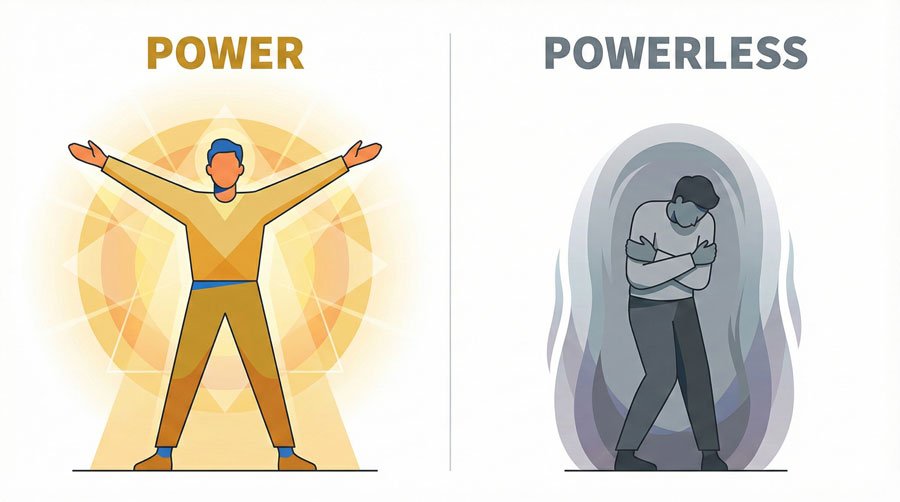
The nonverbal expression of power and dominance is universal across the animal kingdom. When animals (including humans) feel powerful, they expand — stretching out, taking up space and opening up their bodies. Think of a gorilla beating its chest or a peacock fanning its feathers.
Humans naturally mirror these behaviours. When we feel confident, we stand tall, spread our arms wide, and take up more physical space. Conversely, when we feel powerless, we do the opposite — we close up, wrap our arms around ourselves and make ourselves small.
The Power Pose Effect

Research published in Psychological Bulletin analysed 128 experiments with nearly 10,000 participants and found clear evidence that body positions affect self-perception.
When participants adopted expansive, high-power postures, they reported feeling more confident and powerful compared to those who took contractive, low-power poses.
The key takeaway? Your body doesn’t just reflect your emotions — it can actually create them.
Related Topics:
Technique 1: Fake It Until You Make It

This is perhaps the most famous piece of body language advice, and science backs it up. The concept is simple: even if you don’t feel confident, adopting the physical postures of a confident person can trick your brain into actually feeling that way.
How to Apply This Reverse Mind Trick
- Before a meeting or presentation, stand in a power pose for two minutes — feet apart, hands on hips, chest open, chin slightly raised.
- During conversations, maintain open body language — uncross your arms, face the person directly, and lean slightly forward.
- In social settings, resist the urge to shrink. Take up space, keep your shoulders back, and maintain steady eye contact.
Over time, what starts as “faking it” becomes your natural state of being. Your brain begins to associate these postures with genuine confidence.
Technique 2: Control Your Voice Through Breath

Your voice is one of the most revealing indicators of your emotional state. A nervous or stressed body runs high on adrenaline, which doesn’t just trigger the fight-or-flight response — it also prepares your body for screaming or defensive reactions.
This causes your voice to become high-pitched, shaky and difficult to control.
When your voice betrays your nerves, it becomes nearly impossible to project the nonverbal expression of power and authority to the people around you.
The Simple Fix: Learn to Breathe
The solution is surprisingly straightforward — controlled breathing. Diaphragmatic breathing (also called belly breathing) is a technique used by professional speakers, actors, and even military personnel to stay calm under pressure.
Try this exercise before your next high-pressure situation:
- Sit or stand with a straight back and relaxed shoulders.
- Place one hand on your chest and the other on your belly.
- Inhale deeply through your nose for four counts, directing the breath into your abdomen.
- Hold for four counts.
- Exhale slowly through your mouth for four counts.
- Repeat this cycle five to ten times.
This technique — known as box breathing — lowers cortisol (your stress hormone) and helps restore a calm, resonant voice that commands attention.
Technique 3: Master the Art of Pacing and Pausing
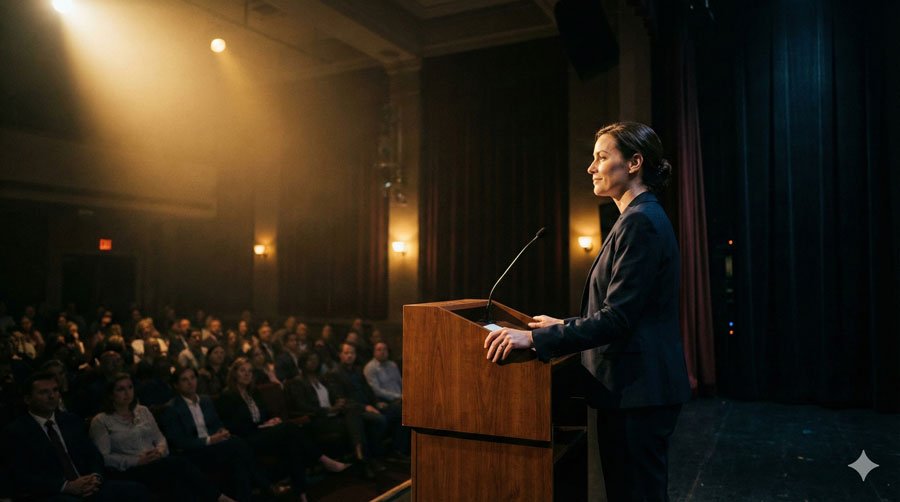
The speed at which you move and speak reveals volumes about your confidence level. A person with anxiety or low self-esteem tends to have rapid movements and speaks at a hurried pace. In contrast, someone with genuine confidence moves deliberately and speaks slowly.
Why Slowing Down Projects Authority
Confident communicators take long, purposeful pauses. They don’t rush through their words. By doing so, they communicate something powerful: “I am worth listening to, and what I’m about to say is worth waiting for.”
Practical Tips for Pacing
- Pause before answering questions. A brief silence shows you’re thoughtful and composed.
- Slow your hand gestures. Rapid, jerky movements signal anxiety. Smooth, deliberate gestures convey control.
- Walk with intention. Enter rooms slowly, make eye contact, and avoid fidgeting.
- During presentations, use strategic pauses after key points to let your message sink in.
Technique 4: Adopt Open Body Language in Every Situation
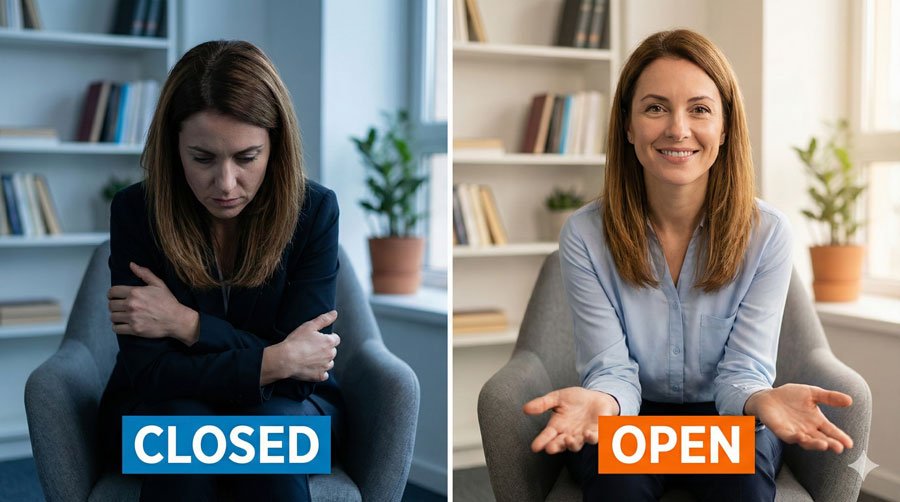
Open body language is the foundation of nonverbal confidence. It signals approachability, trustworthiness, and self-assurance to everyone around you.
Signs of Open vs. Closed Body Language
| Open Body Language | Closed Body Language |
|---|---|
| Arms relaxed at sides or using gestures | Arms crossed over chest |
| Feet shoulder-width apart | Legs tightly crossed |
| Leaning slightly forward | Leaning away or hunching |
| Steady, comfortable eye contact | Avoiding eye contact |
| Relaxed facial expression | Tense jaw or furrowed brow |
When to Use Open Body Language
Whether you’re delivering a presentation, attending a meeting, leading a seminar, or having a private conversation, open body language creates an immediate sense of trust and authority. It works in both professional and personal settings, helping you connect more effectively with others.
Technique 5: Practice Until It Becomes Natural
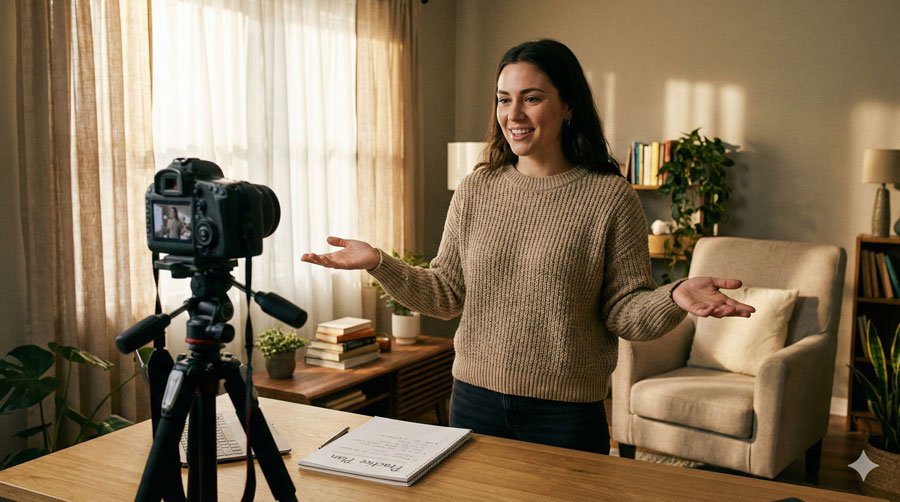
Body language mastery isn’t something you achieve overnight. Just like any skill, it requires consistent practice. Self-confidence is a skill, not an innate talent — and the more you work at it, the more natural it becomes.
How to Build Your Body Language Practice
- Start small. Focus on one technique per week — perhaps open posture in week one, controlled breathing in week two.
- Record yourself. Film your presentations or practice sessions and review your body language objectively.
- Seek feedback. Ask trusted friends or colleagues how you come across nonverbally.
- Use everyday interactions. Practice maintaining eye contact with baristas, standing tall in queues, and speaking slowly in casual conversations.
- Be patient. Transformation doesn’t happen overnight, but every small effort builds toward lasting change.
Putting It All Together: Your Body Language Action Plan

The next time you find yourself preparing for a performance — whether it’s a job interview, a business presentation, a public seminar, or even a social gathering — remember these three core tools:
- Adopt open, expansive body language to project confidence.
- Take control of your breath to calm your nerves and strengthen your voice.
- Slow down and take your time to communicate authority and composure.
These techniques aren’t just about impressing others. They’re about rewiring your own brain to genuinely feel more powerful, more capable and more at ease in any situation. Start practising today and watch as these tools become a natural, inseparable part of us.
About the Author
Lalit M. S. Adhikari is a Digital Nomad and Educator since 2009 in design education, graphic design and animation. He’s taught 500+ students and created 200+ educational articles on design topics. His teaching approach emphasizes clarity, practical application and helping learners.
Learn more about Lalit Adhikari.
This guide is regularly updated with the latest information about Adobe tools and design best practices. Last Updated: Mar 2026