

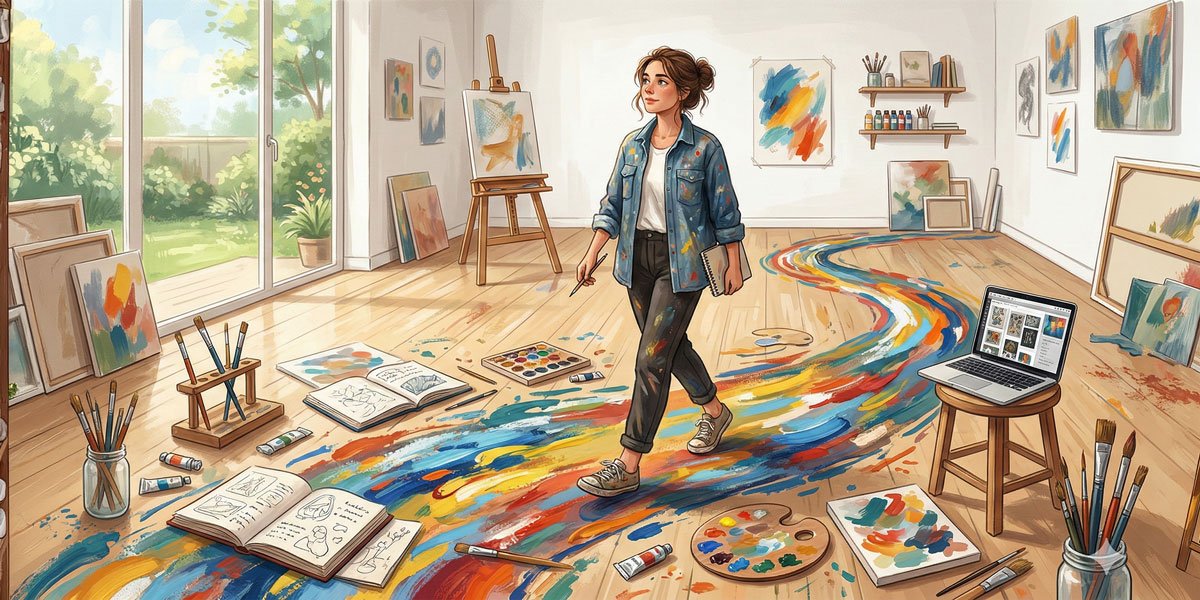
Discover why creativity is a journey, not a destination. Learn to think inside the box, build sacred spaces, embrace failure and share your work.
Have you ever sat in a meeting where your boss casually says, “I need some out-of-the-box ideas,” and your mind suddenly goes blank?
The task sounds simple, yet somehow it feels impossibly difficult, and frustration quietly creeps in.
In those moments, it’s easy to believe you’re “not creative enough,” but the real problem often isn’t a lack of creativity.
It’s the pressure of limitless possibilities and the weight of expectations that make creativity feel like a final destination instead of a living, breathing journey.
Table of Contents
What Creativity Really Means

We use the word “creativity” all the time, but rarely pause to ask what it truly means. Many dictionaries define creativity as the ability to make new things or think of new ideas.
That definition is a starting point, not the full story. Creativity is also a feeling, a subtle inner force that flows through us, shapes our thoughts and invites us to see the world differently.
Think of creativity as energy moving through time and space. It shows up in flashes of insight, quiet reflections, messy drafts and late-night experiments that no one else ever sees.
Why “Think Outside the Box” Can Backfire
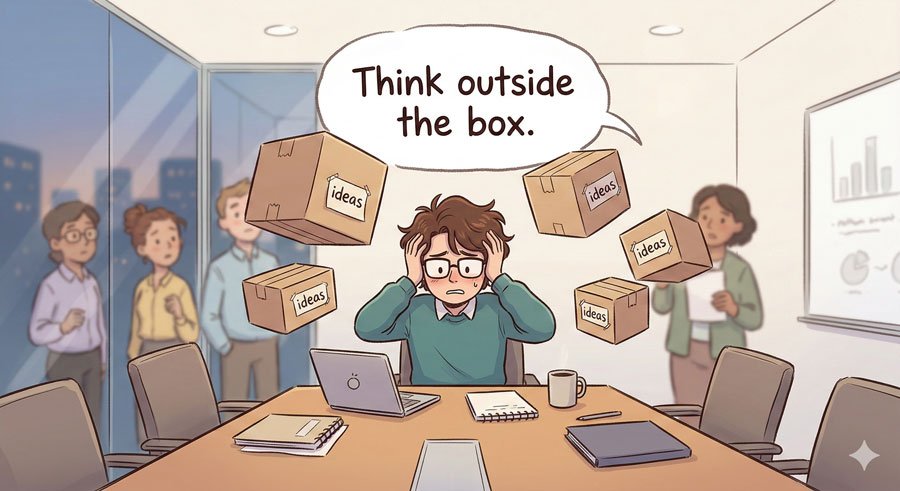
“Think outside the box” is one of the most overused phrases in creative conversations.
It sounds inspiring, but it often leaves you stuck, staring at a blank page or screen.
When you’re told to think without limits, your brain falls into a “sea of possibilities.”
With no constraints, every idea feels either too obvious, too weird, or too vague to hold on to.
Instead of unlocking originality, endless freedom can trigger anxiety and self-doubt.
You start to believe that everyone else finds it easy while you’re the only one struggling.
The Power of Thinking Inside the Box
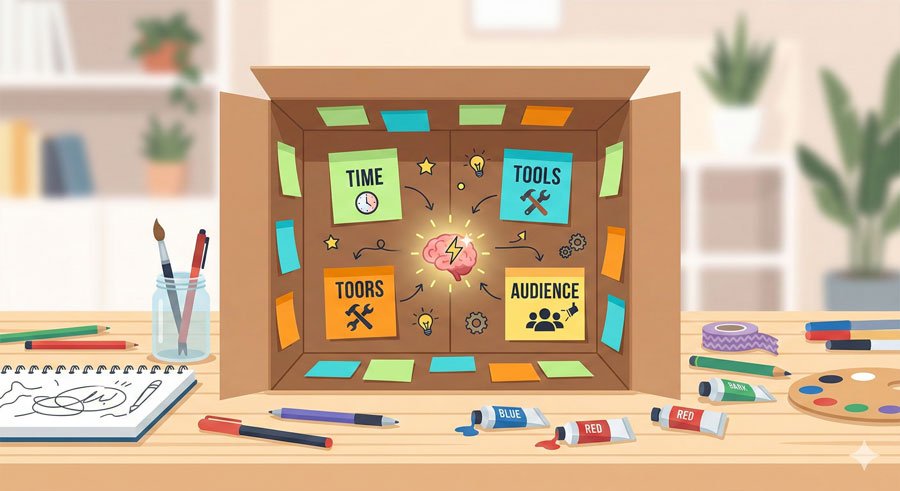
Here’s a gentle mindset shift: don’t think outside the box—think inside the box. When you embrace limitations, you give your creativity something solid to push against.
A “box” can be anything: a deadline, a specific audience, a limited colour palette, a single sentence, or a strict word count. These limits become a framework, not a prison; they act like the edges of a canvas that help you decide where to paint.
Instead of drowning in endless options, you step into a small boat—your chosen constraints—and sail in a clear direction.
Within that smaller space, your mind starts to make sharper, more original connections, because it’s forced to work with what it has, not everything it could possibly have.
Practical Ways to Create Your “Box”
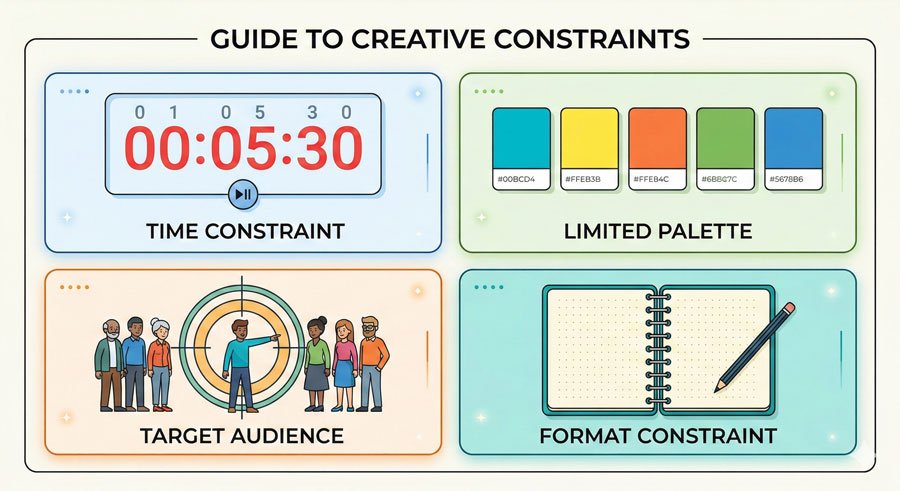
You can design your own creative box by choosing intentional limitations, such as:
- Time: “I’ll brainstorm for 10 minutes without stopping.”
- Tools: “I’ll create this using only pencil and paper.”
- Format: “I’ll write this idea as a short story instead of a list.”
- Audience: “I’ll explain this concept to a 12-year-old.”
These simple decisions transform the abstract idea of “be creative” into a clear, doable next step. You no longer wait for inspiration to hit—you build conditions that naturally invite it in.
Creativity Needs a Sacred Space
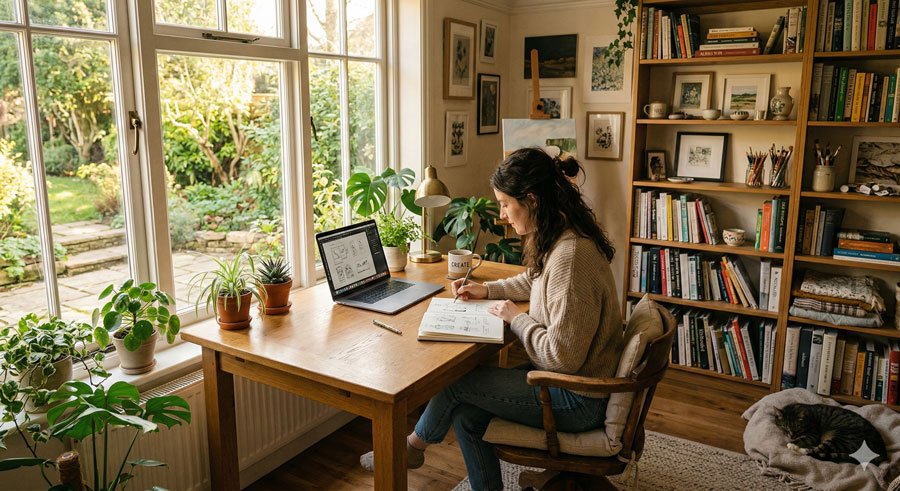
Every creative process begins with a thought, but that thought needs a safe place to land.
Your environment can either shame your ideas into silence or gently encourage them to grow.
A sacred creative space doesn’t have to be fancy. It just needs to feel emotionally safe—free from harsh judgment, noise, and constant interruptions.
In that kind of space, fragile ideas can emerge without fear. Like a caterpillar quietly turning into a butterfly, a simple thought can slowly transform into something beautiful when given time and protection.
Examples of Sacred Creative Spaces
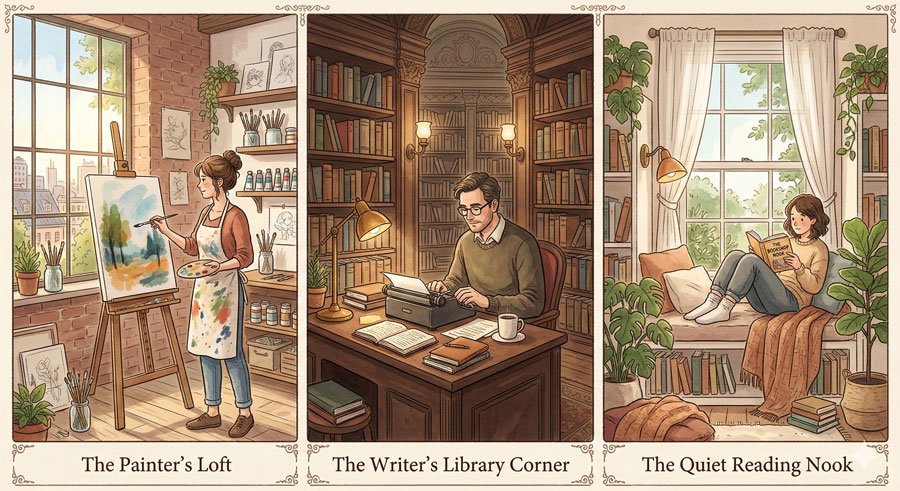
Sacred spaces look different for everyone:
- A painter’s loft or studio where canvases, brushes, and colors live freely.
- A quiet library where the love of words fills the air and silence feels respectful, not empty.
- A small corner of your home with a desk, a plant, and a notebook that exists purely for your ideas.
What they all share is a sense of respect—for the work, for the process, and for the person creating. Your sacred space is where your thoughts are allowed to be vulnerable, unfinished and honest.
Playing With Ideas: From Thought to Form

Once a creative thought appears, your job isn’t to protect it forever. Your job is to play with it—stretch it, twist it, test it and see what it can become.
This stage is messy by design. You write, erase, sketch, redraw, rewrite and rearrange; you’re sculpting the raw material of your idea into something more tangible.
As you shape it, your creation slowly starts to breathe on its own. It becomes less of a thought in your head and more of a real thing in the world, with its own presence and impact.
Embracing the F‑Word: Failure
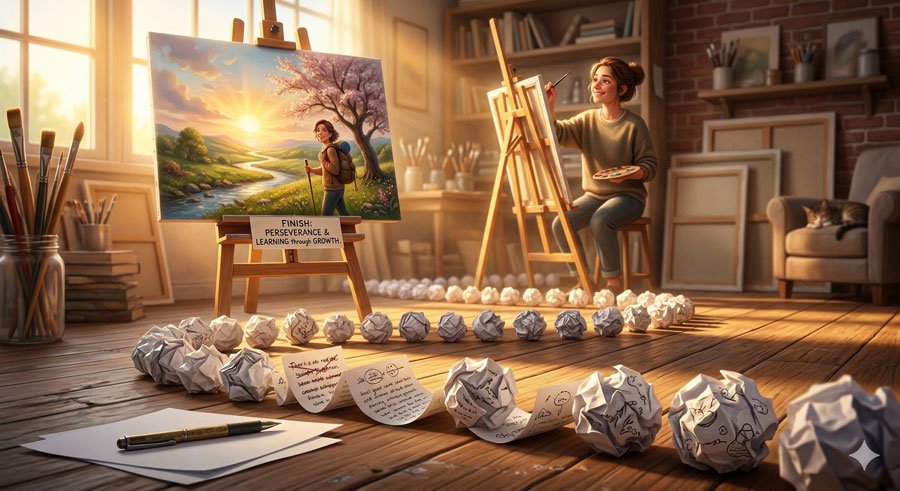
No one learns to walk on the day they are born. Yet somehow we expect ourselves to “get it right” the first time we try something new.
Creativity needs failure. It needs you to get messy, make mistakes, fall down, and then get back up with a little more wisdom each time.
I often tell my students: “The kick of failure teaches you a thousand times more than the trophy of victory.” Every misstep shows you what doesn’t work, which quietly points you closer to what does.
When you stop fearing failure, you stop treating your ideas like fragile glass. You start treating them like clay—something you can keep reshaping until it finally feels true.
Creativity Wants to Be Shared

The final step in the creative journey is sharing. Keeping your work hidden forever keeps its impact small, both for you and for others.
When you share your creations—whether it’s a painting, a blog post, a design, a song, or a talk—you give them permission to find their own sacred spaces in other people’s lives.
Your work might comfort someone, challenge someone, or inspire another person to start their own creative journey.
Nothing is completely original; almost everything we make is remixed, recycled, and filtered through our unique experiences.
That’s not a weakness—it’s the point. Your perspective is the filter that turns “already existing” ideas into something only you could bring into the world.
Walking the Creative Path, One Step at a Time

Creativity isn’t a finish line you cross once and for all. It’s a journey made of small, consistent steps: choosing your box, honouring your space, playing with ideas, embracing failure and sharing what you create.
The next time someone asks you to “think outside the box,” smile quietly to yourself. You now know the secret: meaningful creativity often begins inside the box—with thoughtful limits, a safe space and a willingness to keep going, even when it feels hard.
If you treat creativity as a journey instead of a destination, you’ll stop waiting to feel “ready” and simply start walking. And that’s where the real magic begins.
About the Author
Lalit M. S. Adhikari is a Digital Nomad and Educator since 2009 in design education, graphic design and animation. He’s taught 500+ students and created 200+ educational articles on design topics. His teaching approach emphasizes clarity, practical application and helping learners.
Learn more about Lalit Adhikari.
This guide is regularly updated with the latest information about Adobe tools and design best practices. Last Updated: Mar 2026