

This post is the third in a series inspired by Austin Kleon’s book Steal Like an Artist: 10 Things Nobody Told You About Being Creative (Workman Publishing, 2012). The idea of making the work you want to see, the Eno and Cox examples and the “all fiction is fan fiction” idea come from his work and I have credited them where they appear. The design and animation projects, classroom exercises and challenge are my own.
My name is Lalit Adhikari and we are at LTY. Let’s begin!
Table of Contents
Why “Write What You Know” Isn’t Always the Best Advice

You’ve probably heard the classic advice: “write what you know.” It’s well meant, but followed too literally it can leave you with small, cautious work. If you only use your own day-to-day experience, it’s easy to feel that nothing you know is exciting enough to make.
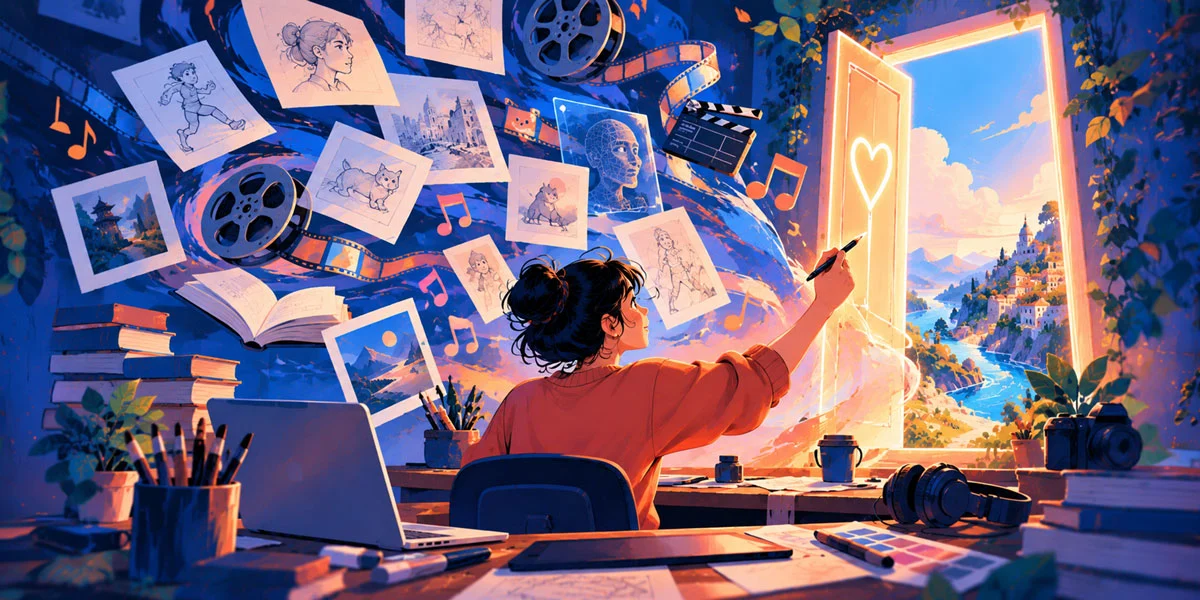
Think back to when you first fell in love with a cartoon, a game or a film. You didn’t wait until you were an expert. You drew your own characters, invented the next episode and imagined levels the creators never built. You made the thing you wanted more of.
That instinct is the real advice, and it is the heart of a chapter in Austin Kleon’s Steal Like an Artist: make the work you like best, the work you want to see. The author Toni Morrison is widely quoted as saying something similar, that if there’s a book you want to read that hasn’t been written yet, you must write it. Musician and producer Brian Eno described his own approach as making music he wanted to hear that didn’t exist yet (as cited in Kleon).
So here is the better advice: make what you love. Make the thing you wish already existed.
The Real Question: What Do You Want to See?
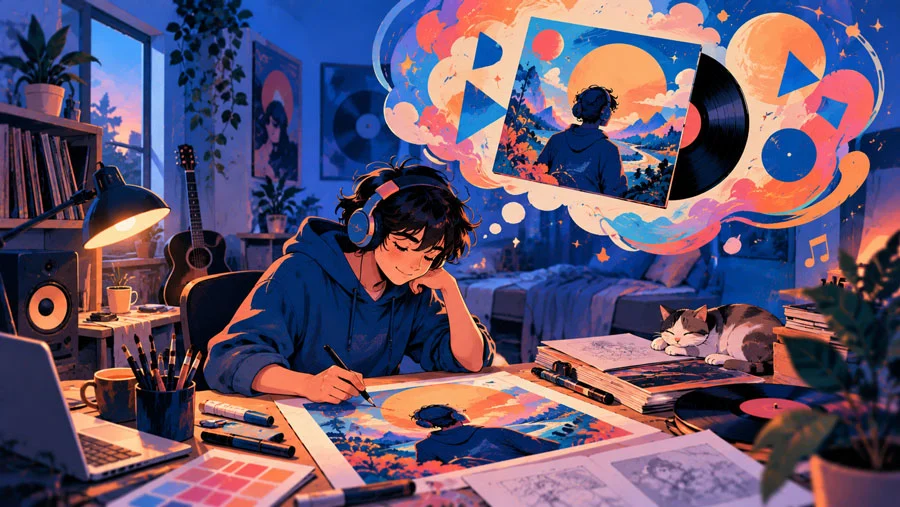
This small shift changes everything. Instead of asking “What do I know?”, ask “What do I want to see? What do I wish existed?” Deerhunter’s Bradford Cox has described a childhood game of imagining and recording his own versions of albums by bands he loved before the real ones were released, then comparing them with the real thing afterwards (as cited in Kleon). It was a way of studying his heroes by trying to predict them.
When we love a piece of work, we crave more of it. We want sequels, spin-offs and alternate versions. Instead of waiting for someone else to make them, we can make them ourselves.
Where “Write What You Know” Still Helps
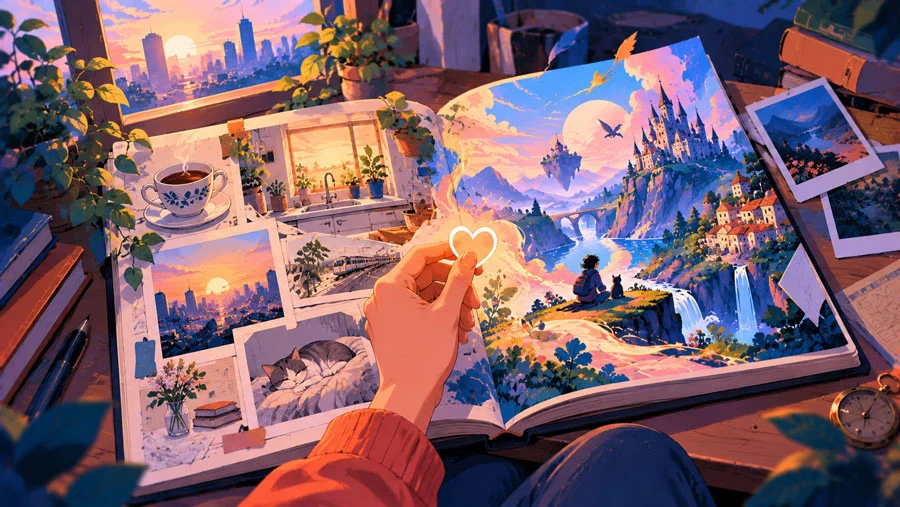
To be fair, the old advice has a useful core. Your experience gives your work emotional truth: the details only you would notice, like how your grandmother’s kitchen smelled or how your city sounds at six in the morning.
The strongest approach combines both. Choose a subject you love, then bring what you know to it. A fantasy story feels real when its characters have real feelings. A film poster feels fresh when its colors come from a street you actually walk through.
The Power of Fan Fiction and Fan Art
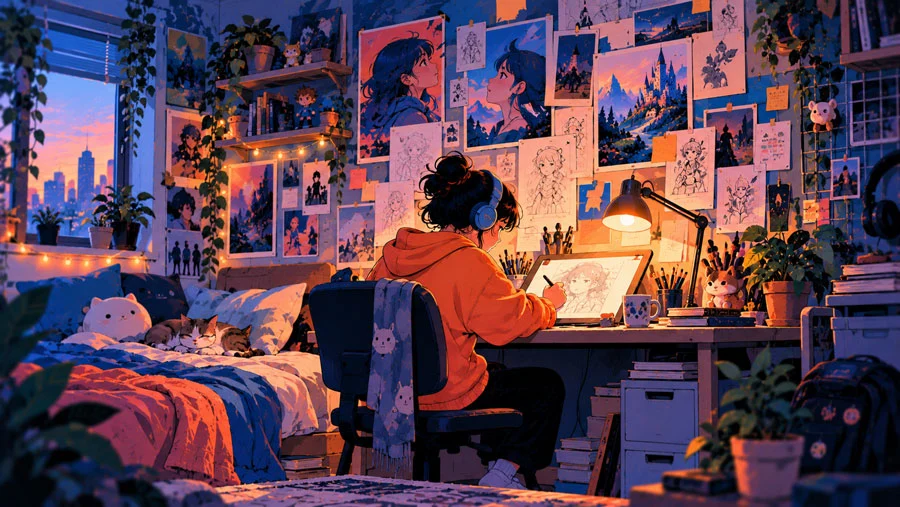
Many people dismiss fan work, but it is one of the oldest ways to learn. Writers practice character, plot and dialogue by working in worlds they already love. Artists redraw favorite characters to learn anatomy and style. Animators recreate favorite scenes to study timing.
A related idea in Kleon’s book is that all fiction is, in a sense, fan fiction. Every story builds on earlier stories, and every character is shaped by characters we’ve met. The difference between fan work and “original” work is often just acknowledged inspiration versus unacknowledged influence.
Creative Lineage: All Stories Build on Stories

Today’s stories are remixes of older ones. Star Wars drew on samurai films, mythology and classic adventure serials. Harry Potter builds on boarding school stories and long magical traditions. The Marvel films adapt comic book characters who have been evolving for decades.
What makes these works significant isn’t that they invented something from nothing. They recombined existing themes, archetypes and structures in fresh ways. They took what they loved and made it their own. If you want to make something inspired by your favorite film or book, you’re not wasting your time. You’re taking part in a long creative tradition.
From Fan Work to Original Work
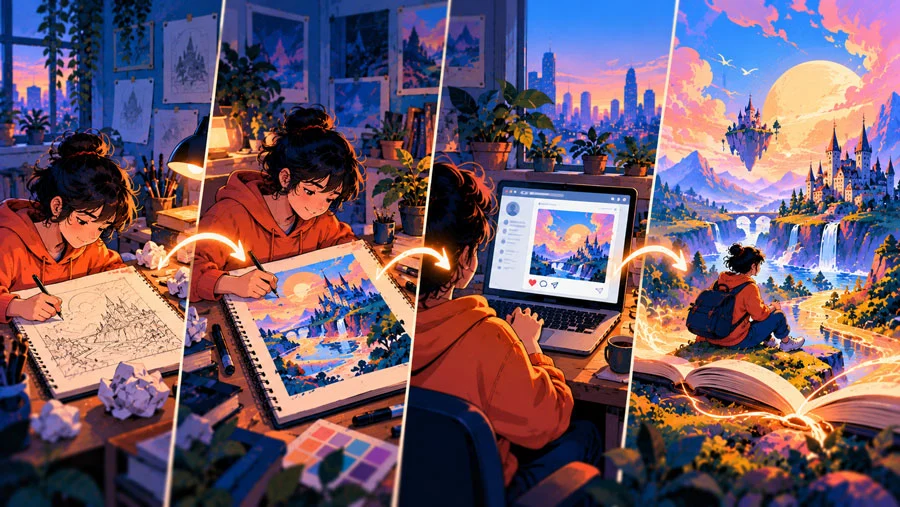
Many writers began by working in worlds created by others. E. L. James’s Fifty Shades books began as fan fiction based on Twilight, and Cassandra Clare wrote popular Harry Potter fan fiction before launching her own original series. In both cases the published books were reworked as original stories.
The move from fan work to original work isn’t a rejection of where you started. It’s an evolution. You carry over the voice you developed and the techniques you mastered, and you apply them to worlds of your own.
A Note on Rights and Respect
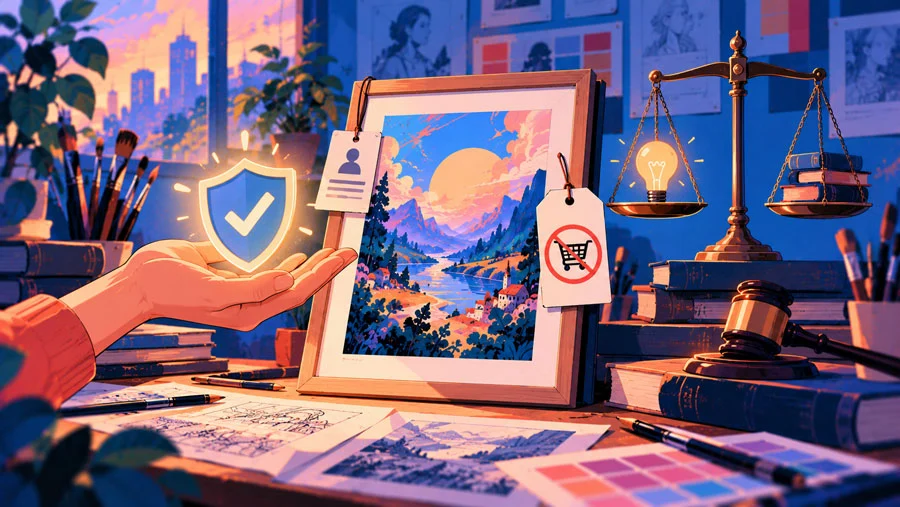
Fan work sits in a gray area of copyright law that varies by country, and this isn’t legal advice. A few habits keep you on safer ground:
- Treat fan work as practice or a personal project, not a product to sell.
- Credit the original creators and label your work as unofficial or a concept.
- Don’t put official logos, characters or trademarks on items you sell.
- When a piece gets strong, transform it into something original that is fully yours.
Passion Projects for Designers and Animators

Everything above applies directly to design. If a writer can write the sequel, a designer can make the poster that should have existed. Here are passion project ideas matched to the tools I teach:
| Photoshop | An alternate movie poster for a film you love, or a poster for a sequel that doesn’t exist |
| Illustrator | A logo and icon set for a fictional brand from your favorite game or show |
| InDesign | A magazine spread or zine about a band, sport or hobby you’re obsessed with |
| CorelDraw | Packaging design for an imaginary product you wish you could buy |
| 2D animation | A 10-second scene of a favorite character doing something the original never showed |
| Digital marketing | A mock social campaign for a dream brand, with a content calendar and three sample posts |
Classroom Example: The “Dream Brief”

In my classes I use an exercise I call the Dream Brief. Instead of handing students a client brief, I ask them to write one for themselves. It must begin with a single sentence: “I wish this existed.” It might be a poster series for a film they love, a redesigned app screen for a game they play, or a title sequence for a story they’d like to tell.
The rules are simple:
- Start with one sentence that begins “I wish this existed.”
- Collect three references and credit them.
- Finish within one week.
- Present the work in class and explain what you borrowed and what you changed.
In my experience, students tend to put in more effort on a Dream Brief than on an assigned one, because the motivation is their own. They also become much better at explaining their influences, which is exactly the habit that separates inspiration from imitation.
From Passion Project to Portfolio
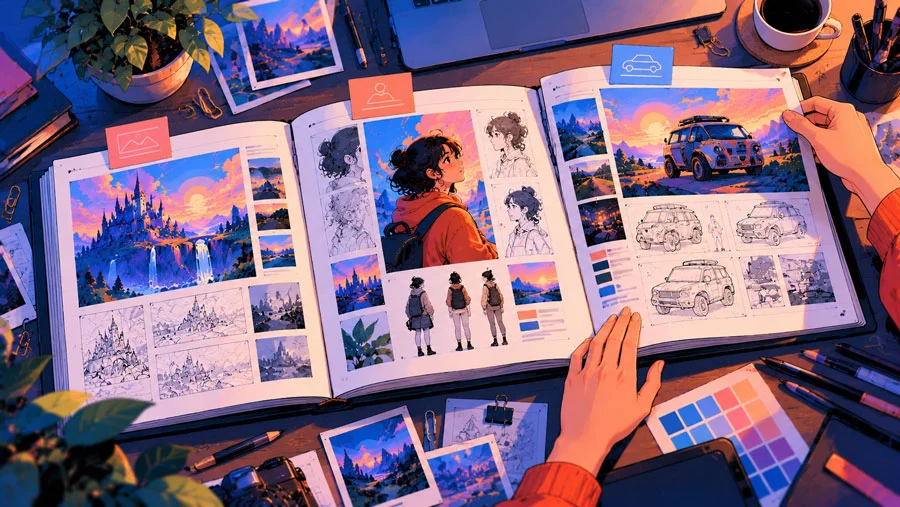
Passion projects can be some of the strongest pieces in a portfolio, because they show taste, initiative and process. When you add one:
- Label it clearly as a personal or concept project.
- Show the process: references, sketches and iterations, not just the final image.
- Credit your inspirations and say what you changed.
- Avoid presenting it as real client work.
A client or employer can see your taste and drive far more clearly in a project you were excited about than in one you completed only because you had to.
Reverse-Engineer Your Creative Heroes
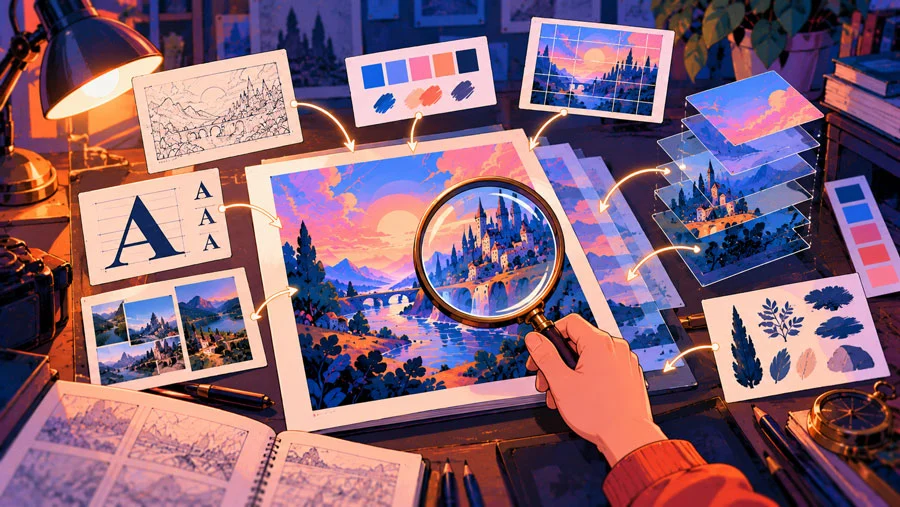
Think about a piece of work you love. What exactly did you love about it? Now ask what’s missing. What didn’t the creators have the time or budget to explore? What would they make today? This isn’t criticism. It’s the first step toward your own project. Kleon suggests a version of this in his book: imagine your favorite makers collaborating with you in charge of the crew, and make whatever they would make.
What Would Your Favourite Creators Make Together?
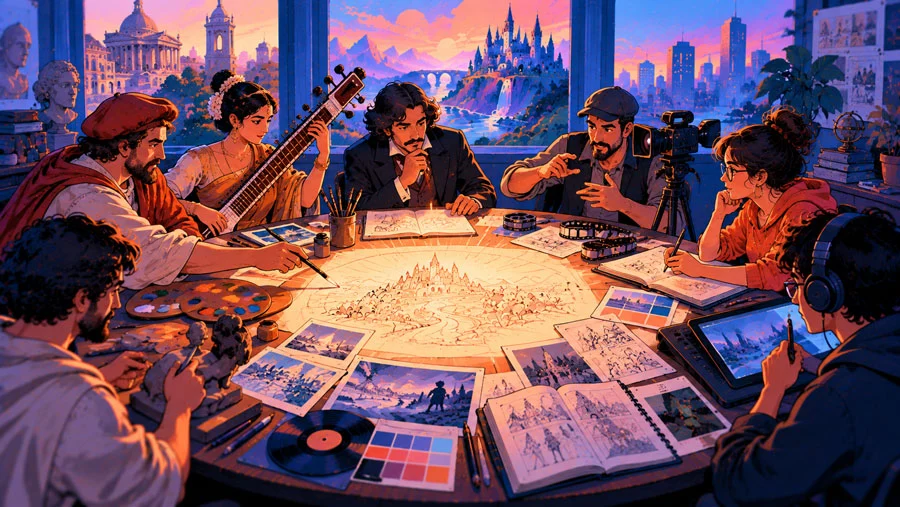
This is a generative exercise. Picture your favorite writers in a room creating a story together, or musicians and artists from different eras collaborating on one project. You don’t need the real answer. You’re combining influences and seeing what emerges.
Here is a design version I like. Fold a sheet of paper in half. On the left, list five visual traits of one hero, such as bold grids, limited color and heavy sans-serif type. On the right, list five traits of a very different hero, such as hand-drawn lines, soft gradients and playful lettering. Then sketch a poster that uses three traits from each side. The result won’t look like either hero, and that’s the point.
Asking the Right Questions to Guide Your Work

The questions that guide your creative work aren’t “What do I know?” or “What’s realistic?” Try these instead:
- What do I wish existed?
- What would make a better version of something I already love?
- What world do I want to spend time in?
- What would happen if I combined one element from this work with one from that one?
- What would I design if nobody could say no?
These questions point you toward work that comes from real interest rather than obligation or convention.
Your Creative Manifesto: Make the Work You Wish Existed
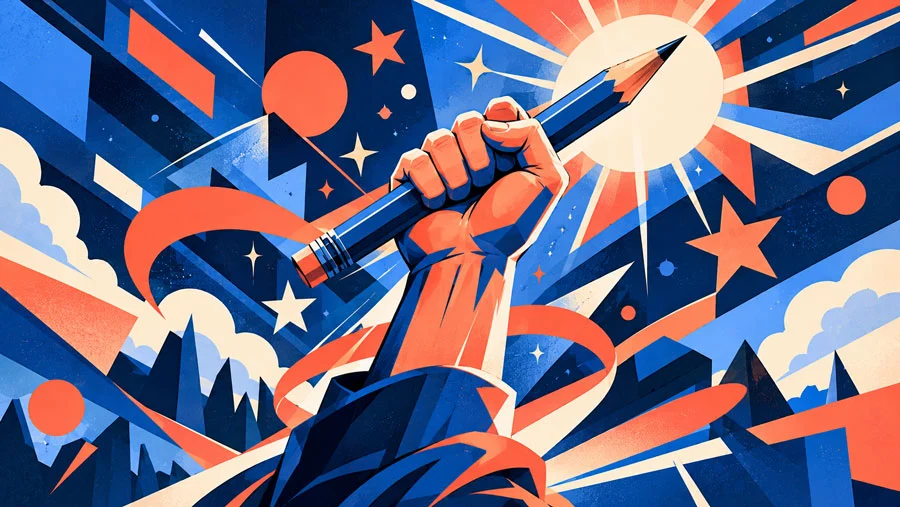
Kleon sums up the idea in a short manifesto: make the art you want to see, play the music you want to hear, write the books you want to read, and do the work you want to see done (paraphrased from Steal Like an Artist). Here is my version for design students:
Design the poster you wish hung on your wall. Animate the scene you wish you’d seen. Build the brand you wish you could buy from. Make the portfolio piece you’d be proud to explain.
This isn’t selfish, and it doesn’t mean ignoring your audience. Work that comes from genuine interest tends to carry an energy that other people can feel. Make it for yourself first, then share it, and the people who connect with it will find you. You can’t please everyone, and trying to usually produces work that nobody loves.
Start today. Not what you should make, and not what is commercially safe. What do you actually want to make?
Your 7-Day Passion Project Challenge
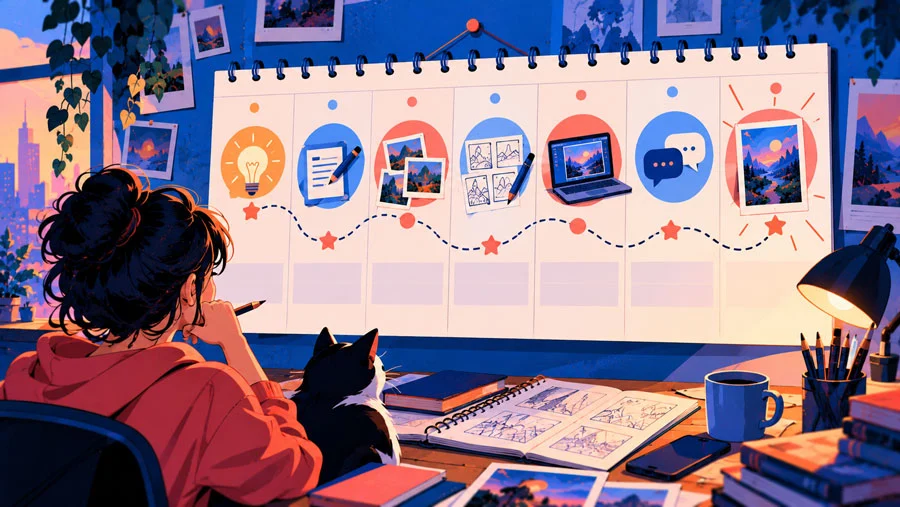
- Day 1: Write 10 sentences that begin “I wish this existed.”
- Day 2: Choose one and write a one-paragraph brief for it.
- Day 3: Collect five references and note what you’ll borrow from each.
- Day 4: Sketch six thumbnails on paper.
- Day 5: Build the strongest thumbnail in your software of choice.
- Day 6: Refine it and get feedback from one person.
- Day 7: Publish it with credits and a short note on what you borrowed and what you changed.
Frequently Asked Questions

Is “write what you know” bad advice?
Not bad, just incomplete. Your experience adds emotional truth, but it works best when it’s applied to a subject you genuinely love.
Is fan fiction or fan art good practice?
Yes. Working in a world you already love lets you focus on craft: character, composition, timing and style. Keep it non-commercial and credit the original.
Can I put fan art in my portfolio?
Many designers do, as a clearly labeled personal or concept project with credit to the source. Avoid using it commercially, and check the rules that apply where you live.
How do I choose a passion project?
Start with “I wish this existed” and pick the idea you can’t stop thinking about.
Conclusion: Your Creative Work Is Waiting

Your creative work isn’t waiting for perfect credentials, the right connections or a clear commercial path. It is waiting for you to ask better questions and to start.
The stories you want to tell, the designs you want to make and the work you want to see in the world are all legitimate starting points. Begin with what you love. Begin with what you wish existed. That is where your best work lives.
Sources & Further Reading
- Austin Kleon, Steal Like an Artist: 10 Things Nobody Told You About Being Creative (Workman Publishing, 2012)
Anecdotes and quotations attributed to Brian Eno and Bradford Cox are as cited in Kleon’s book. The Toni Morrison idea is widely quoted and paraphrased here.
Continue Reading
Previous: Blog Post 2, “From Copying to Creating.” Next: Blog Post 4 in this series.
About the Author
Lalit M. S. Adhikari is a Digital Nomad and Educator since 2009 in design education, graphic design and animation. He’s taught 500+ students and created 200+ educational articles on design topics. His teaching approach emphasizes clarity, practical application and helping learners.
Learn more about Lalit Adhikari.
Last Updated: Oct 2026