

This post is the second in a series inspired by Austin Kleon’s book Steal Like an Artist: 10 Things Nobody Told You About Being Creative (Workman Publishing, 2012). Several ideas and quotations here, including copying your heroes, the “failure to copy” idea and the analog and digital workspace, come from his work and I have credited them where they appear. The classroom examples, exercises and commentary are my own, from teaching design and animation.
My name is Lalit Adhikari and we are at LTY. Let’s begin!
Table of Contents
Why Copying Your Heroes Actually Makes You Better
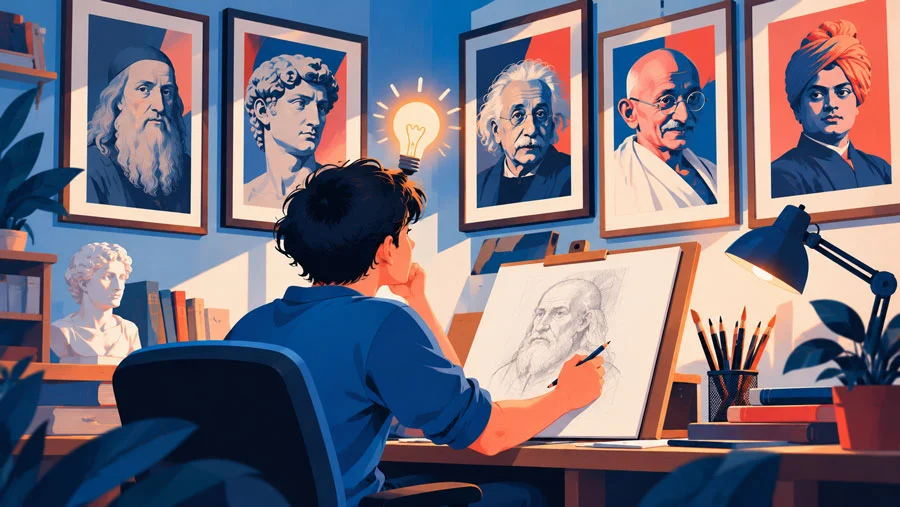
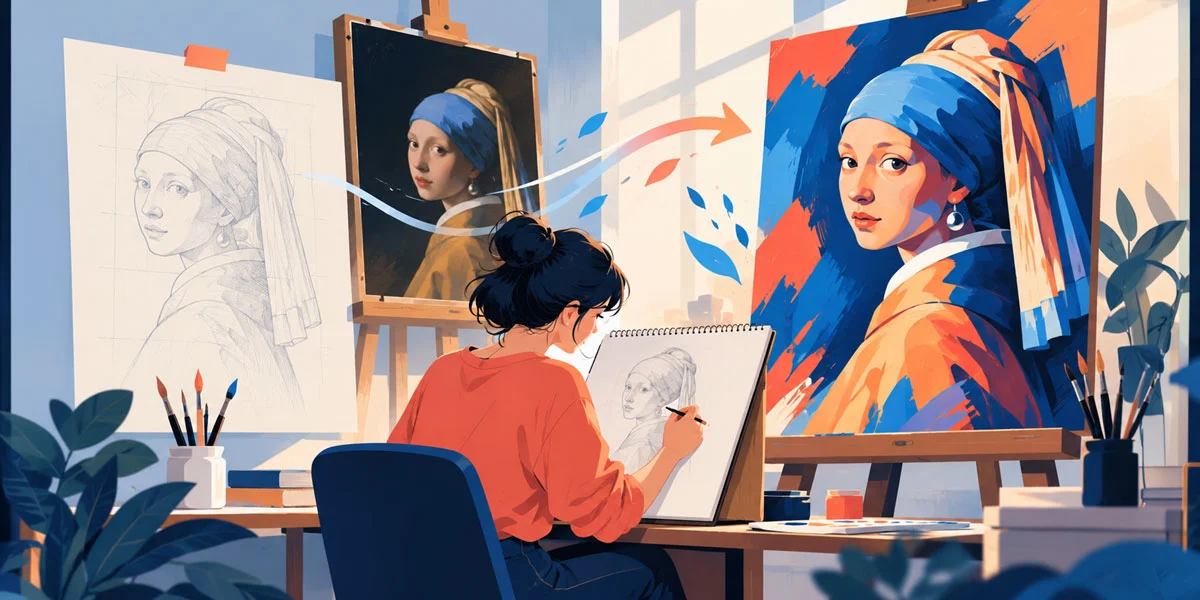
The path to an authentic creative voice doesn’t begin with trying to be original. It begins with copying. That may sound backwards, but it’s how nearly every master learned their craft, from painters to musicians to writers. Learning through imitation isn’t cheating. It’s a basic part of how people build skill.
We learn to write by copying letters. Musicians learn by playing scales and other people’s songs. Painters learn by reproducing the work of earlier painters. These aren’t shortcuts. They’re the training ground.
Even the Beatles began as a cover band. Paul McCartney has recalled that they emulated Buddy Holly, Little Richard, Jerry Lee Lewis and Elvis and that he and John Lennon began writing their own songs partly so other bands couldn’t play the same set (as cited in Austin Kleon’s Steal Like an Artist).
The painter Salvador Dalí is credited with a line that sums it up: “Those who do not want to imitate anything, produce nothing.” (As cited in Kleon.) Imitation isn’t the opposite of creation. It’s where creation starts.
The Mechanics of Learning Through Imitation
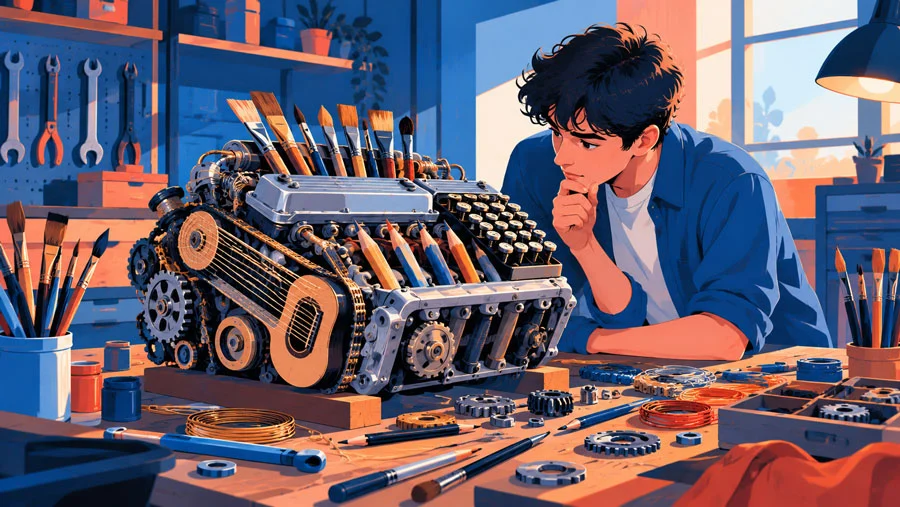
When you copy a hero, you’re reverse-engineering their work, like a mechanic taking an engine apart to see how it runs. You’re not trying to become that person. You’re trying to understand their process, their decisions and the problems they were solving.
Here is the key distinction: plagiarism passes someone else’s work off as yours, while copying for study is reverse-engineering. When you copy to learn, you’re open about it. You’re learning in public and you say where your inspiration comes from.
The songwriter Nick Lowe has described starting out by rewriting his heroes’ catalogs, but the advice is to widen the circle. A line often attributed to the writer Wilson Mizner makes the point: copy from one author and it’s plagiarism, copy from many and it’s research.
Cartoonist Gary Panter put it more playfully: borrow from one person and you become their imitator, but borrow from a hundred and people call you original (both as cited in Kleon).
When you draw from many sources, each one shapes your work in a different way, and the combination feels new.
Historical Examples: The Beatles, Salvador Dalí and Kobe Bryant
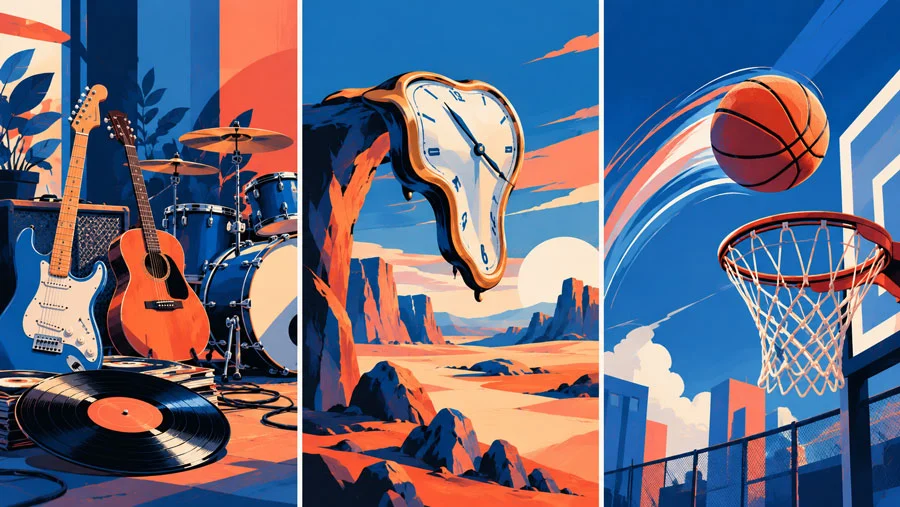
The Beatles are the clearest example of learning through imitation and then moving past it. They played American rock and roll, rhythm and blues and pop covers long before they found their own sound. By studying the structure, emotion and technique of those songs and making them their own, they eventually created music that influenced generations.
Dalí, famous for his dreamlike surrealism, trained in classical painting technique before developing his own style. The lesson is that you need to understand the rules well before you can bend them effectively.
Basketball star Kobe Bryant was open about borrowing from the players he admired. He has been quoted as saying he “stole” moves from the greats and tried to do them proud (as cited in Kleon). Because his body was different from the players he studied, he couldn’t copy every move exactly, so he adapted them. That adaptation became part of his own style.
Understanding Plagiarism vs. Creative Borrowing
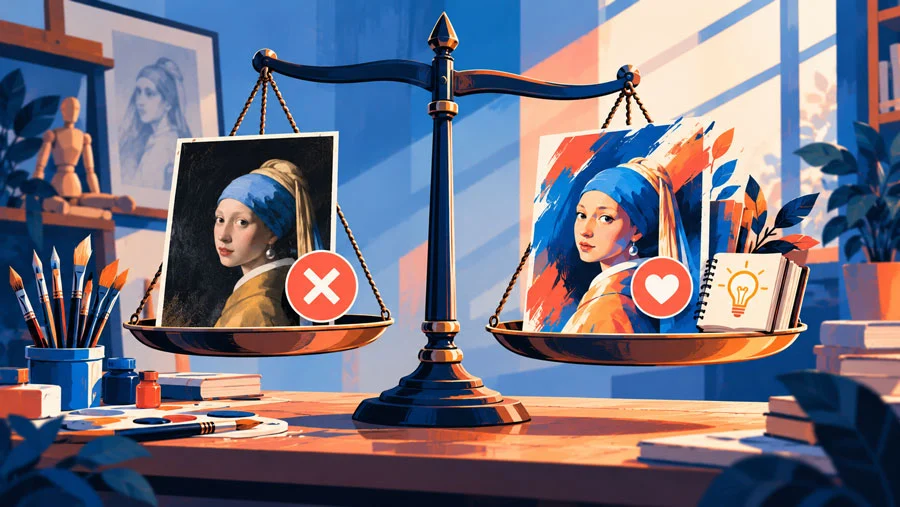
The line between plagiarism and creative borrowing comes down to attribution, transformation and intent. Plagiarism takes credit for someone else’s work. It’s dishonest and it violates the original creator’s rights.
Creative borrowing means learning openly from someone’s work, acknowledging the source, and transforming the material through your own perspective. The process is transparent, the sources are honored and the result is something new.
Filmmaker Francis Ford Coppola once told young creators, in effect, to steal from their elders at first, put what they take into their own voice and wait for the day when someone steals from them (as cited in Kleon). That is the lineage of creativity: learn, transform and eventually be learned from.
Moving From Imitation to Emulation
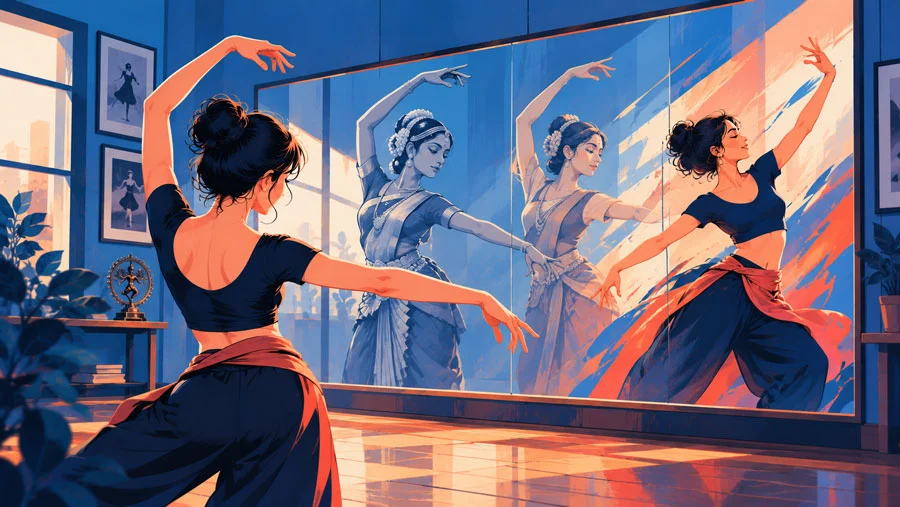
At some point you have to move from imitating your heroes to emulating them. Imitation is copying. Emulation is imitation that goes one step further and breaks through into something of your own.
Remember Bryant’s body not matching his heroes’. The gap forced him to adapt. The same pattern shows up in comedy. In his 2011 commencement speech at Dartmouth, Conan O’Brien described how Johnny Carson tried to be Jack Benny and became Johnny Carson, David Letterman tried to be Carson and became Letterman and O’Brien tried to be Letterman and became himself.
His point was that falling short of our ideal is what ends up defining us.
Examine Where You Fall Short
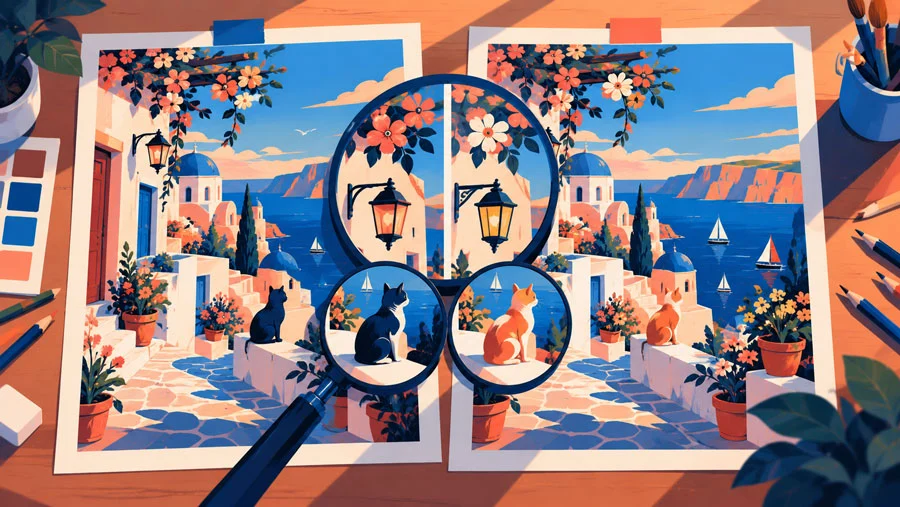
Here is the liberating part: human beings can’t make perfect copies. You can’t be your hero because you’re not them. You have different experiences, strengths, weaknesses and perspectives and the places where your version differs from theirs are where your own voice lives.
So the work is to examine where you fall short. What’s different about your version? What’s in there that makes it yours? That is what you should amplify.
If you admire a writer’s structure but can’t capture their emotional depth, you’ll naturally find an approach that plays to your strengths. If you love a painter’s palette but handle form differently, you’ll develop a technique that reflects how you see. Those gaps aren’t failures. They’re where your voice starts.
How “Failure to Copy Perfectly” Reveals Your Unique Style
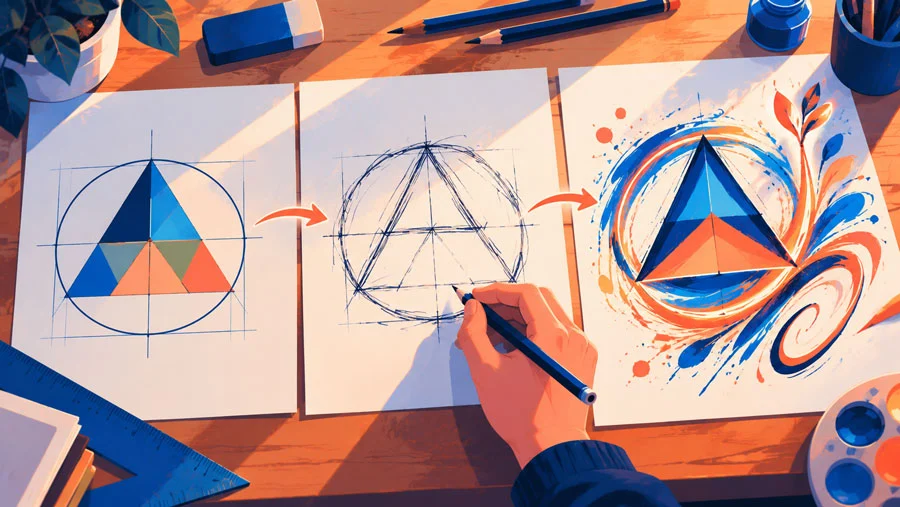
This isn’t failure in the usual sense. It’s natural variation. When you try to copy something complex, you inevitably add your own quirks, interpretations and habits. Ironically, the more closely you study your heroes, the clearer your own individuality becomes.
Merely imitating your heroes doesn’t honor them. Transforming what you learned from them into something only you could make does.
Try It: The Overlay Exercise

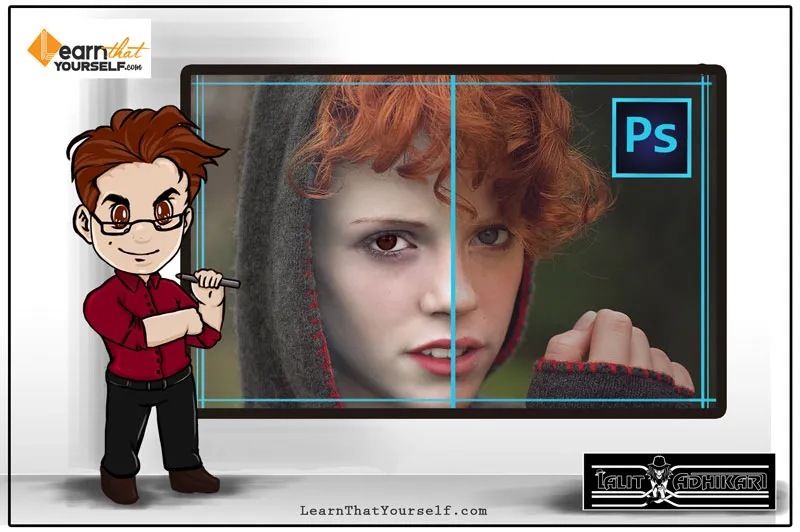
Here is an exercise I use in my Photoshop classes. Students choose a poster or social media graphic they admire and rebuild it as closely as they can, matching the layout, type and colors. When they finish, they place the original over their version at 50% opacity and look at where the two don’t line up. Maybe the headline is larger, the spacing is looser, the colors are warmer or the crop is different.
I ask them to list three differences and decide which ones they would keep on purpose. Those differences aren’t mistakes. They are early signs of the student’s own taste, and the next project starts from those choices.
You can try it yourself:
- Choose a design you admire and rebuild it as closely as you can.
- Place the original over your version at 50% opacity.
- List the three biggest differences.
- Circle the one you like best.
- Start a new design on your own subject and build it around that difference.
The Role of Your Body and Physical Practice
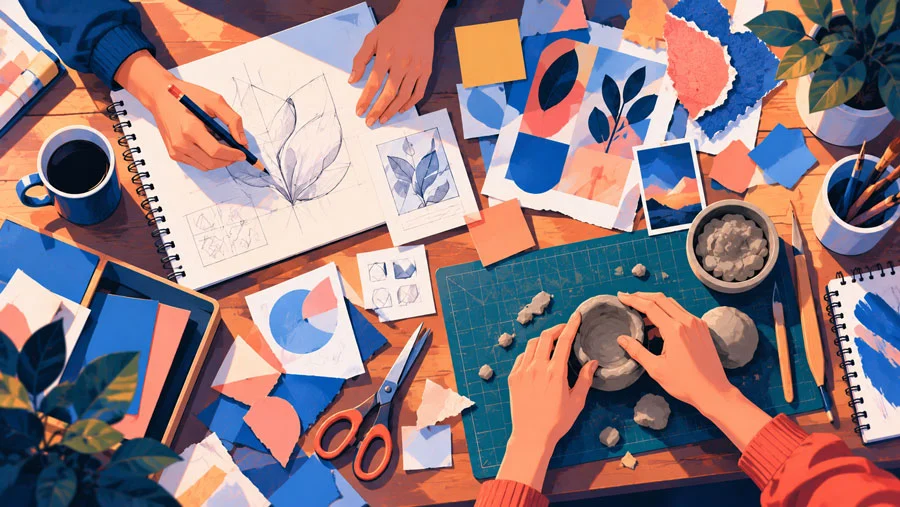
We tend to think of creative work as something that happens in the head, but it’s more physical than that. The act of making is tied to the thinking. When you’re learning through imitation, hands-on practice matters.
The cartoonist Lynda Barry is quoted as reminding creators, “don’t forget to use your digits” (as cited in Kleon). Your hands were the original digital devices.
Why Analog Work Matters More Than You Think

Computers are powerful, but they can make work feel abstract. Stanley Donwood, who has made album artwork for Radiohead, has said that a computer puts a sheet of glass between you and what you’re making and that you barely touch anything you’re working on until you print it (as cited in Kleon).
Notice how still people are at a computer. Physical work such as drawing, painting, sculpting or writing by hand uses the whole body and movement helps thinking. Watch a great musician or a great speaker and you’ll see that the body is part of the performance.
The connection runs both ways: the body can nudge the brain just as the brain directs the body. When you’re stuck, go through the motions. Pick up a guitar, rearrange sticky notes, knead some clay or sketch badly on purpose. Starting the motion often starts the thinking.
Building Your Creative Workspace: Analog vs. Digital

The two-station idea comes from Austin Kleon’s Steal Like an Artist. Here is how I adapt it. A good creative setup respects both hands-on making and digital tools and if you have the space, it helps to think of it as two stations.
The analog station is for starting. Keep paper, pencils, markers, sticky notes, scrap printouts, scissors and tape within reach, and keep screens out. Let sketches, scraps and failed attempts pile up. A messy desk is a record of your thinking.
The digital station is for finishing. This is where your computer, drawing tablet and scanner live, and where you refine, edit and publish.
The loop works like this: begin on paper, move to the screen to refine and finish and when you run out of steam, go back to paper to play again. Short on space? A notebook and a laptop on the same desk will do, as long as you treat them as two separate modes.
Analog Before Digital in My Classroom
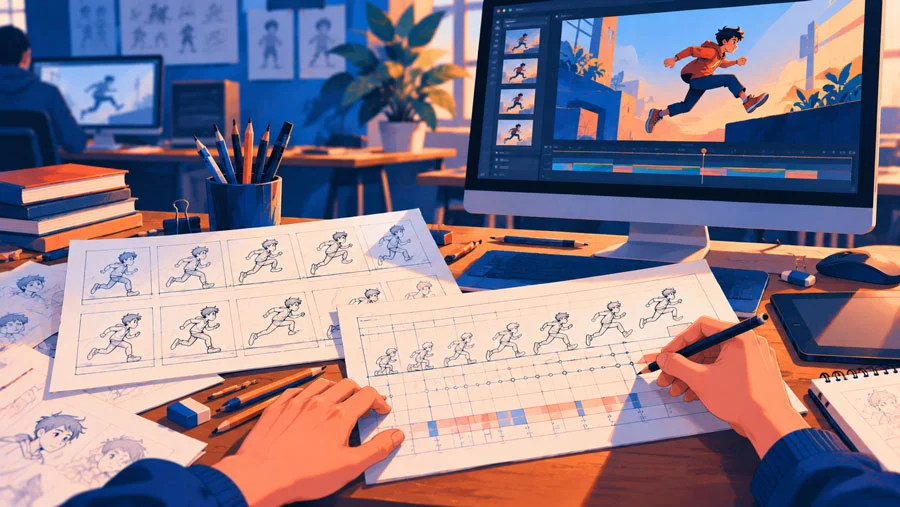
I apply this loop across the subjects I teach:
- Graphic design: students sketch at least six thumbnail layouts on paper before opening Illustrator or InDesign. Weak ideas are discarded in minutes instead of hours.
- 2D animation: students draw key poses and a rough timing chart on paper before animating in software.
- Digital marketing: students sketch a social post or landing page layout on paper, then build it in Photoshop or Canva.
The paper stage is quick, low-pressure and surprisingly revealing. By the time students sit down at the computer, they already know what they’re building.
Your 5-Day Copy-to-Create Challenge

Put the ideas into practice with a simple five-day exercise:
- Day 1: Choose one piece by a hero that you love.
- Day 2: Recreate it by hand, by tracing, sketching or playing it, as closely as you can.
- Day 3: Compare your version with the original and list where they differ.
- Day 4: Pick the difference you like best and exaggerate it.
- Day 5: Make a new piece on your own subject using that difference and credit your inspiration.
Frequently Asked Questions

Is copying someone else’s work wrong?
Copying for private study is a long-established way to learn. Problems begin when you publish or sell someone’s work as your own, or reproduce it closely without permission. Copyright rules vary by country, so when you share practice work, credit the original and make clear it’s a study.
What is the difference between imitation and emulation?
Imitation is copying what someone did. Emulation goes further: you use what you learned to make something that reflects your own choices.
How do I find my own style as a designer?
Study several creators you admire, copy their work to understand it, then notice where your results differ. Those differences are the beginning of your style.
Why does drawing by hand help creativity?
Hand work is quick, low-pressure and physical. It lets you explore many ideas before committing to one on screen.
Conclusion: Embrace the Imitation-to-Innovation Journey

The path from copying to creating isn’t a shortcut. It’s the long route that every master has walked. Your job right now is to identify your heroes, study them, analyse their techniques and try to replicate what they do.
Expect to fall short. Expect your copies to be imperfect and your version to be different. In that difference, your own voice is waiting to emerge.
Copy your heroes. Examine where you fall short. Ask yourself what in there makes you different, and amplify it. That is where your unique contribution lives.
Sources & Further Reading
- Austin Kleon, Steal Like an Artist: 10 Things Nobody Told You About Being Creative (Workman Publishing, 2012)
- Conan O’Brien, commencement address, Dartmouth College, June 2011
Quotations and anecdotes attributed to McCartney, Dalí, Lowe, Mizner, Panter, Coppola, Bryant, Barry and Donwood are as cited in Kleon’s book.
Continue Reading
Previous: Blog Post 1, “Where Do Great Ideas Come From?” Next: Blog Post 3, “Write What You Love, Not What You Know.”
About the Author
Lalit M. S. Adhikari is a Digital Nomad and Educator since 2009 in design education, graphic design and animation. He’s taught 500+ students and created 200+ educational articles on design topics. His teaching approach emphasizes clarity, practical application and helping learners.
Learn more about Lalit Adhikari.
Last Updated: Oct 2026