

Discover the real history of Comic Sans, why it’s so controversial, and why it’s actually brilliant for accessibility. Learn how context matters in typography and design decisions.
My name is Lalit Adhikari and we are at LTY. Let’s begin!
Table of Contents
Introduction: The Font Everyone Loves to Hate (And Why That’s Unfair)
In the early 1990s, a typographic designer named Vincent Connare sat at his computer and made a decision that would ultimately result in one of the most culturally significant and widely despised typefaces in history.
He was not trying to create something terrible. He was not attempting to produce a font that would become the object of widespread mockery and the symbol of poor design judgment. He was simply trying to solve a practical problem.
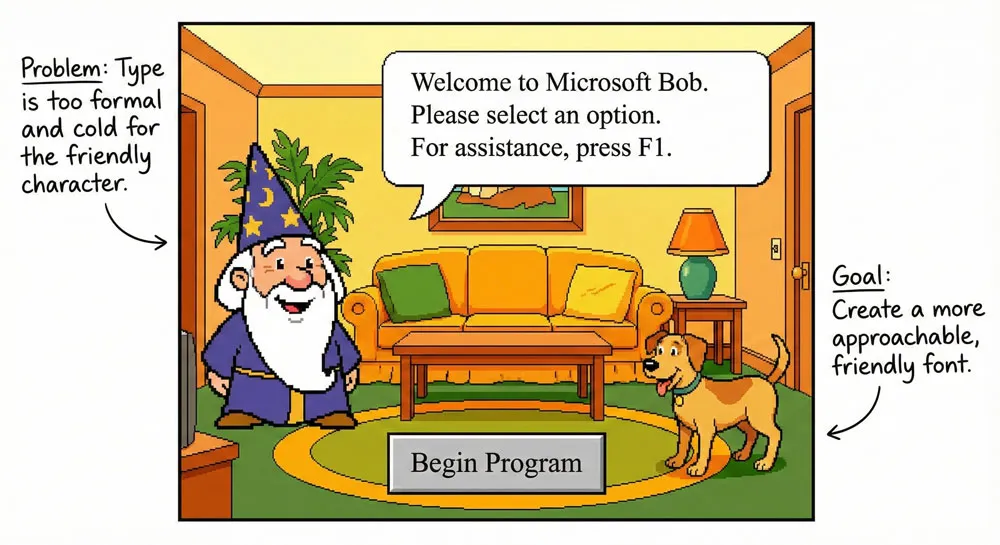
Connare was working at Microsoft, and the company had developed a new software package called Microsoft Bob—an attempt to create a user-friendly interface for non-technical users. The software was designed to feel warm, approachable, and non-threatening.
It featured illustrations of friendly characters and helpful wizards. Yet the text throughout the interface was rendered in Times New Roman, a formal, traditional serif typeface designed for newspapers in the 1930s.
There was a fundamental mismatch. The warm, friendly illustrations were undermined by the formal, chilly typography. Connare suggested that the problem was solvable. He could design a typeface that felt as warm and approachable as the illustrations.
He could create a font that would hold the user’s hand as they navigated through the software. And so Comic Sans was born—a rounded, friendly typeface inspired by the lettering in comic books, designed with the explicit goal of being warm, accessible, and non-threatening.
For a brief moment, Comic Sans achieved its intended purpose. It appeared in Microsoft software and successfully communicated friendliness and approachability. And then, something unexpected happened.
Comic Sans escaped from Microsoft and became bundled into Windows 95, suddenly available to hundreds of millions of computer users worldwide. People discovered the font, and they liked it. It was friendly. It was distinctive. It was approachable. It was, in a word, not like a typeface.
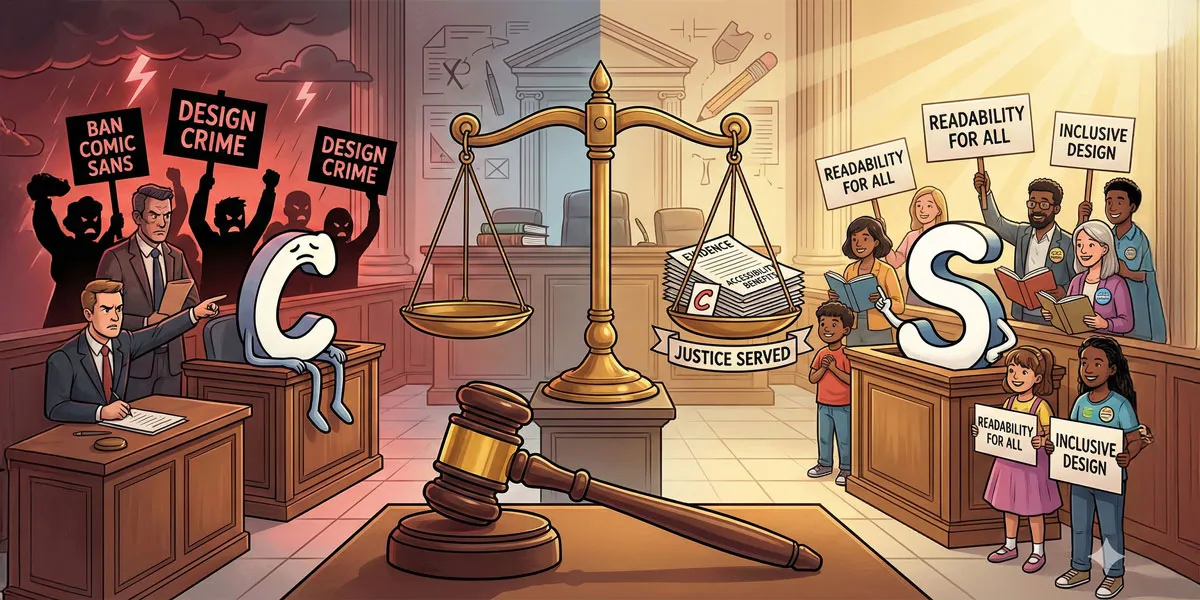
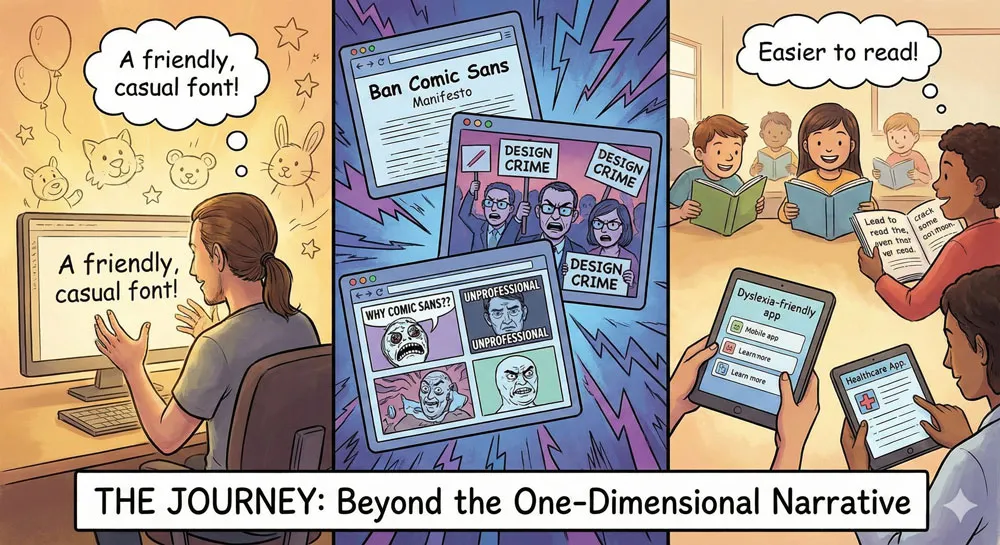
And then, just as quickly as Comic Sans had captured the world’s affection, the cultural narrative shifted. Design professionals began to openly mock Comic Sans. Bloggers created “Ban Comic Sans” websites.
The typeface became a symbol of poor design judgment, amateur hour, and a fundamental misunderstanding of typography. Comic Sans went from being a practical solution to a professional problem into a cultural punchline.
Yet this narrative of Comic Sans as an inherently “bad” font obscures a more nuanced truth. Comic Sans is not bad. It is contextually appropriate in certain situations and entirely inappropriate in others.
Like all typefaces, Comic Sans has a purpose. The tragedy of Comic Sans is not that it was designed poorly—it was designed brilliantly for its intended purpose—but that it became used so ubiquitously in contexts for which it was never intended.
This comprehensive exploration of Comic Sans tells the real story of how a practical, well-designed typeface became a symbol of design failure.
It examines the history of Comic Sans, the psychology behind the hatred, the legitimate contextual appropriateness of the font in certain applications, the accessibility benefits that design professionals often overlook, and ultimately, what the Comic Sans phenomenon reveals about typography, culture, and the invisible gatekeeping that shapes how we judge design.
Related Topics:
- Gotham: Font That Won an Election And Changed Design Forever
- Futura: The Geometric Vision of Paul Renner
- Gill Sans: Eric Gill’s Humanist Masterpiece
The Birth of Comic Sans: Solving a Design Problem at Microsoft
The Microsoft Bob Context: Why Comic Sans Was Needed
To understand Comic Sans, you must first understand the problem it was designed to solve. In the early 1990s, Microsoft was attempting to make personal computers less intimidating to non-technical users.
The company developed Microsoft Bob, a software suite designed with a radically user-friendly interface. Bob featured helpful wizards, warm illustrations, and an overall aesthetic designed to make computers feel like helpful assistants rather than complicated machines.
The software included a finance manager, a word processor, and various other tools, all presented within a friendly, illustrated environment. There was a problem, however: the actual text within this warm, friendly interface was rendered in Times New Roman, a typeface designed in the 1930s for The Times newspaper.
Times New Roman communicates formality, tradition, and authority. It is the opposite of warm or approachable. When users saw Times New Roman text accompanying friendly, cartoonish illustrations, they experienced cognitive dissonance—a mismatch between the visual style of the typography and the visual style of the surrounding interface.
Vincent Connare worked at Microsoft as a typographic engineer (a job title that speaks volumes about how the company thought about type design). He was responsible for ensuring that Microsoft software had appropriate, functional typography. Looking at Microsoft Bob, Connare immediately recognized the problem.
The interface needed a typeface that matched its warm, friendly aesthetic. It needed a typeface that felt like it had been drawn by a friendly hand, that communicated approachability rather than formality, and that would make non-technical users feel comfortable rather than intimidated.
Connare had an insight: the same visual language used in comic books—rounded letterforms, varied stroke weights, a sense of friendliness and informality—could be translated into a typeface.
Comic books had been using hand-lettering for decades that was simultaneously readable and friendly. Why not create a typeface that captured these qualities?
Vincent Connare: The Designer and His Influences
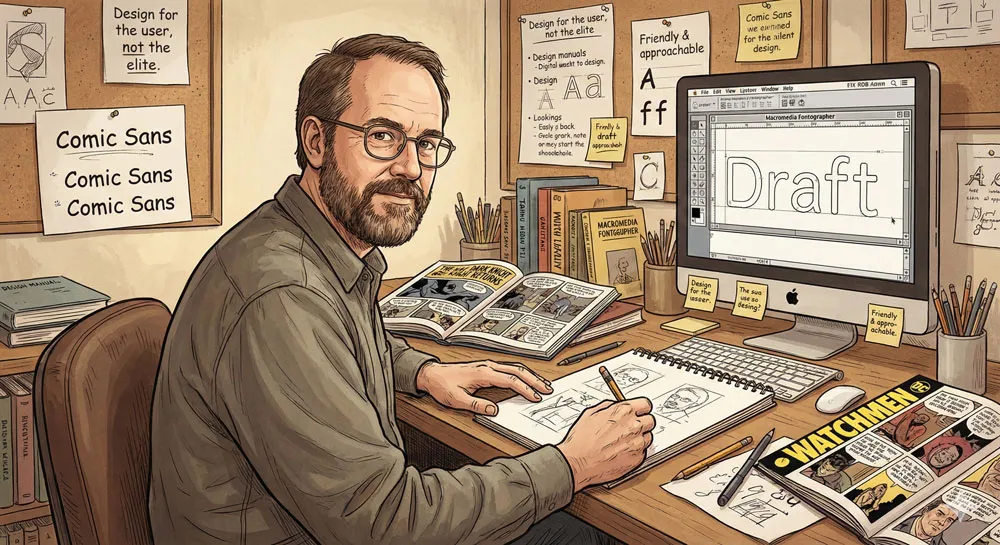
Vincent Connare came to Microsoft from Agfa Compugraphic, where he had worked as a type designer. He was trained first as a photographer and painter, which meant he brought visual sensibilities to type design that went beyond pure geometric or systematic thinking.
He understood how images communicated emotion and how visual forms could trigger psychological responses.
Connare’s inspiration for Comic Sans came partly from deliberate study and partly from spontaneous creative intuition. He had Frank Miller’s Batman: The Dark Knight Returns on his desk—the graphic novel that had helped elevate comics into a respected art form.
He also studied Alan Moore’s and Dave Gibbons’ Watchmen. Both works featured innovative lettering that melded visuals and text seamlessly, creating a sophisticated reading experience where typography and illustration worked together.
Connare was particularly interested in how comic book lettering created a sense of personality and emotion that went beyond simple communication. Each letter was hand-drawn, which meant letters could vary slightly, giving them a sense of individuality and humanity. Comic book lettering was not mechanical or robotic; it was human and warm.
However, Connare also understood a fundamental constraint: Comic Sans could not actually use hand-drawn, individually varying letterforms. It had to be a digital typeface where each letter was identical every time it appeared. The challenge was to create identical letterforms that somehow retained the sense of friendly, human warmth that made comic book lettering so appealing.
Connare made deliberate design choices to achieve this. He created soft, rounded letterforms—the visual equivalent of a child’s blunted scissors, with no sharp points to snag or intimidate.
He made the letterforms slightly informal, with subtle variations in proportion and weight that suggested human hand-drawing even though every instance of each letter was identical. He created a typeface that felt friendly and approachable despite its digital uniformity.
The Design Process: Creating Warm Typography
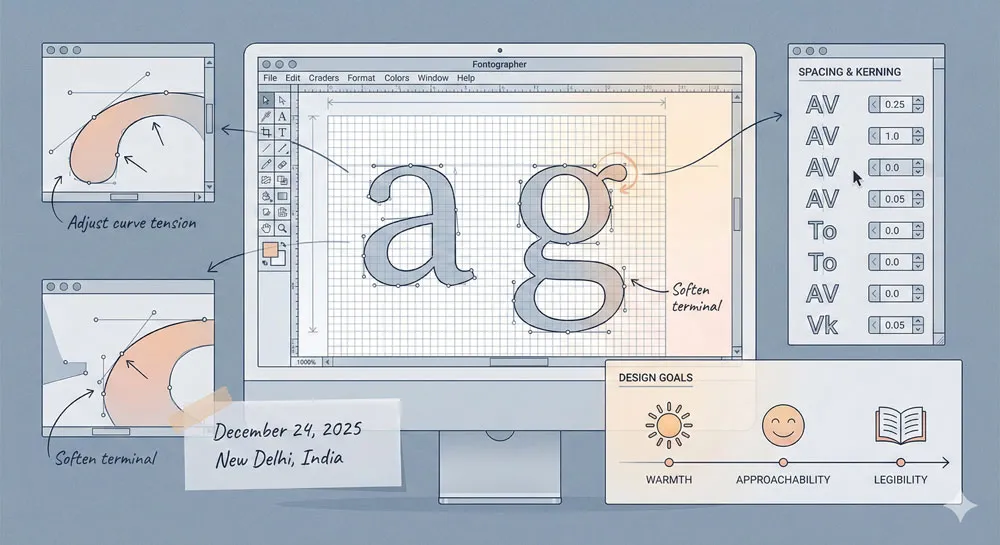
Connare used Macromedia Fontographer, the standard tool for digital type design in the early 1990s. He drew each letterform repeatedly within a grid, refining the shapes until he achieved his desired effect.
He worked carefully to ensure that despite the rounded, informal aesthetic, the typeface remained legible. Each letter had to be clearly distinguishable from similar letters (a problem that would later plague Comic Sans when it was used at very small sizes in inappropriate contexts).
Connare paid careful attention to the spacing between letters (kerning) and the overall visual balance of the typeface. Like any skilled type designer, he understood that legible, beautiful typography requires attention to countless small details.
Connare relaxed his eyes to concentrate on the white space behind letters, gauging the space between characters, the space between lines of text, and the visual weight of the letterforms.
The result was a typeface that successfully communicated friendliness and approachability while remaining legible at various sizes. Comic Sans was not a technically simple typeface; it was a thoughtfully designed solution to a specific communication problem.
Comic Sans in Microsoft Bob: Initial Success and Limited Scope
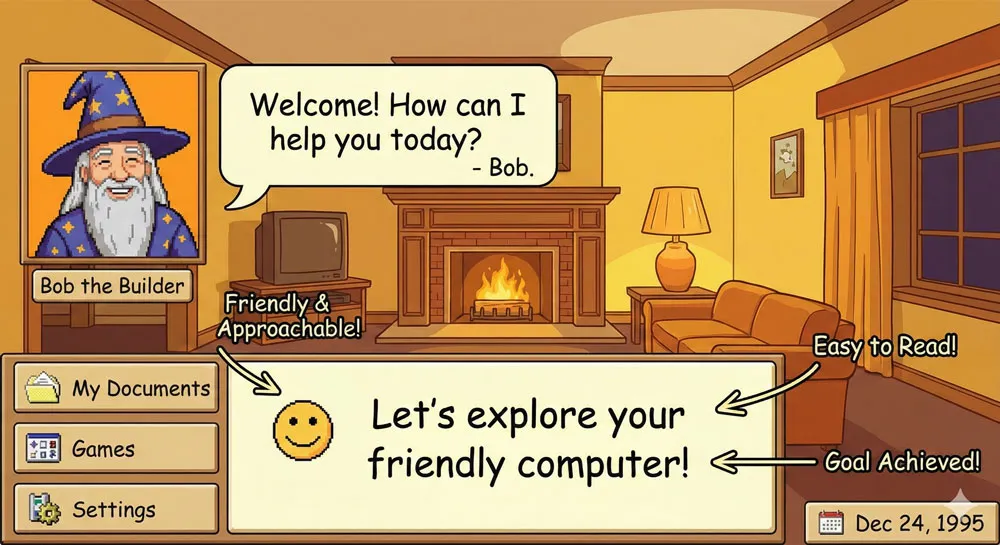
When Connare presented Comic Sans to the team working on Microsoft Bob, the response was initially positive. The typeface successfully communicated the warm, friendly aesthetic that the software was designed to project.
However, there was an immediate practical problem: Microsoft Bob had already been designed with Times New Roman measurements. Everything in the software—text sizes, speech bubbles, interface elements—had been built around Times New Roman’s proportions.
Comic Sans was slightly larger than Times New Roman, which meant the typeface could not simply be substituted without redesigning many interface elements. The team decided to proceed with Times New Roman, and Microsoft Bob was released with its original typography unchanged.
This moment is crucial to understanding Comic Sans’s later history. The typeface was designed with a specific, limited scope: to improve the typography in a particular software package for non-technical users.
It was not designed to be a universal typeface for all purposes. It was not designed to be used on wedding invitations, medical documents, or corporate websites. It was designed for a specific purpose in a specific context.
Yet fate intervened. Although Microsoft Bob itself was not a commercial success, Comic Sans had been programmed into the software.
When the font was later included in Microsoft’s broader distribution systems and eventually bundled with Windows 95, Comic Sans suddenly became available to hundreds of millions of computer users worldwide.
Related Topics:
- Baskerville: Elegant Serif That Shaped Print Typography
- Bodoni Font: Serif That Defined Luxury Typography
- Garamond: Timeless Serif That Defined Classical Typography
Comic Sans Escapes: From Microsoft Bob to Global Ubiquity
Windows 95 and Sudden Popularity
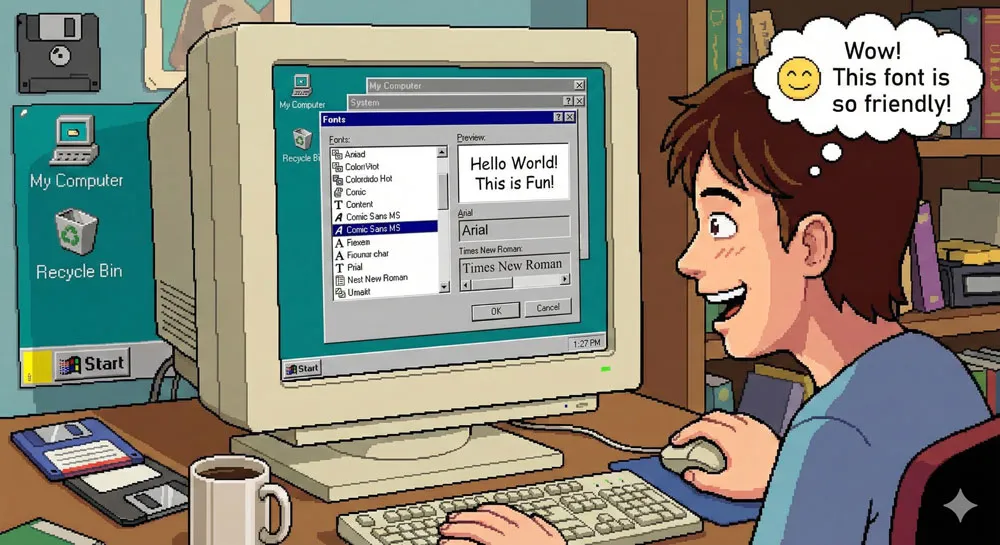
The turning point for Comic Sans came with Windows 95. Microsoft bundled Comic Sans with Windows 95 as one of the operating system’s standard fonts.
Suddenly, every Windows user had access to Comic Sans. And unlike most system fonts that are designed to be workhorses (like Arial or Times New Roman), Comic Sans was distinctive. It stood out from the crowd.
Users discovered Comic Sans and, by and large, liked it. It was different from the formal, corporate fonts they were used to. It was friendly. It was approachable.
It communicated warmth and informality. And because it was so distinctive, it was perfect for people who wanted their text to stand out or to communicate a casual, friendly tone.
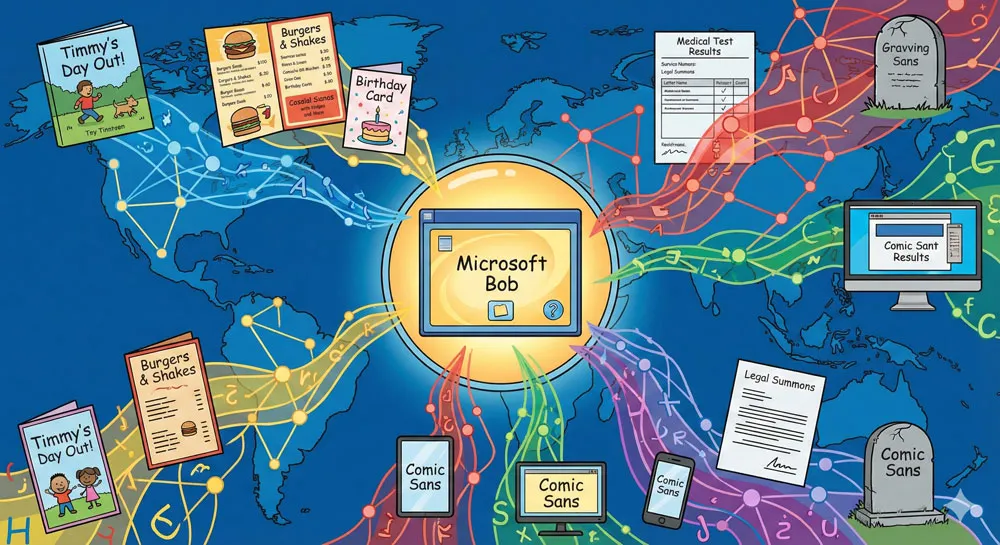
Comic Sans began appearing everywhere. Restaurant menus used Comic Sans because it communicated a casual, approachable dining experience. Birthday party invitations used Comic Sans because it communicated fun and celebration.
Websites used Comic Sans in their early days because it communicated friendliness and accessibility. Small businesses used Comic Sans because it made their materials feel less corporate and more personal.
In these contexts, Comic Sans was often an excellent choice. A casual restaurant genuinely does communicate a warmer, more approachable aesthetic with Comic Sans than with Helvetica.
A birthday party invitation genuinely does feel more celebratory with Comic Sans than with Times New Roman. These were not examples of Comic Sans being misused; these were examples of Comic Sans being used exactly as it was designed to be used—to communicate friendliness, approachability, and informality.
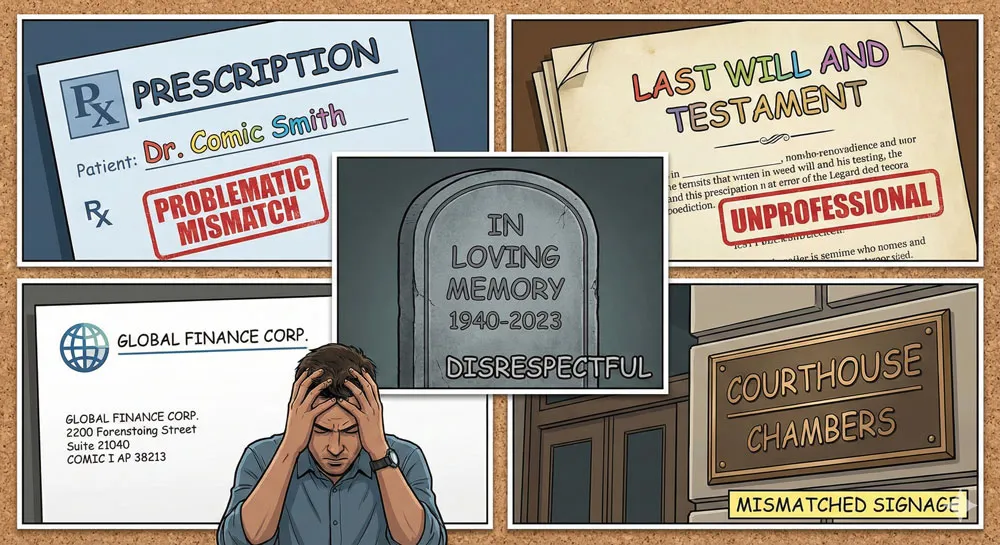
However, Comic Sans began to appear in contexts for which it was never designed. People used Comic Sans on medical documents, legal papers, funeral announcements, and corporate letterheads.
They used it in contexts where the casual, friendly aesthetic of the typeface undermined the serious tone of the content. This is where the genuine criticism of Comic Sans becomes relevant.
The Rise of Comic Sans as a Design Default
One of the most interesting aspects of Comic Sans’s early history is how quickly it became a default choice, particularly for people with limited design training. Comic Sans was available, it was distinctive, and it was easy to use.
People who did not have any formal training in typography or design would encounter Comic Sans and think, “This font makes my text look different and friendly. I’ll use it.”
This phenomenon is revealing because it suggests something important about design literacy. Comic Sans became popular not because it was the best choice for most applications, but because it was a visible, distinctive choice that non-professionals could make.
In a world of bland corporate typefaces like Arial and Times New Roman, Comic Sans offered an alternative. It offered a way for people to express personality and individuality in their typography.
However, this rise of Comic Sans as a default choice also created a backlash. Professional designers began to see Comic Sans everywhere—used inappropriately in contexts where it undermined the intended message.
A doctor’s office using Comic Sans on a medical brochure was genuinely problematic because the casual, playful typeface undermined the seriousness and authority of medical information. A lawyer using Comic Sans on a legal document was genuinely inappropriate because the friendly typeface contradicted the formal tone of legal communication.
Yet design professionals conflated these legitimate examples of Comic Sans misuse with the typeface itself. The problem was not Comic Sans; the problem was using Comic Sans inappropriately.
But the professional design community began to treat Comic Sans as inherently bad, regardless of context.
Related Topics:
- The Worst Fonts in the World: A Typographic Hall of Shame
- Gill Sans and Tube: How Johnston and Gill Defined London
- Baskerville and Eaves: A Tale of Perfection, Passion and Revival
The Hate Campaign: How Comic Sans Became a Cultural Punchline
The Ban Comic Sans Movement
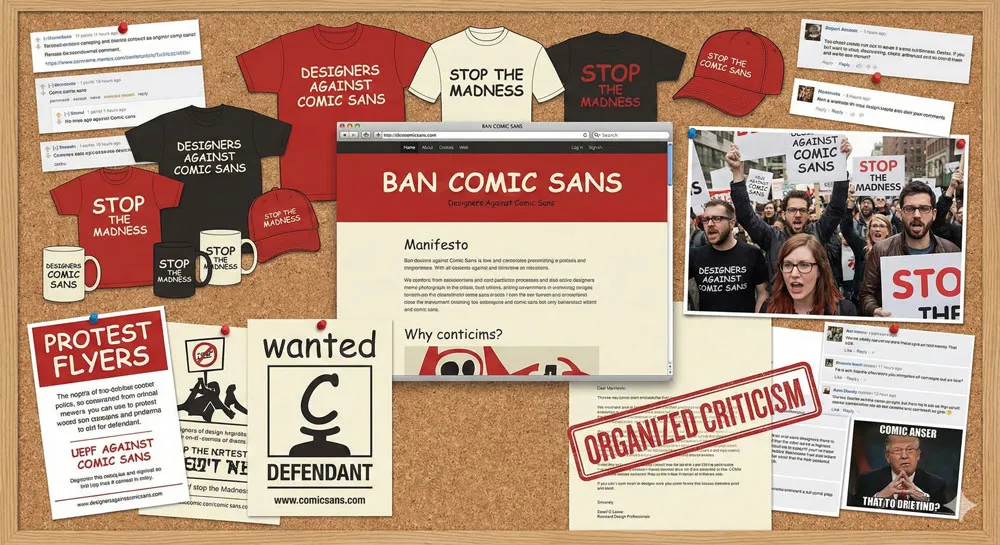
By the early 2000s, a coordinated cultural movement had emerged to criticize and ban Comic Sans. The most visible manifestation of this movement was the “Ban Comic Sans” website, created by Holly and David Combs, a husband-and-wife team who became passionate advocates against the typeface.
The Combs created merchandise—t-shirts, mugs, and caps—with anti-Comic Sans messaging. They created a manifesto explaining their position.
The Combs were articulate and thoughtful in their criticism. They acknowledged that font selection is a matter of personal preference, but they argued that certain fonts should be used in certain contexts.
They argued that Comic Sans was inappropriate for serious communication. They used a memorable metaphor: “Typesetting such a message in Comic Sans would be ludicrous analogous to showing up for a black tie event in a clown costume.”
This metaphor is revealing because it captures something true about Comic Sans. The typeface does have a specific personality, and using it in certain contexts creates a mismatch between the typeface’s personality and the context’s requirements.
A black-tie event requires formal dress; a legal document requires formal typography. Comic Sans violates these contextual expectations.
However, what began as legitimate criticism of Comic Sans misuse evolved into something more like cultural gatekeeping and snobbery. Design professionals began to treat Comic Sans as intrinsically bad, regardless of context.
The typeface became a symbol of poor design judgment. People who used Comic Sans were coded as lacking taste, sophistication, or design literacy.
The Psychology of the Hate Campaign

What is interesting about the Comic Sans hate campaign is its intensity and longevity. Why did design professionals become so passionate about criticizing a single typeface? Why did Comic Sans inspire such vehement cultural backlash?
Part of the answer lies in professional gatekeeping. Design professionals, like members of any profession, have an investment in maintaining professional standards and distinguishing themselves from non-professionals.
Comic Sans, as a typeface that was popular with non-professionals and often misused in inappropriate contexts, became a symbol of unprofessional design. By criticizing Comic Sans, design professionals were asserting their own professional standards and distinguishing themselves from non-professional designers.
However, there is also an element of genuine frustration. Comic Sans became ubiquitous in inappropriate contexts—so ubiquitous that many designers felt they were constantly encountering it misused.
A doctor’s office with a Comic Sans medical brochure, a law firm with Comic Sans letterheads, a funeral home with Comic Sans on gravestones—these were genuinely problematic examples of Comic Sans misuse. The frustration was real.
Yet the frustration became directed at the typeface itself rather than at the misuse. Design professionals began to treat Comic Sans as if the typeface itself was the problem, rather than treating the problem as a matter of contextual inappropriateness.
This is a crucial distinction that often gets lost in the Comic Sans debate.What is interesting about the Comic Sans hate campaign is its intensity and longevity. Why did design professionals become so passionate about criticizing a single typeface? Why did Comic Sans inspire such vehement cultural backlash?
Part of the answer lies in professional gatekeeping. Design professionals, like members of any profession, have an investment in maintaining professional standards and distinguishing themselves from non-professionals.
Comic Sans, as a typeface that was popular with non-professionals and often misused in inappropriate contexts, became a symbol of unprofessional design. By criticizing Comic Sans, design professionals were asserting their own professional standards and distinguishing themselves from non-professional designers.
However, there is also an element of genuine frustration. Comic Sans became ubiquitous in inappropriate contexts—so ubiquitous that many designers felt they were constantly encountering it misused.
A doctor’s office with a Comic Sans medical brochure, a law firm with Comic Sans letterheads, a funeral home with Comic Sans on gravestones—these were genuinely problematic examples of Comic Sans misuse. The frustration was real.
Yet the frustration became directed at the typeface itself rather than at the misuse. Design professionals began to treat Comic Sans as if the typeface itself was the problem, rather than treating the problem as a matter of contextual inappropriateness. This is a crucial distinction that often gets lost in the Comic Sans debate.
How Comic Sans Became Internet Culture
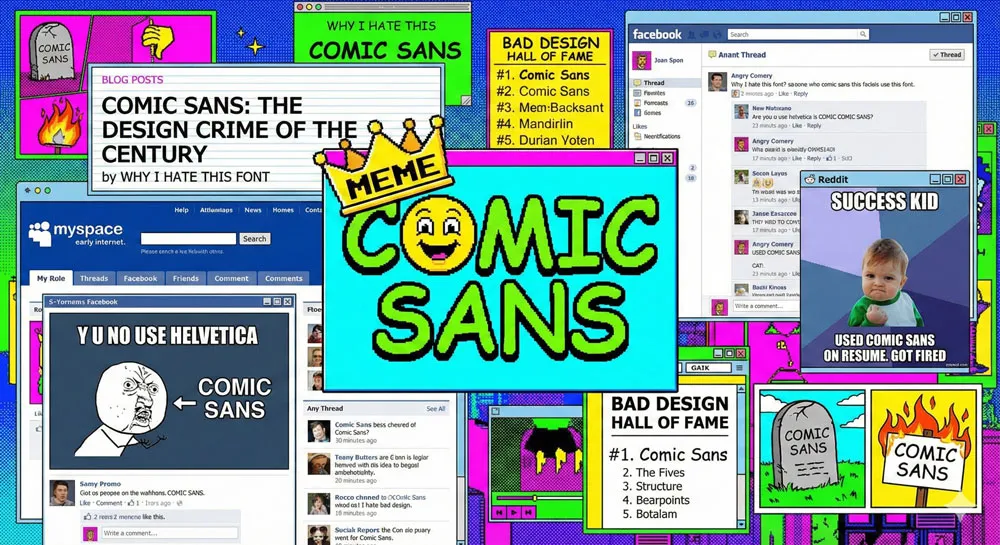
The Ban Comic Sans campaign was particularly effective because it emerged at a moment when the internet was becoming a major cultural force. The campaign spread through blogs, websites, and early social media.
Comic Sans became a meme—a symbol of bad design that could be invoked instantly to communicate the idea of poor taste or lack of sophistication.
This internet amplification of Comic Sans hatred is significant because it spread the message far beyond the design professional community. People who had no formal training in design began to absorb the cultural narrative that Comic Sans was “bad.”
The typeface became culturally coded as uncool, unsophisticated, and indicative of poor design judgment.
Simon Garfield notes in “Just My Type” that Vincent Connare found himself at the center of an internet hate campaign. He became the “Comic Sans guy”—the designer most famous not for his overall body of work but for creating a typeface that became the object of widespread mockery.
This is a remarkable and somewhat cruel position to occupy. Connare had designed the typeface with good intentions, for a specific purpose, and the typeface had accomplished its intended goals. Yet he became associated with one of design’s most visible “failures.”
Related Topics:
- Futura vs. The World: The Geometric Vision of Paul Renner
- Legibility vs. Readability: What Every Designer Needs to Know
- Secret Life of Symbols: History of Ampersand and Interrobang
The Defense of Comic Sans: Why Connare Was Right
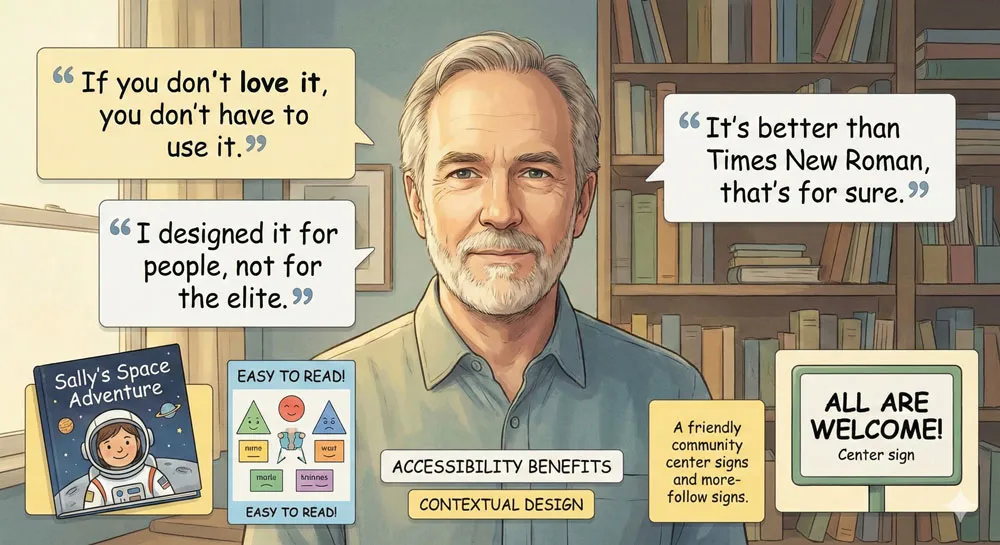
Vincent Connare’s Philosophical Response
To his credit, Vincent Connare has maintained a philosophical and sometimes humorous perspective on the Comic Sans hatred. He has refused to apologize for the typeface or to treat it as a failure.
Instead, he has offered some insights into what he believes the Comic Sans phenomenon reveals about typography, design, and culture.
One of Connare’s most memorable statements is: “If you love Comic Sans, you don’t know much about typography. If you hate it, you really don’t know much about typography either, and you should get another hobby.”
This statement is both dismissive and profound. It suggests that both uncritical love and uncritical hatred of Comic Sans represent failures to understand the nuanced relationship between typography and context.
Connare has also pointed out that Comic Sans was never intended to be a universal typeface. It was designed for a specific purpose. He has noted that people like Comic Sans “because it’s not like a typeface”—it communicates in a fundamentally different way than traditional typefaces.
This is precisely why it is appropriate in certain contexts (where you want to communicate that something is informal, friendly, and approachable) and entirely inappropriate in others (where you want to communicate formality, authority, and seriousness).
The Accessibility Argument: Comic Sans for Dyslexic Readers
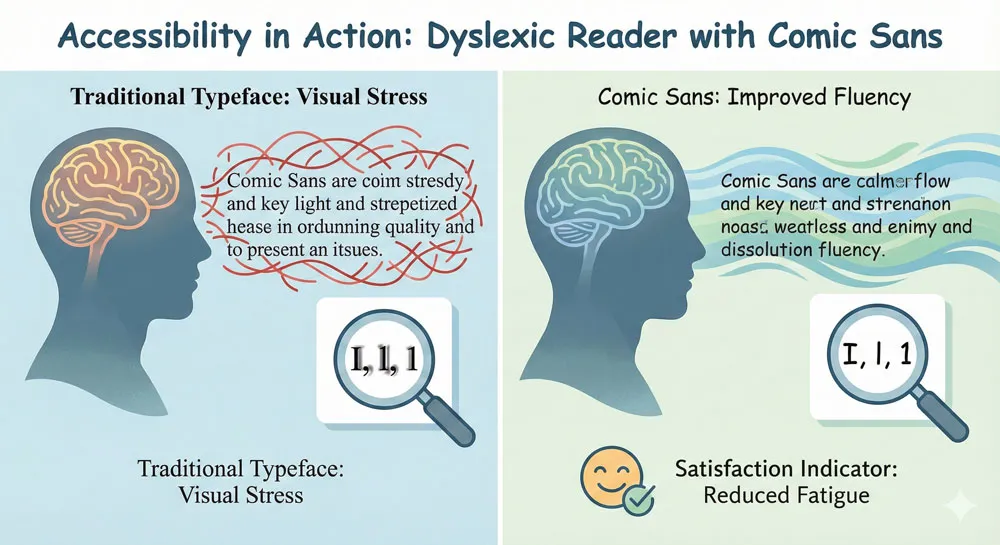
One of the most significant arguments in Comic Sans’s defense—and one that is often overlooked in the general cultural hatred—is the typeface’s exceptional accessibility for people with dyslexia.
Research has demonstrated that Comic Sans, along with a few other typefaces with distinctive letterforms and clear differentiation between similar characters, is significantly easier for many dyslexic readers to read than traditional typefaces like Times New Roman or Arial.
This is a powerful argument because it demonstrates that Comic Sans has legitimate, important uses beyond casual communication. For people with dyslexia, Comic Sans is not a stylistic choice; it is an accessibility tool that materially improves their ability to read and comprehend text.
Using Comic Sans in educational materials for students with dyslexia, in medical information for dyslexic patients, and in other dyslexia-sensitive contexts is not a failure of design; it is an example of design serving human needs.
Connare himself has written about this accessibility dimension of Comic Sans. He notes that both Trebuchet (another typeface he designed) and Comic Sans are highly regarded by specialists who work with dyslexic children.
The easy, unthreatening clarity of the letterforms, the clear differentiation between similar characters, and the overall distinctiveness of the typeface make it an excellent choice for dyslexic readers.
This accessibility argument fundamentally challenges the narrative of Comic Sans as an inherently bad typeface.
If Comic Sans genuinely helps people with dyslexia read more effectively, then criticizing Comic Sans without acknowledging this benefit is not just gatekeeping—it is potentially harmful. It is prioritizing abstract design principles over practical human accessibility needs.
Context Matters: When Comic Sans Is Perfectly Appropriate
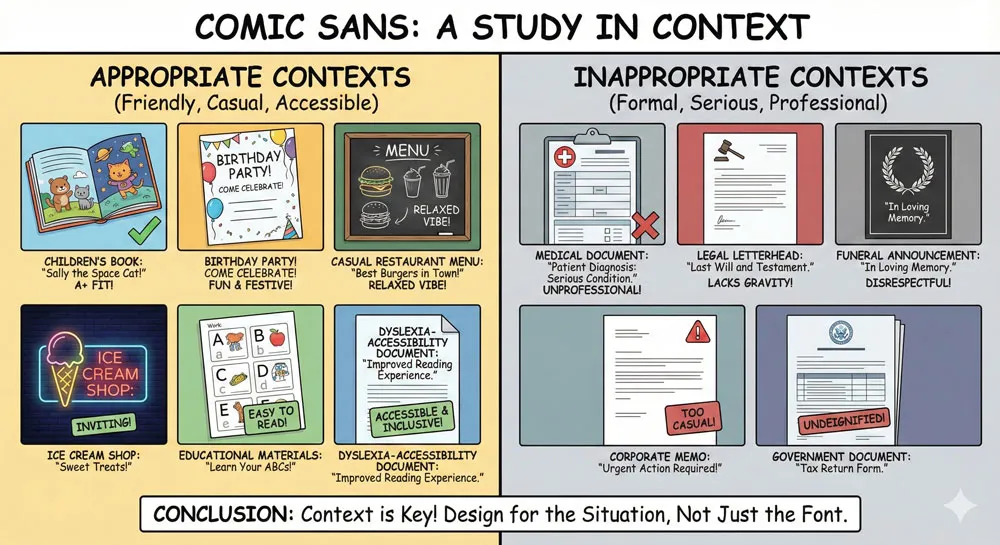
The most important argument in Comic Sans’s defense is simple: context matters. Comic Sans is an appropriate, even excellent, choice for certain applications and an inappropriate choice for others.
The problem has never been Comic Sans itself; the problem has been using Comic Sans in contexts for which it was never designed.
Comic Sans is perfectly appropriate for:
- Children’s books and educational materials
- Casual, friendly communication
- Birthday parties, celebrations, and informal events
- Accessibility-focused materials for dyslexic readers
- Playful, informal brand communication
- Comic books and graphic novels (the original inspiration)
- Signage for informal, casual businesses (ice cream shops, toy stores, casual restaurants)
- Personal communication and informal correspondence
Comic Sans is inappropriate for:
- Medical documents and healthcare information (unless specific accessibility needs justify it)
- Legal documents and formal correspondence
- Corporate branding and professional communication
- Funeral announcements and serious institutional communication
- Academic and scholarly papers
- Government documents and official communication
- Financial statements and formal business documents
The key insight is that this is not unique to Comic Sans. Every typeface is appropriate in certain contexts and inappropriate in others. Helvetica, while generally excellent for corporate and institutional communication, would be terrible for a children’s book.
Garamond, while beautiful for literary typography, would be inappropriate for emergency signage where maximum legibility and accessibility are paramount.
The problem with Comic Sans is not that it is contextually specific—all typefaces are. The problem is that Comic Sans became so ubiquitous and so available that it began to be used in contexts for which it was never designed.
And because the design professional community responded to this misuse with blanket criticism of the typeface itself, the cultural narrative became distorted.
Related Topics:
- Helvetica – Swiss Modernism’s Ubiquity Crisis
- Comic Sans – Accessibility & Gatekeeping Critique
- Gotham – Political Design & Elections Power
The Mythology of Comic Sans: What Actually Gets Used Badly
Examining the “Bad” Uses of Comic Sans
One of the most interesting aspects of the Comic Sans phenomenon is examining the specific instances that design professionals cite as examples of Comic Sans misuse. These citations reveal something about the gatekeeping at work in the design community.
The canonical example is Comic Sans used in medical contexts. Design professionals frequently cite examples of medical brochures, health information, and doctor’s office signage using Comic Sans as evidence of the typeface’s failure.
Yet in many of these cases, the use of Comic Sans might actually be justified on accessibility grounds. If a medical practice is attempting to make health information accessible to all readers, including those with dyslexia, Comic Sans might be an excellent choice.
Another frequently cited example is Comic Sans used on funeral home signage or gravestones. Design professionals treat this as obviously inappropriate—Comic Sans is playful and casual, so it is “wrong” for a solemn occasion.
Yet one could argue that what a funeral home should prioritize is legibility and accessibility for grieving people of all ages and abilities, many of whom may have dyslexia or other reading difficulties. From this perspective, Comic Sans might actually be a thoughtful choice.
The most telling example from the “Ban Comic Sans” campaign was their finding of a brochure describing irritable bowel syndrome printed in Comic Sans. The campaign treated this as obviously inappropriate and laughable.
Yet consider the context: a medical brochure attempting to communicate about an uncomfortable, somewhat embarrassing condition to a general audience.
Comic Sans communicates approachability and removes the sense that the medical system is cold and institutional. For this specific communication goal, Comic Sans might be an excellent choice.
What becomes clear when examining these specific examples is that many instances cited as “bad uses” of Comic Sans actually represent thoughtful design decisions that prioritize accessibility and communication effectiveness over abstract design principles.
The design community’s dismissal of these uses as inherently inappropriate reveals something about the professional gatekeeping at work.
The Actual Problem: Comic Sans as Default Rather Than Choice
The genuine problem with Comic Sans is not the typeface itself but the phenomenon of Comic Sans becoming a default choice for people with limited design literacy.
When someone uses Comic Sans simply because it is available and distinctive, without considering whether it is appropriate for the specific context, that is a missed design opportunity.
However, this is not a problem unique to Comic Sans. The same phenomenon occurs with other default typefaces. Arial, the bland geometric sans-serif bundled with Windows, is used ubiquitously in contexts where better typeface choices are available.
Times New Roman, bundled with virtually every computer, is used as a default even in contexts where it is inappropriate.
The problem is not Comic Sans; the problem is design literacy. Many people do not understand the relationship between typeface and context. They do not understand that different typefaces communicate different messages and create different emotional effects.
They treat typeface selection as a purely aesthetic choice (“I like the way Comic Sans looks”) rather than as a strategic communication choice (“Comic Sans communicates the right tone for this context”).
Comic Sans became the focus of design professional criticism precisely because it became a visible, distinctive default choice. When people used Comic Sans inappropriately, it was obvious.
When people used Times New Roman inappropriately (which happens constantly), it was invisible because Times New Roman is the default, the typeface that disappears into the background.
Related Topics:
- Futura – Geometric Modernism Revolution
- Gill Sans – Humanist Alternative Modernism
- Baskerville – Print Excellence & Love Story
Context Is Everything: Where Comic Sans Actually Works
Comic Sans in Children’s Materials
One of the clearest examples of Comic Sans being perfectly appropriate is in children’s books and educational materials. Children are the typeface’s ideal audience.
The rounded, friendly letterforms, the playful sense of informality, the distinctive personality—all of these qualities make Comic Sans excellent for children’s materials.
Teachers have found that Comic Sans works well for classroom materials, worksheets, and educational signage. For children learning to read, the clear, distinctive letterforms help with character recognition. The friendly aesthetic communicates that learning is approachable and fun rather than intimidating and formal.
However, when children reach higher grades and transition to academic work, other typefaces become more appropriate. The shift from Comic Sans to more formal typefaces mirrors a shift in communication context.
As the material becomes more serious and academic, the typography should reflect that shift. This is not a failure of Comic Sans; it is an example of context-appropriate typographic choice.
Comic Sans in Casual Business
Small businesses, particularly casual, approachable businesses, often use Comic Sans effectively. An ice cream shop, a toy store, a casual restaurant, or an informal salon might use Comic Sans to communicate their casual, friendly aesthetic.
In these contexts, Comic Sans is not a failure of design; it is a strategic choice to communicate the business’s personality and values.
Similarly, businesses targeting children or emphasizing approachability (children’s entertainment venues, youth-focused nonprofits, playgroups) might use Comic Sans to communicate their mission and values.
The typeface effectively communicates that the organization is friendly, non-threatening, and child-centered.
In these contexts, Comic Sans is often a more effective communication choice than a formal sans-serif like Helvetica.
Helvetica would communicate professionalism and authority; Comic Sans communicates friendliness and approachability. Different contexts call for different typographic messages.
Comic Sans and Accessibility
Perhaps the most important and least acknowledged context where Comic Sans is genuinely excellent is accessibility-focused communication. As noted earlier, Comic Sans is significantly easier for many dyslexic readers to read than most other typefaces.
The distinctive letterforms, the clear differentiation between similar characters (particularly the much-improved ability to distinguish lowercase “l” from the number “1” or uppercase “I”), and the overall legibility of the typeface make it an accessibility tool.
Materials designed for people with dyslexia should prioritize Comic Sans (or other dyslexia-friendly typefaces) over more aesthetically “sophisticated” choices.
An educational program serving dyslexic students, a healthcare provider serving dyslexic patients, or any organization attempting to make information accessible to people with visual processing differences should consider Comic Sans as a legitimate, effective choice.
This context represents perhaps the clearest refutation of the “Comic Sans is bad” narrative.
When a typeface genuinely improves accessibility for people with disabilities, dismissing that typeface as bad is not just design snobbery—it is potentially harmful gatekeeping that prioritizes abstract design principles over human accessibility needs.
Related Topics:
- Bodoni – Theatrical Prestige Aesthetics
- Garamond – Classical Foundation Principles
- Worst Fonts – Criticism & Gatekeeping Analysis
The Comic Sans Phenomenon: What It Reveals About Design Culture
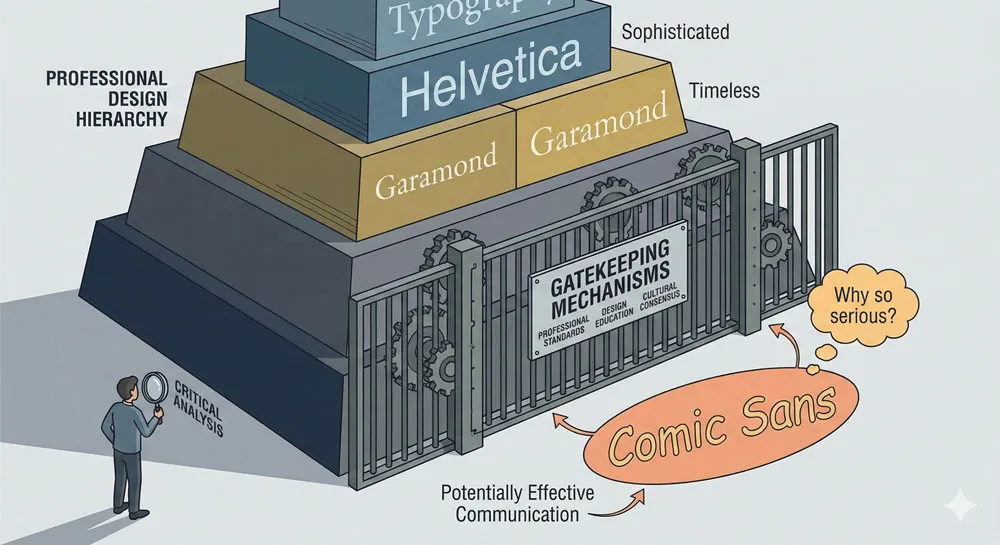
Professional Gatekeeping and Design Hierarchy
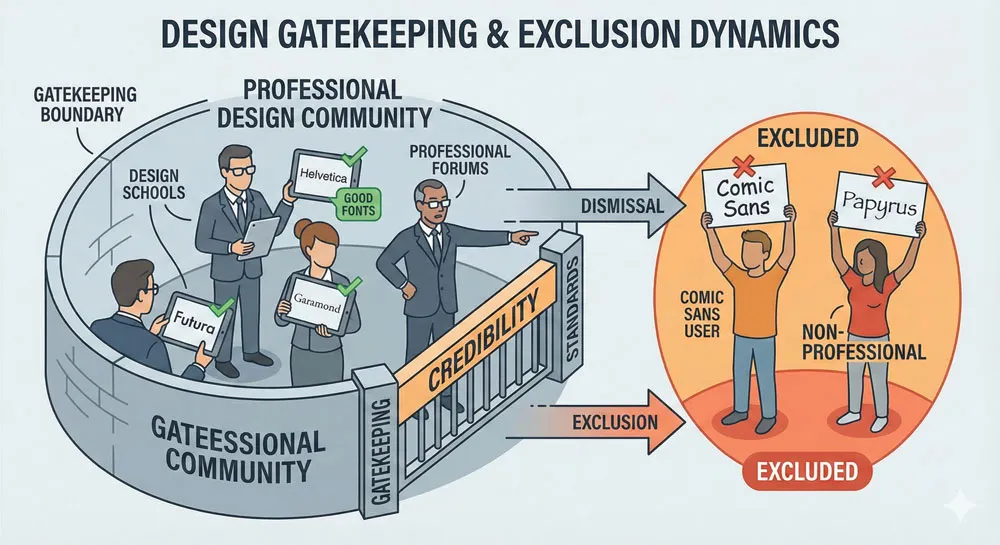
The Comic Sans hate campaign reveals something important about design culture. Design professionals maintain certain standards and certain hierarchies.
Certain typefaces are coded as sophisticated and appropriate; others are coded as unsophisticated and inappropriate. This coding is not based purely on technical merit; it is based on cultural association and professional gatekeeping.
Helvetica is coded as sophisticated and professional. Times New Roman is coded as formal and authoritative. Garamond is coded as elegant and literary.
Comic Sans, by contrast, is coded as unsophisticated, amateur, and poor design judgment. These codings are not based on the intrinsic qualities of the typefaces; they are based on accumulated cultural associations and professional consensus.
Comic Sans became the focus of gatekeeping precisely because it challenged the professional design hierarchy. It was a typeface that non-professionals could access and use effectively for their purposes.
It did not require professional design training to use Comic Sans competently. It was distinctive enough that even people with limited design experience could recognize it and use it to communicate a specific message.
This threatened the professional design community’s gatekeeping. If non-professionals could design with Comic Sans and achieve their communication goals, what was the value of professional design training?
The design community responded by establishing Comic Sans as an object of ridicule, thereby reasserting their professional standards and status.
The Paradox of Comic Sans’s Success
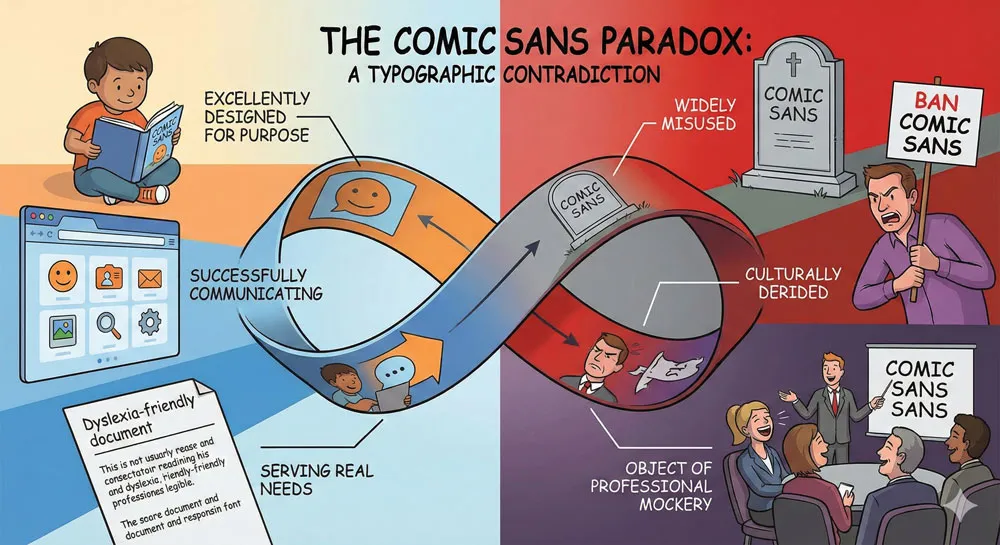
There is a paradox at the heart of the Comic Sans story. Comic Sans was designed brilliantly to achieve specific communication goals. It remains exceptionally good at communicating friendliness, approachability, and informality.
It works well for children’s materials. It is excellent for accessibility purposes. In the contexts for which it was designed, Comic Sans succeeds.
Yet Comic Sans became ubiquitously used in contexts for which it was never designed. And because the misuse was so visible and so widespread, the cultural narrative became that the typeface itself was bad, rather than that the misuse was inappropriate.
This paradox reveals something important about design and communication. Typefaces do not have objective value; they have contextual value. A typeface that is excellent in one context might be terrible in another. The job of the designer is to understand context and to make typographic choices that align with that context.
The tragedy of Comic Sans is not that the typeface is bad. The tragedy is that Comic Sans became so available, so visible, and so easy to use that it became a default choice for people without design training.
And when those people used Comic Sans in inappropriate contexts, the design professional community responded not by helping them understand context-appropriate typography, but by dismissing both Comic Sans and the people using it as bad designers with poor taste.
Comic Sans and Design Literacy
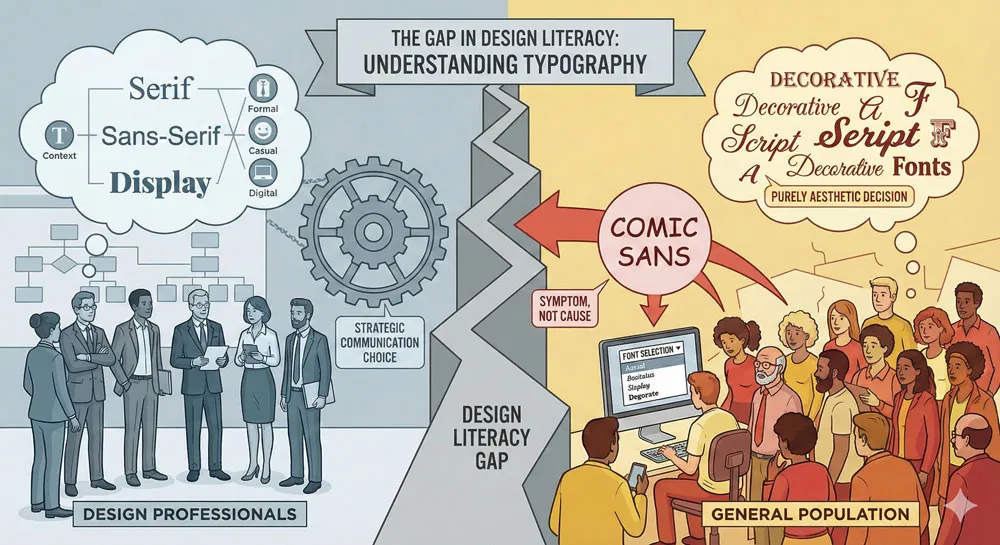
The Comic Sans phenomenon ultimately reveals a crisis in design literacy. Most people do not understand how typography communicates.
They do not understand that different typefaces have different personalities, different psychological effects, and different contextual appropriateness. They do not understand that choosing a typeface is not a purely aesthetic decision but a strategic communication decision.
This lack of design literacy meant that when Comic Sans became available to general users, many people used it because they liked the way it looked, without understanding whether it was appropriate for their specific context.
This led to widespread Comic Sans misuse, which led to design professional gatekeeping, which led to the current cultural narrative that Comic Sans is an inherently bad typeface.
The solution is not to ban Comic Sans (which is what the hate campaign literally called for). The solution is to increase design literacy so that more people understand the relationship between typeface choice and communication context.
If more people understood that Comic Sans is appropriate in certain contexts and inappropriate in others—just like every other typeface—then Comic Sans would be used more appropriately, and the widespread misuse would decrease.
Related Topics:
- Gill Sans & The Tube – Urban Identity Infrastructure
- Baskerville & Mrs. Eaves – Love, Partnership & Revival
- Futura & Paul Renner – Geometric Vision & Revolution
The Broader Context: Other Controversial Typefaces
Papyrus and the Same Gatekeeping
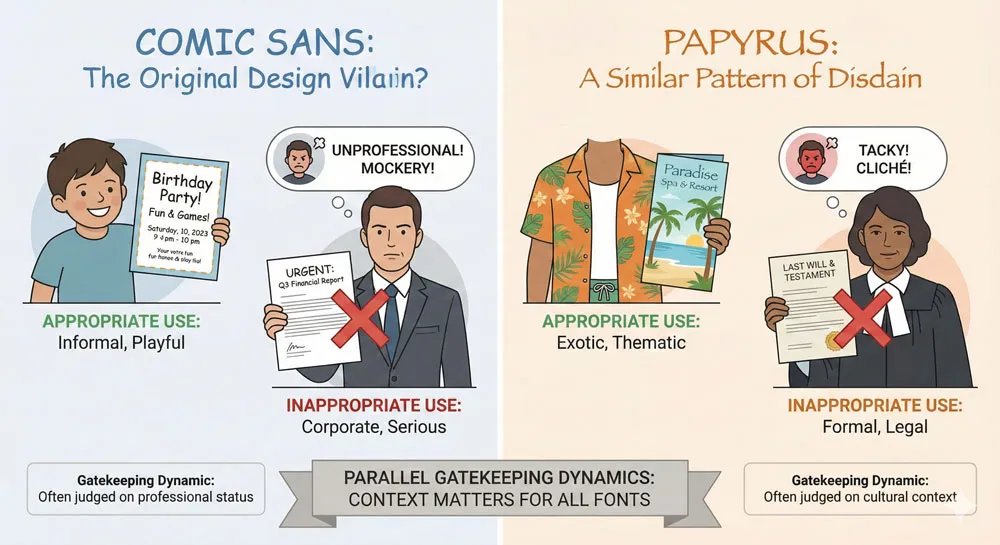
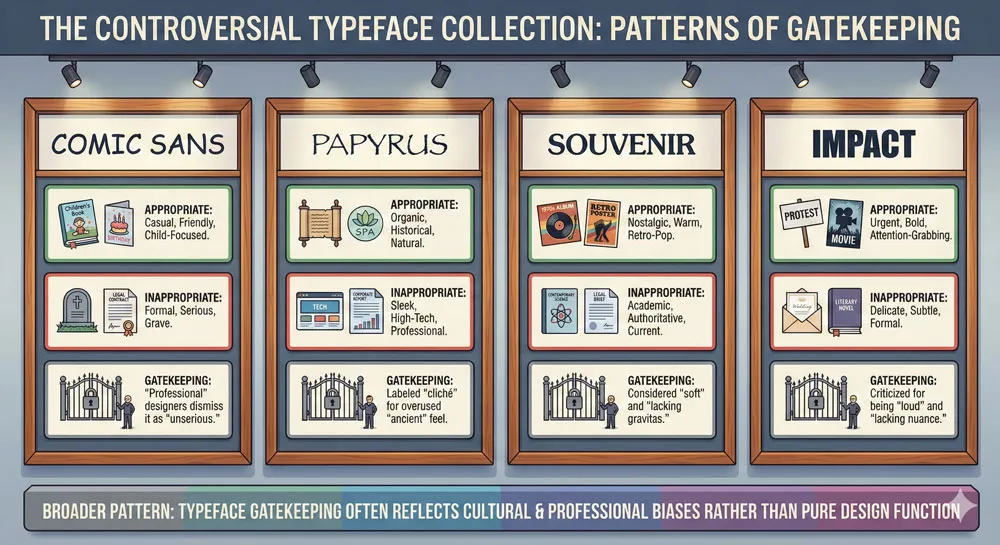
Comic Sans is not the only typeface that has become the subject of professional disdain. Papyrus, a decorative typeface with a hand-drawn, ancient aesthetic, has become similarly controversial.
Design professionals cite Papyrus as an example of bad typography when used inappropriately (on corporate documents, medical signage, etc.), but Papyrus is perfectly appropriate for certain contexts—vacation resorts, botanical gardens, casual outdoor contexts where its organic aesthetic aligns with the environment.
Like Comic Sans, Papyrus became the focus of gatekeeping precisely because it was popular with non-professionals and visible in many inappropriate contexts.
The design professional response was to establish Papyrus as an object of ridicule, thereby reasserting professional standards.
Souvenir and Retro Appropriateness
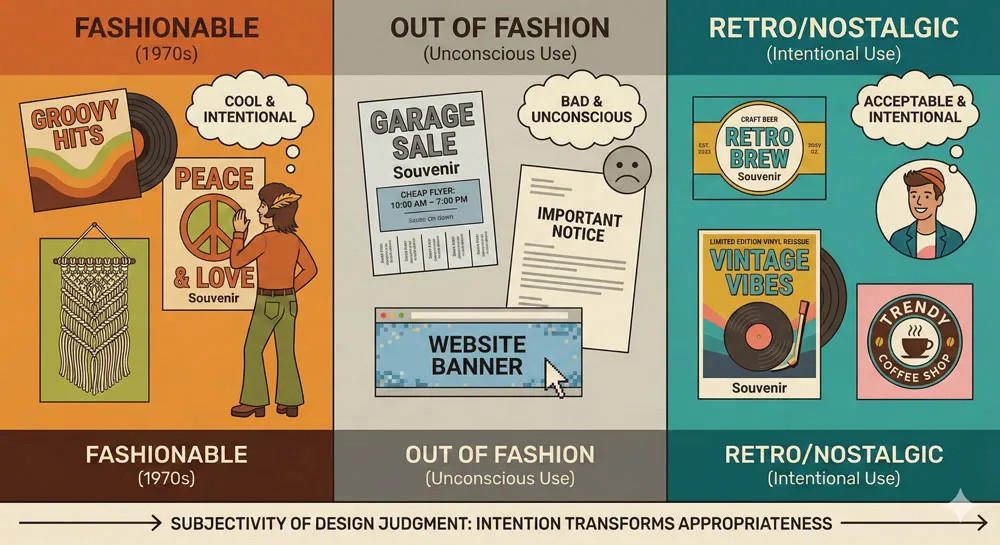
Souvenir is another typeface that was fashionable in the 1970s, went out of fashion, and is now often derided as dated or retro. Yet contemporary designers sometimes deliberately use Souvenir to communicate 1970s nostalgia or vintage aesthetic.
The same typeface that is considered bad when used unconsciously becomes acceptable when its dated quality is intentional and contextually appropriate.
Impact and Legitimate Appropriateness
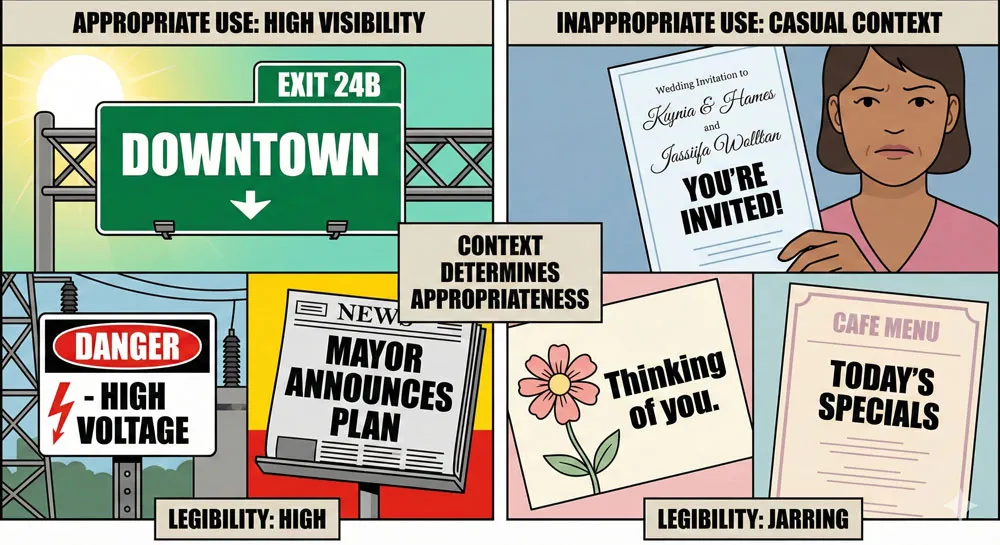
Impact is a condensed, heavy sans-serif that is often used inappropriately on casual documents and websites.
Yet Impact is excellently designed for its original purpose: creating high-visibility signage and headlines where maximum legibility and impact are required. In its appropriate context (emergency signage, highway signs, attention-demanding headlines), Impact is perfectly appropriate.
These other controversial typefaces demonstrate that Comic Sans is not unique in being the focus of design gatekeeping.
Rather, Comic Sans is just the most visible example of a broader pattern where design professionals establish certain typefaces as objects of ridicule, thereby reasserting their professional standards and excluding non-professionals from the community.
Related Topics:
- Legibility vs. Readability – Typography Fundamentals
- Ampersand & Interrobang – Symbol Histories
- The Psychology of Typography: Font Influence
Vincent Connare’s Legacy: Beyond Comic Sans
Connare’s Other Typefaces
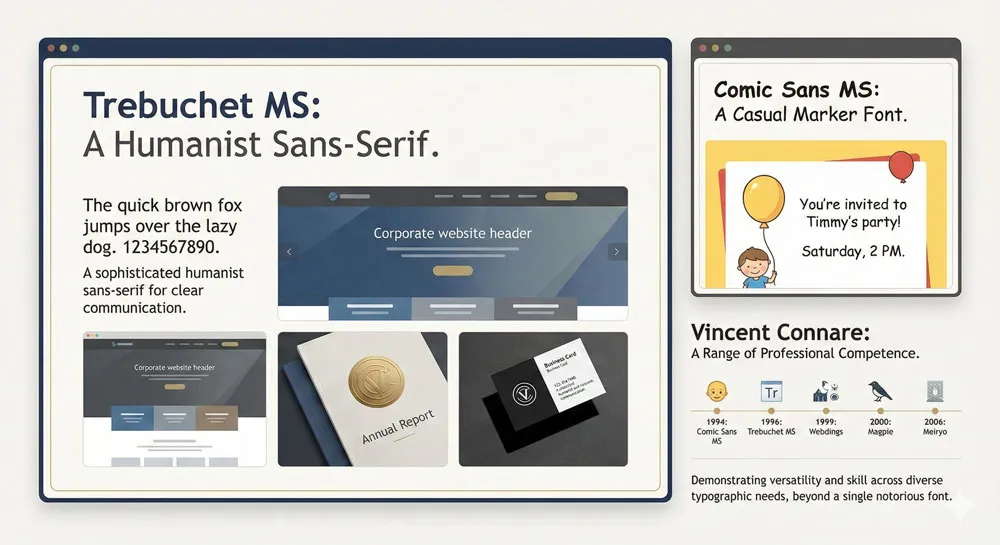
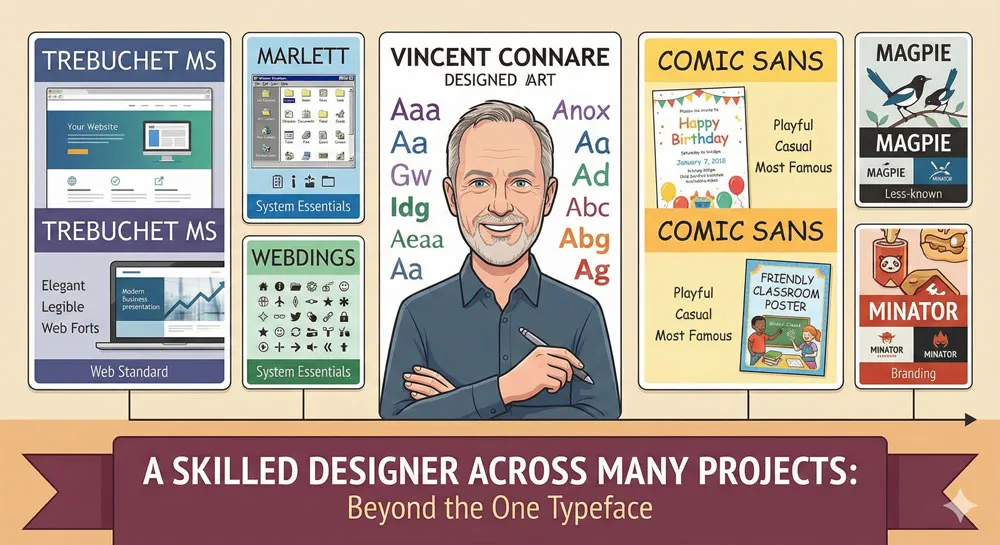
While Comic Sans has overshadowed Vincent Connare’s career, he has designed other notable typefaces that are widely respected.
Most notably, he designed Trebuchet, a semi-formal humanist sans-serif that is well-regarded by designers and is frequently used in professional contexts. Trebuchet demonstrates that Connare is a skilled type designer capable of creating sophisticated, well-respected typefaces.
However, Connare will likely be remembered primarily as the designer of Comic Sans, which is both unfair and revealing. It is unfair because his overall body of work includes many well-designed typefaces. It is revealing because it demonstrates the power of cultural narrative to overwhelm individual merit.
The Comic Sans Guy
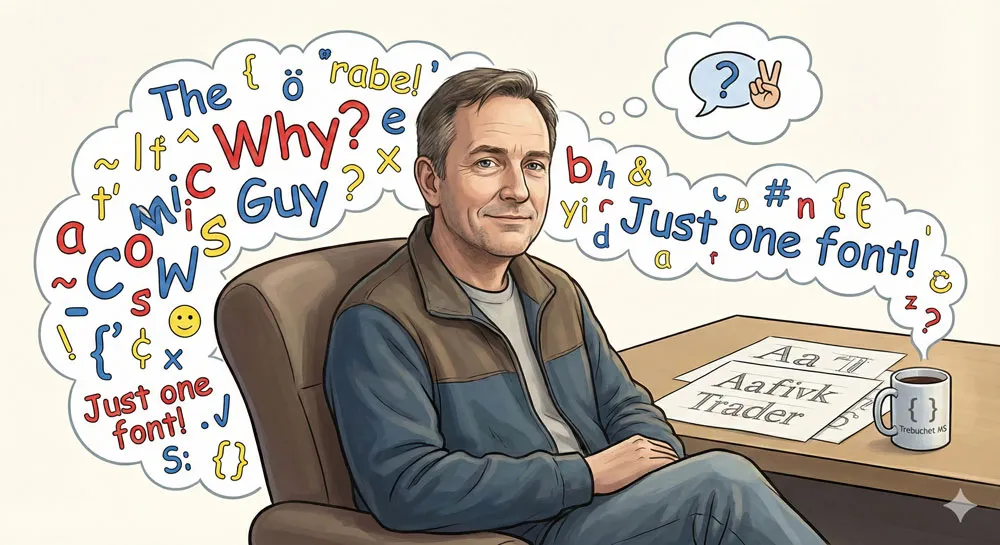
Connare has written about the strange experience of becoming famous as “the Comic Sans guy.” He notes that most of the people who know who he is know him because of Comic Sans, not because of his broader body of work.
He has become a symbol of the typeface, and the typeface has become a symbol of design failure.
Connare has handled this situation with remarkable grace and humor. He has refused to apologize for Comic Sans or to pretend that it was a mistake. He has instead used his notoriety to discuss typography, design, and context.
He created a PDF slideshow documenting odd uses of Comic Sans, including letters of appreciation from Disney and other organizations. His response to the hate campaign has been thoughtful and philosophical rather than defensive or bitter.
Related Topics:
FAQ: Common Questions About Comic Sans
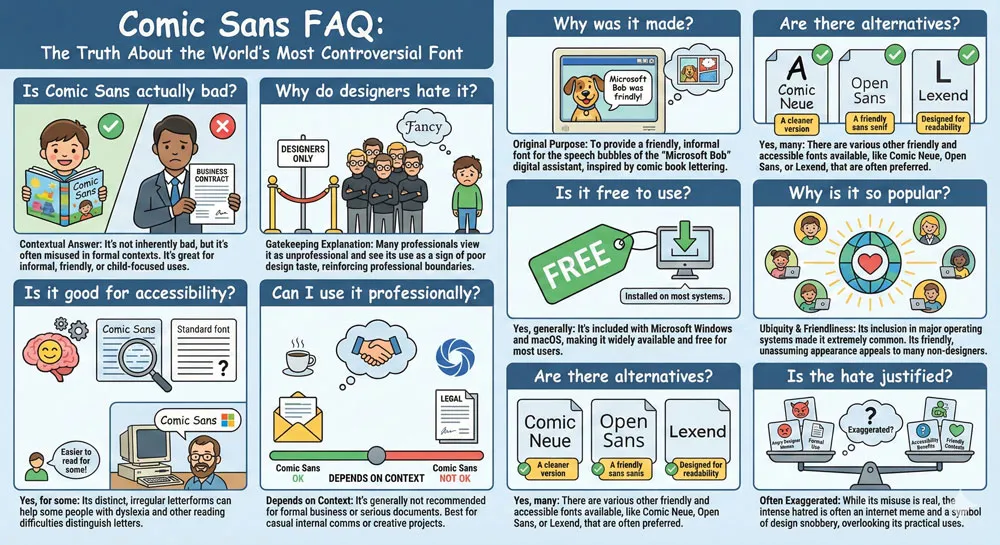
Q: Is Comic Sans actually bad?
A: Comic Sans is not inherently bad. It is a well-designed typeface that communicates friendliness and approachability effectively. However, it is inappropriate in certain contexts where formality or authority are required. Like all typefaces, Comic Sans is contextually appropriate or inappropriate depending on the specific application.
Q: Why do designers hate Comic Sans?
A: Designers criticize Comic Sans partly because of legitimate instances of misuse (medical documents, legal letterheads), partly because of professional gatekeeping (establishing Comic Sans as unsophisticated to maintain professional standards), and partly because Comic Sans became ubiquitously visible in inappropriate contexts.
Q: Is Comic Sans good for accessibility?
A: Yes. Comic Sans is significantly easier for many people with dyslexia to read than most other typefaces. The distinctive letterforms and clear character differentiation make Comic Sans an excellent accessibility tool. Materials designed for people with dyslexia should consider Comic Sans as a legitimate choice.
Q: Can I use Comic Sans professionally?
A: It depends on your context. Comic Sans is perfectly appropriate for some professional applications: children’s programming, casual business communication, accessibility-focused materials. Comic Sans is inappropriate for other professional applications: formal corporate branding, legal documents, financial communications. Ask yourself: does Comic Sans communicate the right message for this specific context?
Q: What’s a better alternative to Comic Sans?
A: It depends on what you are trying to communicate. If you want friendliness and approachability, Gill Sans or Verdana might work. If you want playfulness, other options exist. If you want accessibility for dyslexic readers, Comic Sans might actually be the best choice. There is no universal “better” alternative; the choice depends on context.
Q: Was Comic Sans a mistake?
A: No. Comic Sans was designed brilliantly to solve a specific problem: making software interfaces feel warm and friendly to non-technical users. The typeface succeeded at this goal. The “mistake” was not Comic Sans itself, but the phenomenon of Comic Sans becoming ubiquitously available and used in countless contexts for which it was never designed.
Q: Why do people use Comic Sans if designers hate it?
A: People use Comic Sans because it communicates effectively. It is friendly, distinctive, and approachable. For people with limited design training, Comic Sans offers a visible way to make their typography distinctive and to communicate a casual tone. The gap between professional design standards and public preference for Comic Sans reveals a gap in design literacy.
Q: Is the “Ban Comic Sans” campaign justified?
A: The campaign made legitimate points about Comic Sans misuse in inappropriate contexts. However, the campaign went beyond calling for context-appropriate use and instead called for essentially banning the typeface altogether. This represents gatekeeping that prioritizes design professionalism over practical communication effectiveness and accessibility needs.
Q: What would Comic Sans creator Vincent Connare say about the hate?
A: Connare has been philosophical and humorous about the Comic Sans hate. He has defended the typeface, acknowledged that it is inappropriate in certain contexts, and noted that both uncritical love and uncritical hatred of Comic Sans represent failures to understand typography’s relationship to context.
Related Topics:
Conclusion: Justice for Comic Sans and Design Humility
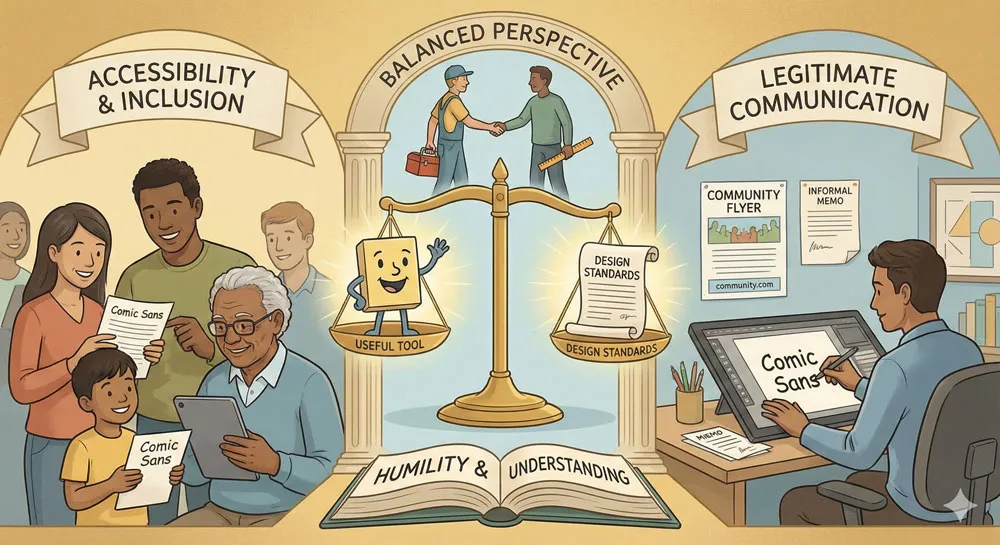
Comic Sans is not a bad typeface. It is a well-designed typeface that effectively communicates friendliness, approachability, and informality. It is appropriate in certain contexts and inappropriate in others—just like every other typeface.
The fact that Comic Sans became the focus of such vehement cultural criticism reveals more about design gatekeeping, professional standards, and cultural hierarchy than it reveals about the typeface itself.
The Comic Sans phenomenon teaches several important lessons. First, context matters in typography. No typeface is universally appropriate or inappropriate; all typeface choices are contextual. Second, design literacy is crucial. Most people do not understand the strategic role of typography in communication.
Third, gatekeeping and professional standards can become barriers to understanding and accessibility. When design professionals dismiss Comic Sans without acknowledging its accessibility benefits or its appropriate uses, they are prioritizing abstract design principles over practical human needs.
The justice for Comic Sans is not to celebrate the typeface as perfect or to use it everywhere. The justice for Comic Sans is to understand it as a well-designed tool that serves specific purposes well.
The justice is to acknowledge that Vincent Connare designed the typeface brilliantly to solve a specific problem. The justice is to recognize that Comic Sans has legitimate, important uses in accessibility contexts.
The justice is to stop treating Comic Sans as a symbol of design failure and to instead understand it as a symbol of how context-appropriate typography works.
Perhaps most importantly, the Comic Sans phenomenon teaches us about humility. It teaches designers that professional standards and abstract design principles should not override practical communication effectiveness and accessibility needs.
It teaches us that there is often a gap between professional judgment and public preference, and that this gap is sometimes evidence that professionals are being too rigid rather than evidence that the public lacks taste.
Vincent Connare created a typeface with good intentions, for a specific purpose. That typeface worked well for its intended purpose.
That the typeface became misused in inappropriate contexts is not an indictment of the typeface or its designer; it is an indictment of design literacy and of the professional gatekeeping that has made people afraid of making typographic choices that deviate from accepted conventions.
Justice for Comic Sans means using it appropriately while respecting its legitimate purposes. It means acknowledging its accessibility benefits. It means stopping the unnecessary mockery and gatekeeping.
And it means recognizing Vincent Connare as a skilled designer who created a typeface that serves real purposes and helps real people.
Related Topics:
About the Author
Lalit M. S. Adhikari is a Digital Nomad and Educator since 2009 in design education, graphic design and animation. He’s taught 500+ students and created 200+ educational articles on design topics. His teaching approach emphasizes clarity, practical application and helping learners.
Learn more about Lalit Adhikari.
This guide is regularly updated with the latest information about Adobe tools and design best practices. Last Updated: July 2026
Related Topics: