
Home Blog Page 6

Essential Elements: Anatomy and Terminology of Type

0
Essential Elements: Anatomy and Terminology of Type

Master typography terminology and type anatomy. Learn letterform parts: serifs, stems, bowls, counters, ascenders, descenders, baselines and more.


Why Terminology Matters: Building Your Typographic Vocabulary
Why Terminology Matters: Building Your Typographic Vocabulary

Understanding typography fundamentals includes learning its terminology—the shared language that allows designers to communicate precisely about type.

Basic typographic terminology is constant across mediums, building mutual connections from one medium to another. A serif is always a serif, whether you’re working in digital, print, or environmental design.

Knowing the parts that comprise typographic practice aids both type selection and use. Best expression comes with intimate knowledge of essential elements including characters, measures, and styles.

When you can precisely name and describe typographic components, you gain control over your design choices. You move from intuitive design to intentional design.

Many typographic terms originated during metal typesetting days when typographers and printers set lead type slugs (cast-metal sorts) by hand to form words, lines, and paragraphs.

These terms shaped much of the terminology we use today to describe type anatomy and measure. Understanding this historical context helps you appreciate why certain terms exist and what they truly mean.


The Parts of Type: A Complete Anatomical Guide
The Parts of Type: A Complete Anatomical Guide

Every letterform, regardless of typeface, shares common anatomical parts. Let’s explore the essential components:

  • The Foundational Lines:

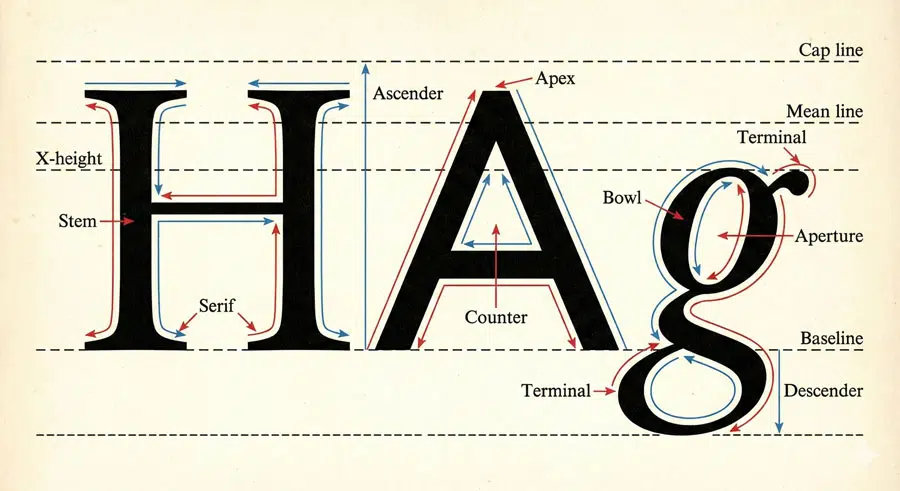
The baseline is the imaginary line on which letterforms, words, lines, and paragraphs sit. It’s your reference point for all vertical measurement. The x-height is the distance from baseline to the top of a lowercase letter like ‘x’—it measures lowercase letterform height minus ascenders and descenders.

The mean line (or mid-line) marks the height of lowercase letterforms minus ascenders and descenders. The cap line marks the height of uppercase letterforms. The ascender line marks the highest point of ascending letterforms like ‘b’, ‘d’, ‘f’, ‘h’, ‘k’, and ‘l’. The descender line marks the lowest point of descenders in letters like ‘g’, ‘j’, ‘p’, ‘q’, and ‘y’.

  • Critical Letterform Components:

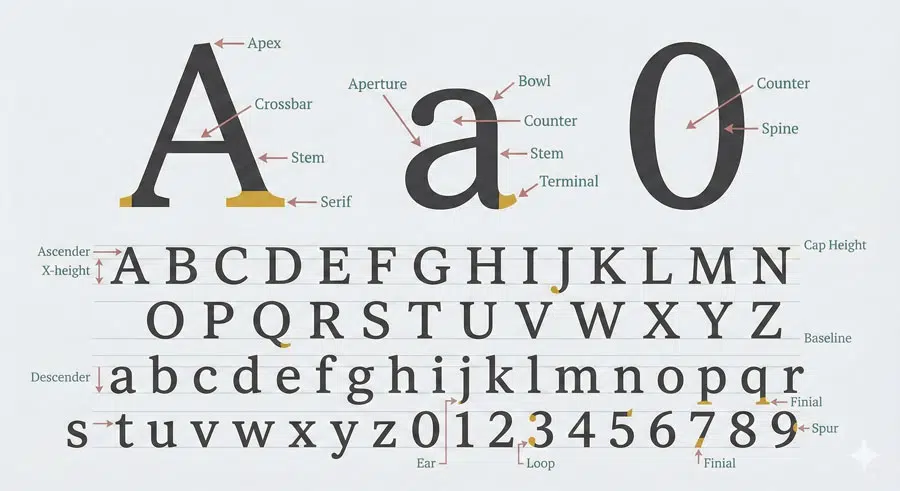
A stem is the primary vertical stroke of a letterform. Serifs are small finishing details at the start and end of strokes—they come in many varieties including reflexive, transitive, bilateral, unilateral, abrupt, and adnate.

An arm is a short horizontal or vertical stroke attached to another on one end, as seen in E, F, and L. A bowl is the curved stroke that encloses counter space, as in ‘a’, ‘b’, ‘g’, and ‘p’.

The counter (or counterform) is the enclosed white space in characters like ‘b’, ‘d’, and ‘o’. An aperture is the partially enclosed white space in letters like ‘C’, ‘S’, ‘n’, and ‘e’.

A crossbar is the horizontal bar that connects two strokes, crosses stems, or bisects stems. The terminal is the curved or straight end of finishing strokes—terminal styles include ball, beak, and teardrop (lachrymal).

Other important components include the ascender (the part of lowercase letters that rises above x-height), the descender (the part that falls below the baseline), the apex (the top point where two strokes meet), the crotch (the acute inside point where two strokes meet), the finial (a curved and tapered finishing stroke), and the swash (an embellished stroke that creates decorative letterforms).


Understanding Glyphs vs. Characters
Understanding Glyphs vs. Characters

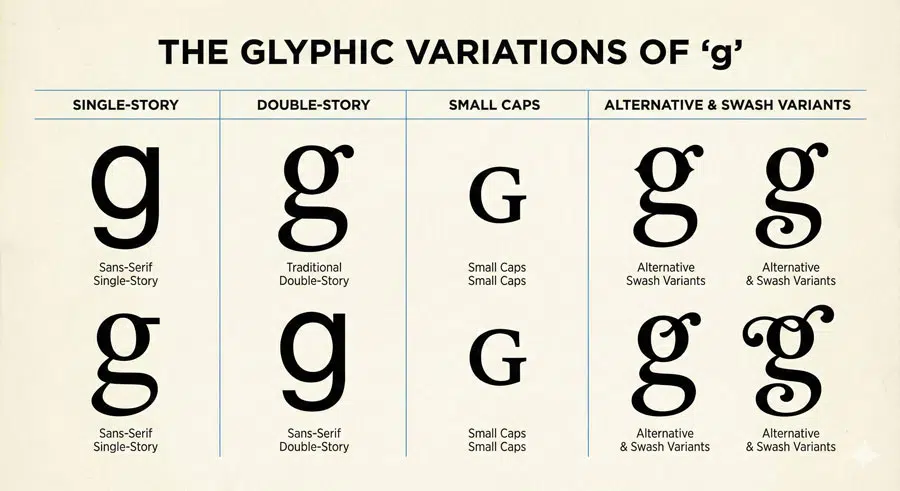
A character is a typographic element such as a letterform, numeral, or punctuation mark. A glyph is a specific visual representation of a character.

This distinction matters because many typefaces contain multiple glyphs per character—alternative versions that add flexibility and richness to typography.

For example, the lowercase ‘g’ character can have multiple glyphs: a single-story ‘g’ (with a single closed counter), a double-story ‘g’ (with a bowl plus loop), and small cap ‘G’. These variations are called “alternates” or “alternate characters.”

The term “diacritic” refers to accent marks—auxiliary marks that combine with letterforms to create new characters. The acute accent mark (´) combined with ‘e’ creates the character ‘é’. These diacritical marks are glyphs on their own but create new characters when combined with letterforms.


Point Size, x-Height and Optical Sizing
Point Size, x-Height and Optical Sizing

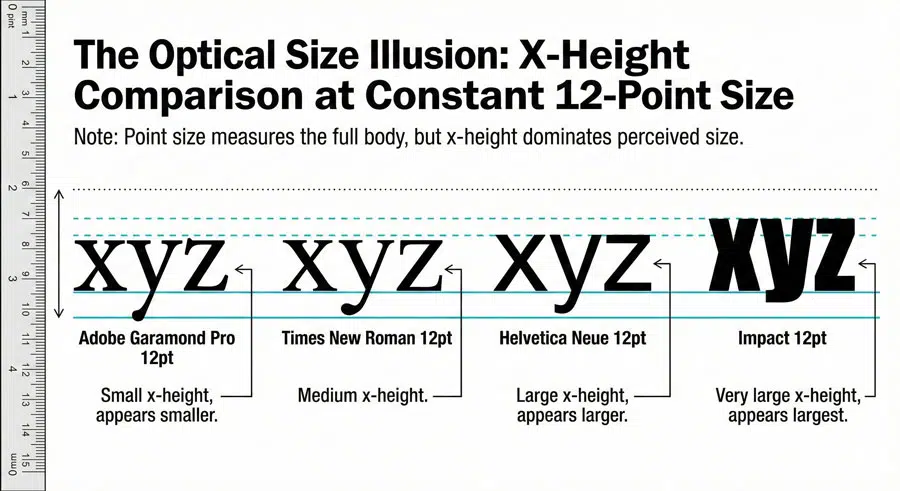
Understanding point size is crucial for consistent typography. Point size refers to the body size of a character—not its appearing size. This distinction is critical. Typefaces that share matching point sizes do not always have the same optical size.

A typeface with a tall x-height (the distance from baseline to the mean line) will look noticeably larger than a typeface with a small x-height, even at the same point size.

Body size is the area a character inhabits plus the white space surrounding it. Body height equals point size. The term originated in metal typesetting days when lead-type blocks called slugs contained characters.

Appearing size refers to optical size—the perceived character size. This is why optical sensitivity is so important in typography. What looks correct visually often stands true, while what a ruler might tell you can be misleading.


Measure, Contrast and Stress
Measure, Contrast and Stress

Measure refers to line length and is typically expressed in picas. A pica equals 12 points and measures approximately 0.166 inches. Understanding measure is essential for readability—both too-short and too-long lines impair reading comprehension.

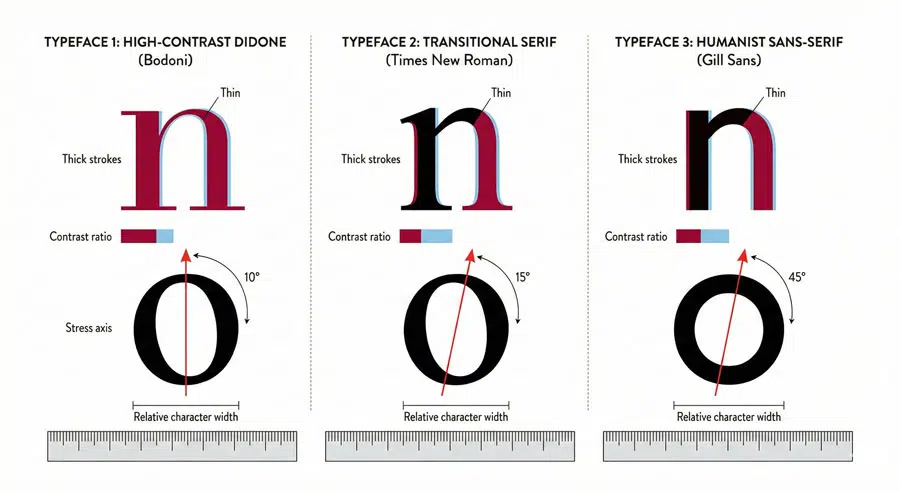
Contrast refers to the relationship between thick and thin strokes in a letterform. Serif typefaces such as Bodoni and Didot feature high thick-to-thin stroke contrast.

Sans serif typefaces such as Trade Gothic and Univers feature low to uniform thick-to-thin stroke contrast. This contrast is a key characteristic that distinguishes typeface categories and influences their personality and readability.

Stress refers to the invisible axis that bisects character tops and bottoms at the thinnest points. Orientation can be oblique or vertical, and stress is detectable using the lowercase ‘o’ as a guide.

Humanist typefaces often have oblique stress (reflecting handwriting influences), while modern typefaces typically feature vertical stress (reflecting mechanical construction).


Serifs and Sans Serifs: The Fundamental Divide
Serifs and Sans Serifs: The Fundamental Divide

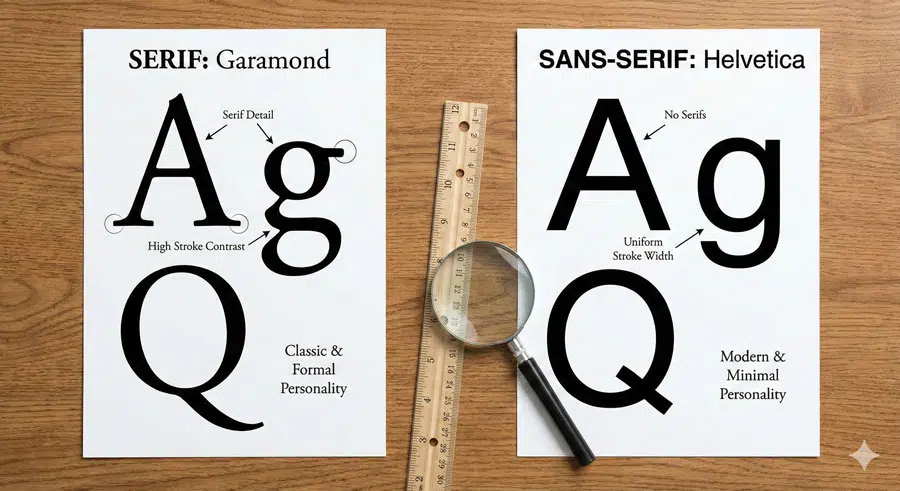
A serif is a small finishing detail at the start and end of strokes. Serif typefaces include Humanist, Old Style, Transitional, Modern, and Slab categories, each with distinct characteristics that reflect historical development and design philosophy.

Sans serif literally means “without serifs.” Sans serif typefaces feature very low to uniform thick-to-thin stroke contrast. Categories include Grotesque, Geometric, Humanist, and Transitional. The first known sans serif typeface appeared in 1816, designed by William Caslon IV. The term “sans serif” was coined roughly twenty years later by Vincent Figgins.

The choice between serif and sans serif is one of the most fundamental decisions a designer makes. For centuries, serif typefaces dominated body text; more recently, sans serifs have become equally prominent for both display and body text applications.


Conclusion: Mastery Through Understanding

Conclusion: Mastery Through Understanding

Learning typography anatomy and terminology is an investment that pays dividends throughout your design career. When you can precisely name the parts of letterforms and understand their relationships, you gain the ability to make intentional, informed design choices. You move beyond trial-and-error design to strategic, purposeful design.


About the Author

Lalit M. S. Adhikari is a Digital Nomad and Educator since 2009 in design education, graphic design and animation. He’s taught 500+ students and created 200+ educational articles on design topics. His teaching approach emphasizes clarity, practical application and helping learners.

Learn more about Lalit Adhikari.


This guide is regularly updated with the latest information about Adobe tools and design best practices. Last Updated: Mar 2026
Ad

Typography Fundamentals: A Complete Guide to Professional Typography

0
Typography Fundamentals: A Complete Guide to Professional Typography

Discover typography fundamentals: the craft of making language visible. Learn macro/micro typography, design objectives, and principles for effective visual communication.


What is Typography? A Designer’s Essential Craft

What is Typography? A Designer's Essential Craft
What is Typography? A Designer’s Essential Craft

Typography is far more than simply selecting a typeface and placing text on a page. It is a refined craft—a deliberate, thoughtful process that makes language visible and gives words life and power.

Designers who understand typography engage with words purposefully and with poise, shaping language to speak fluently through letterforms and their supporting characters.

Typography conveys information while simultaneously evoking emotion, sharing stories, and influencing behaviour across all mediums.

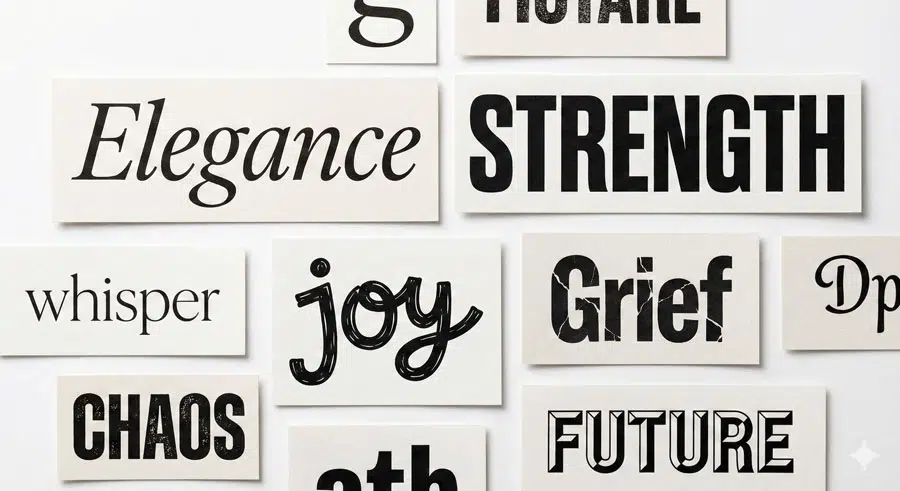
At its core, typography is communication. Type can whisper delicately or shout loudly. It can be commanding and beautiful one moment, then analytical and instructive the next.

The remarkable aspect is that type is simultaneously dramatic, whimsical, modest, and extravagant—a versatile tool that demands both discipline and creativity from designers who dedicate themselves to the craft.


The Essential Difference: Typography vs. Handwriting, Calligraphy and Lettering

The Essential Difference: Typography vs. Handwriting, Calligraphy and Lettering

Many people confuse typography with related but distinct disciplines. Understanding these differences is crucial for any designer seeking to master the craft.

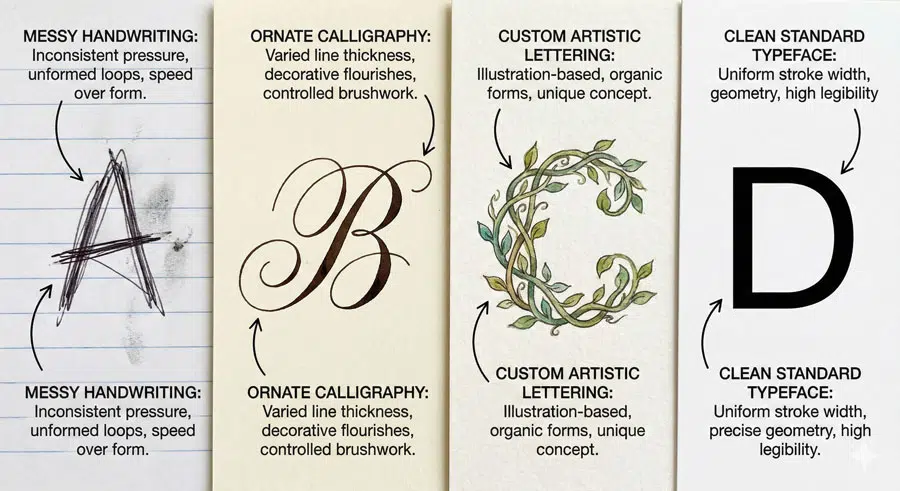
Typography is unique because it uses standardized forms that rearrange and reproduce in exact fashion without end. Typefaces consist of systematized character sets designed for repeated use across ranges of text.

Handwriting, by contrast, is personal and unique—each writer’s hand creates distinct, unrepeatable marks. Calligraphy, which means “beautiful writing,” encompasses diverse styles from ornate and sinuous to rough and painterly, with appearance heavily influenced by the tools used (typically a brush or pen).

Lettering involves custom letterforms designed by hand or digital tools that are unique in appearance, reserved for customization in limited-edition and special work.

The key distinction is this: typography provides the foundation for consistent, repeatable communication across all mediums—from print to digital to environmental design.


The Five Core Objectives of Designing with Type for Communication

The Five Core Objectives of Designing with Type for Communication

When you approach any project—whether it’s a website, poster, packaging, or environmental signage—remember these five fundamental objectives:

  1. Convey Information with Type – Communicate with Clarity The primary function of typography is to ensure your message is understood. Legibility isn’t optional; it’s essential. Every design choice should prioritize clarity while maintaining aesthetic appeal.
  1. Assist the Reading Process – Make It Accessible (and Delightful) Typography should guide the reader’s eye smoothly through content. Hierarchy, spacing, and alignment all play crucial roles in creating a reading experience that is both accessible and enjoyable.
  1. Uphold Typeface Integrity – Value It and Its Makers Type designers pour years of expertise into creating typefaces. Respect their work by using typefaces as intended, never artificially stretching, squashing, or otherwise distorting them.
  1. Express Text Beautifully – Create Visually Inviting Work Beyond function lies artistry. Well-executed typography creates visual interest and emotional resonance. This balance between form and function is what elevates good design to great design.
  2. Design with Appropriateness – Do What Best Serves Each Project Not every typeface works for every purpose. Environmental signage requires directness and clarity; a luxury brand identity might call for elegance and refinement. Choose with intention.

Macro and Micro typography: Two Complementary Approaches

Macro and Micro typography: Two Complementary Approaches

Understanding the distinction between macro and micro typography is essential for creating successful designs. These aren’t separate disciplines but rather complementary approaches that must work together.

Macro typography addresses composition and layout—the plan and organization of typographic elements on a page or screen. It considers spatial positioning, relationships between elements, and white space (negative space).

The macro view is the compositional body where designers order, connect, and balance type to create the first impression that engages viewers. Without immediate visual interest at this macro level, communication fails. Viewers simply won’t engage with your message.

Micro typography refers to typesetting essentials and details. It’s where designers transform plain text into a typographic system with hierarchy, optical emphasis, and strategic variation.

Microtypography encompasses letterform, word, line, and paragraph dynamics. Principal micro factors include spacing (kerning and tracking), and aesthetic tailoring (refinement of punctuation and ragging).

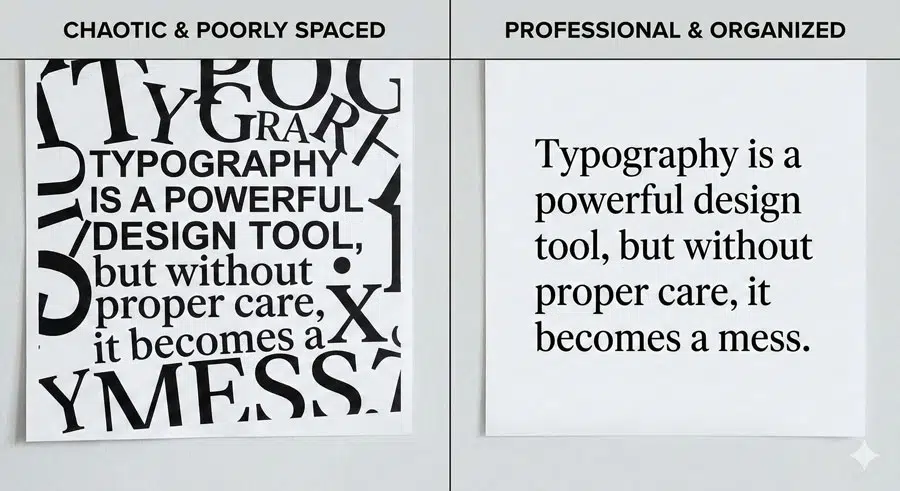
What makes microtypography so elegant is that it’s often undetected by viewers—a sign of its success. Refined compositions feel effortless.

The relationship between macro and micro is interdependent: the success of the whole depends on its parts. A beautifully composed layout falls apart if the micro-details are neglected, and perfect micro-details won’t save a poorly conceived macro layout.


Typography Across All Mediums

Typography Across All Mediums

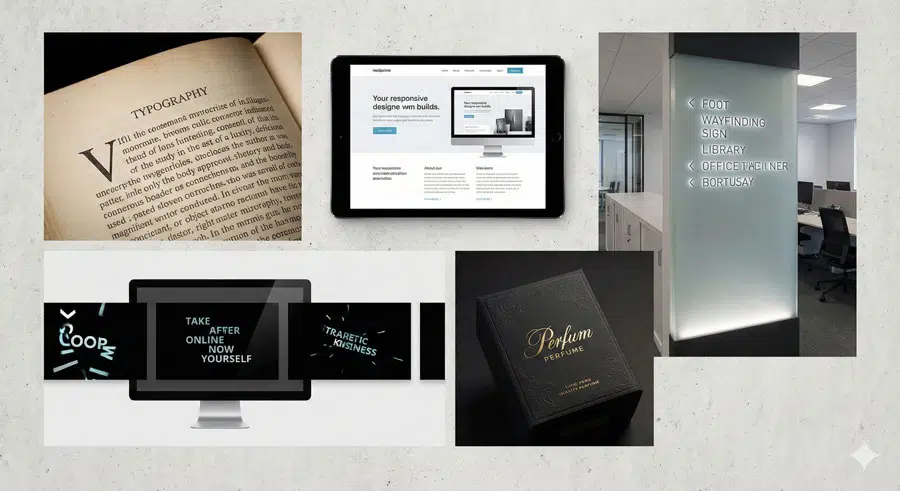
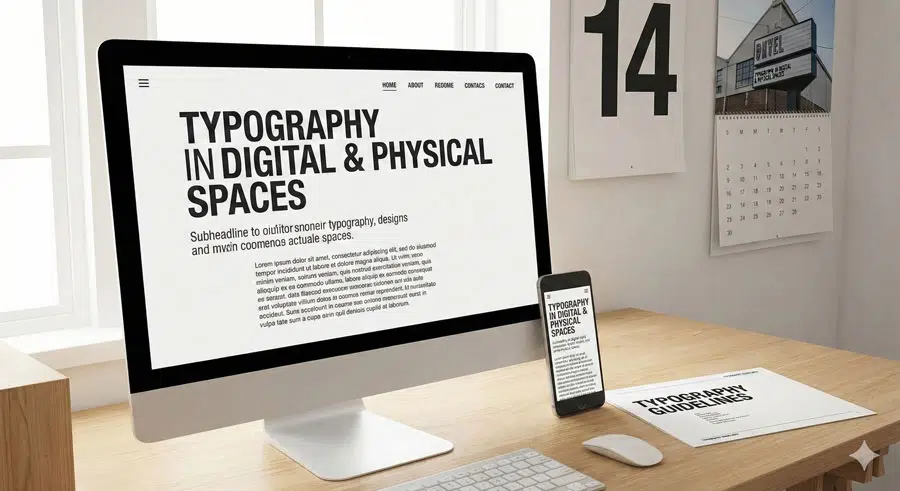
Typography is everywhere—crossing mediums that include environments, interfaces, packaging, print, and digital works.

Whether you’re designing environmental signage systems that require practical directness, motion sequences that appeal through lively type treatments, or conceptual interpretive work, the fundamental principles remain constant.

Designers work with type objectively and subjectively, with both economy and extravagance. Environmental signage is practical and direct; clarity is imperative.

Typography in motion sequences is conceptual and interpretive, with letterforms personifying or emoting strongly. Regardless of the medium, the balance between function and aesthetics reigns supreme.

The versatility of typography is one of its greatest strengths. The same principles that guide a book designer inform a web designer, a packaging designer, and a wayfinding system designer.

Once you understand the fundamentals, you can apply them across infinite contexts.


Conclusion: The Journey Ahead

Conclusion: The Journey Ahead

Typography fundamentals provide the foundation for all visual communication. It’s a field that rewards both disciplined learning and creative experimentation.

The designers who excel at typography understand that it’s not just about selecting pretty fonts—it’s about making thoughtful, purposeful decisions that serve the content and engage the viewer.

As you continue your typography journey, remember that it’s a craft that evolves with practice and observation. Pay attention to typography in the world around you. Notice what works and what doesn’t.

Ask yourself why certain typographic choices are effective. This critical eye, combined with solid foundational knowledge, will develop your expertise.


About the Author

Lalit M. S. Adhikari is a Digital Nomad and Educator since 2009 in design education, graphic design and animation. He’s taught 500+ students and created 200+ educational articles on design topics. His teaching approach emphasizes clarity, practical application and helping learners.

Learn more about Lalit Adhikari.


This guide is regularly updated with the latest information about Adobe tools and design best practices. Last Updated: Mar 2026

Ad

Ampersand & Interrobang – Symbol Histories

0
Ampersand & Interrobang - Symbol Histories

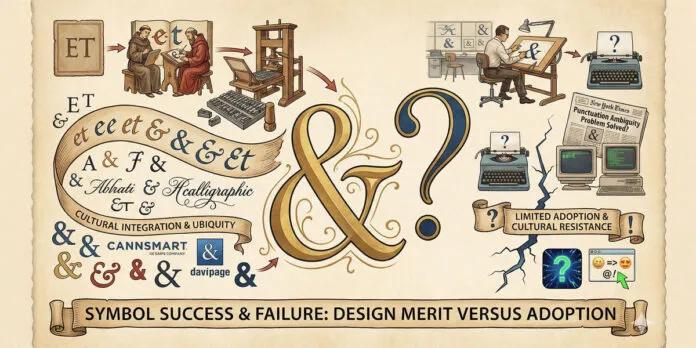
Discover the rich histories of the ampersand (&) and interrobang (?!) symbols, their origins, evolution, and cultural significance in typography and communication.

Ad

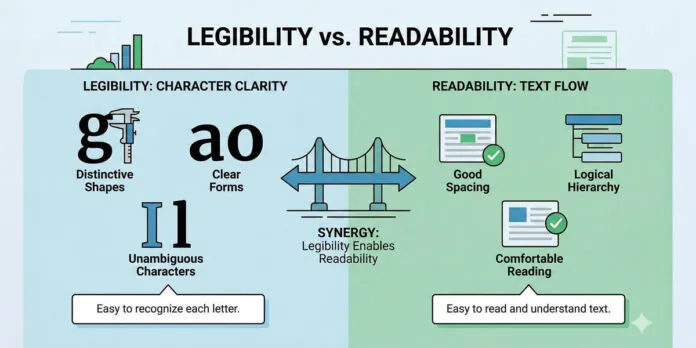
Legibility vs. Readability – Typography Fundamentals

0
Legibility vs. Readability - Typography Fundamentals

Explore the critical difference between legibility and readability in typography, how they impact design, and why understanding both is essential for design excellence.

Ad

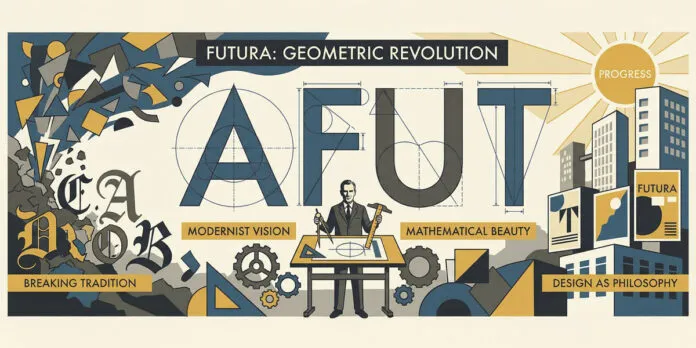
Futura & Paul Renner – Geometric Vision & Revolution

0
Futura & Paul Renner - Geometric Vision & Revolution

Explore Paul Renner’s revolutionary vision for Futura typeface, his design philosophy, and how geometric modernism transformed typography and design thinking.

Ad

Baskerville & Mrs. Eaves – Love, Partnership & Revival

0
Baskerville & Mrs. Eaves - Love, Partnership & Revival

Discover the love story of John Baskerville and typeface Mrs Eaves, exploring how partnership and revival honors design legacy and celebrates typographic romance.

Ad

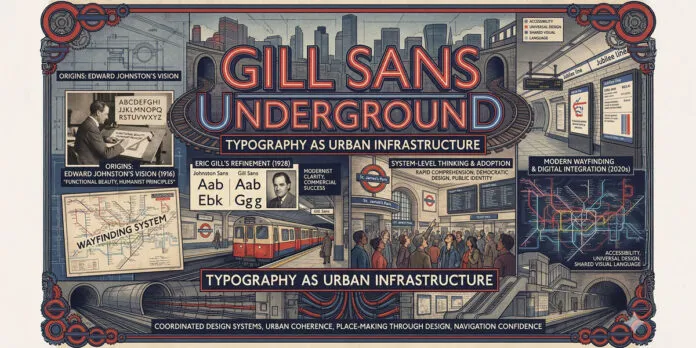
Gill Sans & The Tube – Urban Identity Infrastructure

0
Gill Sans & The Tube - Urban Identity Infrastructure

Explore how Gill Sans became the visual identity of London Underground, shaped urban design thinking, and demonstrates typography’s power in creating urban infrastructure identity.

Ad

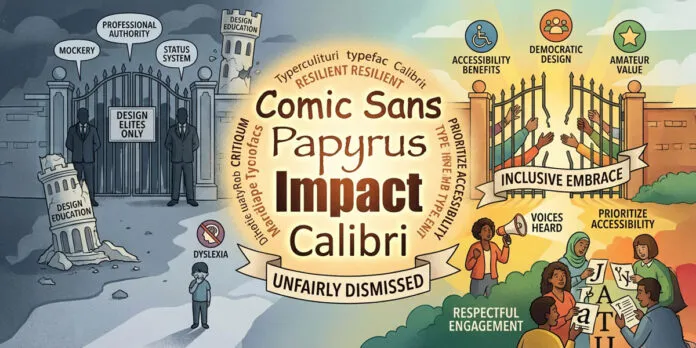
Worst Fonts – Criticism & Gatekeeping Analysis

0
Worst Fonts - Criticism & Gatekeeping Analysis

Examine the “worst fonts” discussion, explore design criticism versus gatekeeping, analyze why certain typefaces are dismissed, and challenge typography elitism.

Ad

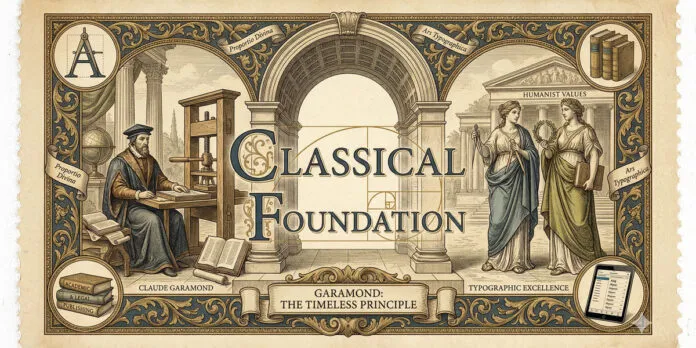
Garamond – Classical Foundation Principles

0
Garamond - Classical Foundation Principles

Discover Garamond’s revolutionary approach to classical serif typography, its enduring influence on Western design, and the timeless principles that make it a foundational typeface.

Ad

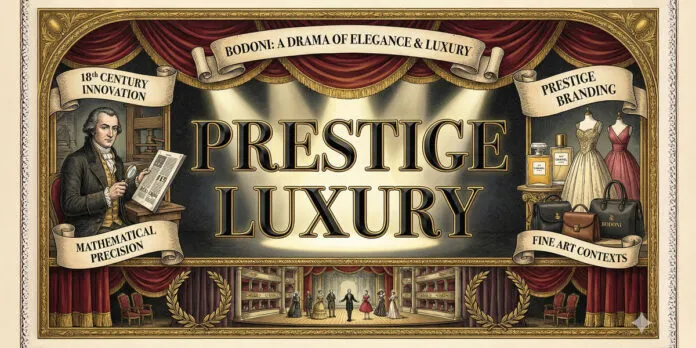
Bodoni – Theatrical Prestige Aesthetics

0
Bodoni - Theatrical Prestige Aesthetics

Explore Bodoni’s revolutionary high-contrast serif design, its association with prestige and luxury branding, and its enduring theatrical appeal in contemporary design.

Ad

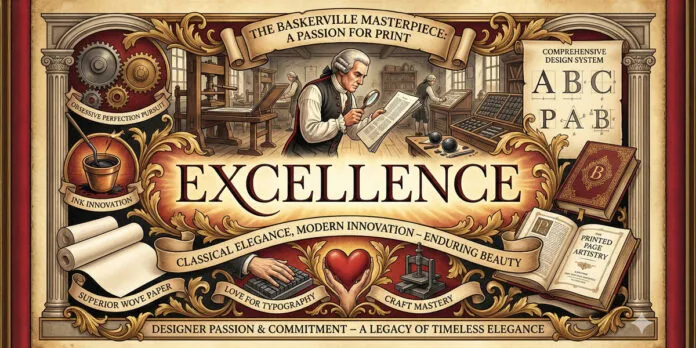
Baskerville – Print Excellence & Love Story

0
Baskerville - Print Excellence & Love Story

Discover Baskerville’s revolutionary approach to serif typography, its unmatched print excellence, and the fascinating story of its designer John Baskerville’s passionate pursuit of typographic perfection.

Ad

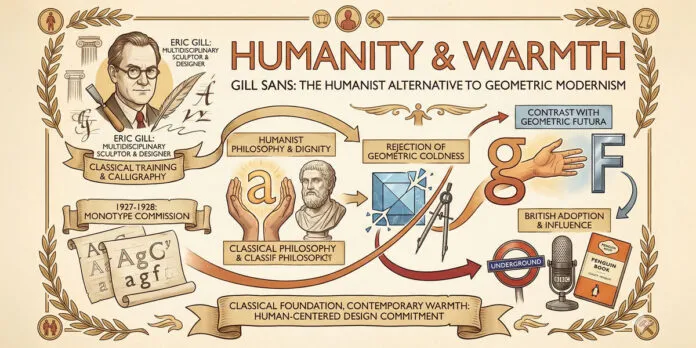
Gill Sans – Humanist Alternative Modernism

0
Gill Sans - Humanist Alternative Modernism

Explore how Gill Sans challenged geometric modernism with humanist principles, bringing warmth and human character to sans-serif typography and design.

Ad