

From fast observational marks on paper to beautifully messy illustrations, sketching is the foundation of visual expression.
In this article, we’ll take a deep dive into what is sketching, sketching vs. drawing, a brief history of sketching, why do we need to sketch, different types of sketching, it’s tools, and why anyone—including you—can start sketching today.
By the end, we’ll understand that sketching isn’t just an art form—it’s a creative habit that nurtures our mind and sharpens our skills.
Table of Contents
Introduction: Sketching is More Than Doodling
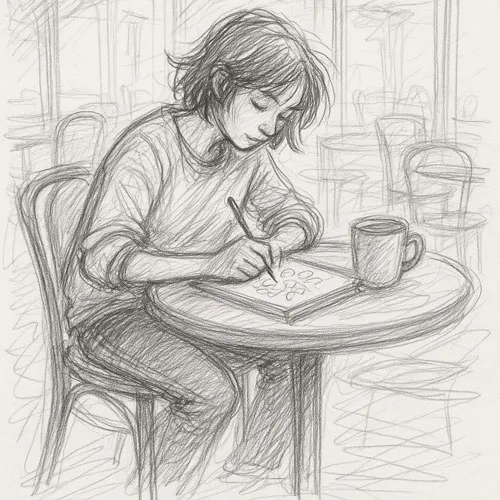
Sketching is one of the oldest and most visually powerful ways humans have used to record, understand and communicate the world around them.
Before cameras, before computers, before even writing – people picked up a stick or a stone and started drawing on cave walls. Those were the beginning of sketches.
Have you ever caught someone or yourself, drawing during a lecture or while waiting for a friend? Without even thinking, our hand moved across the paper, creating shapes, loops or even mini-masterpieces. That small moment of creation is the essence of sketching.
Sketching is often underestimated and misunderstood. It’s not about precision, perfection, or making a finished masterpiece. It’s about expression, exploration and most importantly – observation.
Whether we’re planning an entire illustration or just capturing an idea before it’s lost, sketching is the bridge between the eye, the hand and the imagination.
Related Topics:
What is Sketching?
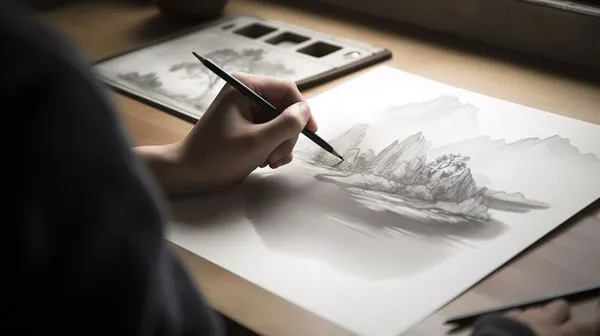
Sketching is a freehand or loosely created drawing that captures the overall idea, mood, or essence of a subject. It can be a quick representation or a detailed outline, used either as the final piece or as a preparatory work for painting, sculpture, design or illustration.
Or in simple terms, we can say, Sketching is a quick, simple drawing. It’s not meant to be perfect. It’s meant to capture an idea, a moment, a thought or even a feeling… Key traits of a sketch:
- Quick, light, and expressive
- Focuses on gesture and composition
- Helps explore creative concepts
- May or may not be a complete piece
We can think of sketching like writing a note to yourself, but with rough drawing instead of words. It’s like saying, “Hey brain, here’s what I saw or thought—quick, before I forget!”.
Sketching is the most natural form of drawing. It’s what everyone does without even thinking much about it. It’s not about being “good” at drawing – it’s about being honest on paper.
Related Topics:
Sketching vs. Drawing – What’s the Difference?
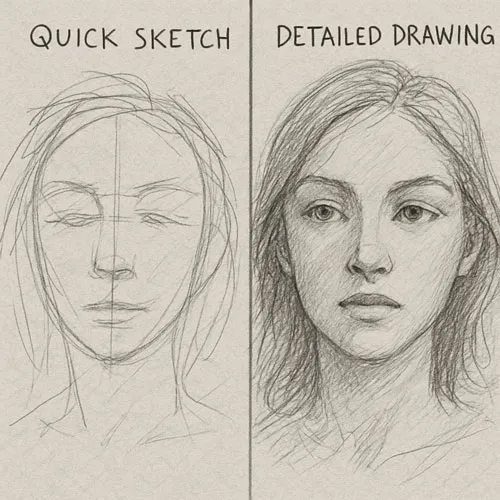
In day-to-day life, we often use ‘sketching’ and ‘drawing’ interchangeably. Especially, when teaching, students’ often ask me for the difference between sketching & drawing.
| S. No. | Sketching | Drawing |
|---|---|---|
| 1 | Quick and loose | Detailed and refined |
| 2 | Fast capturing of ideas | Final, polished artwork |
| 3 | Often exploratory | Focused on accuracy |
| 4 | Used to plan or practice | Used for finished products |
We can put it simply as, every drawing begins with a sketch, but not every sketch becomes a drawing.
Related Topics:
A Brief History of Sketching
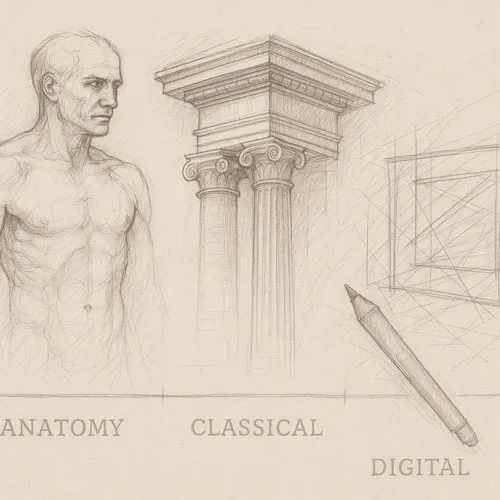
Sketching has been a true companion of artists and learners for centuries.
From Leonardo da Vinci’s anatomy studies to Vincent van Gogh’s expressive lines, sketchbooks have documented human thought as much as they’ve portrayed reality.
In the Renaissance time-period, artists used sketching to map out their larger compositions—exploring perspective, anatomy and proportion. In modern times, sketching has moved into industrial design, fashion, animation, architecture and even UX/UI design.
Today, whether with pencil or stylus, sketching remains one of the rawest and realest forms of visual thinking.
Related Topics:
Why Do We need to Sketch?
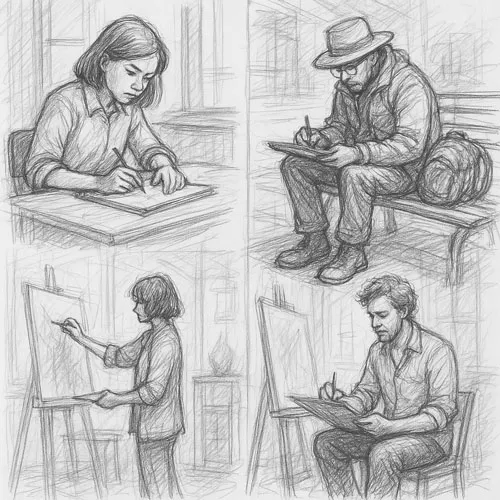
We need to sketch for various reasons and not all of them are about making ‘art’. Sketching is a tool – one of the most effective and productive tool an artist can use. It helps in following ways:
1. Idea Exploration
Sketching lets us explore our brainstorming concepts quickly. Whether we’re designing a car or a website’s UI or planning a comic strip, sketching helps visualize our ideas in seconds.
2. Learning to See
Art isn’t just about drawing – we’ve to learn to observe the world more deeply. Sketching trains us to see forms, light, texture and proportion more accurately.
3. Emotion and Expression
When we are creating fast, gestural sketches, it captures not just what something looks like but how it feels. The energy of a dancer, the skyscraper’s height or even a pet’s personality – all can be shown in a sketch.
4. Documentation
Sketch artists mostly create sketch diaries – drawing their traveling moments, meals or daily events. It’s a visual journal that records life in a deeply personal way.
5. Muscle Memory and Practice
Sketching is like a meditation practice for your hand and mind. The more you sketch, the better you understand form and movement.
Related Topics:
Types of Sketching
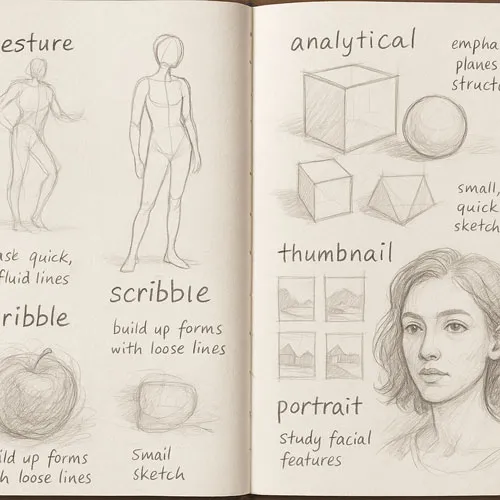
If you’re serious about moving from beginner to professional, it’s important to know the essential sketching styles. These are like the different languages or tools an artist uses to express ideas clearly and creatively.
Below is a beginner-friendly breakdown of the most important sketching styles you should explore before stepping into the professional world:
1. Gesture Sketching
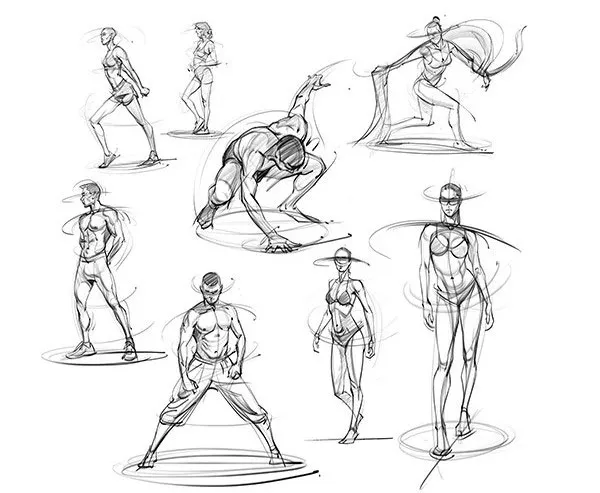
In this style, we only focus on movement and action. Used frequently in figure drawing, it helps capture the energy of a scene or pose in seconds – ideal for live studies.
Purpose: Capturing quick movement, posture, or energy.
Fast, loose sketches (30 seconds to 2 minutes). Mostly used in figure drawing (human or animal). Great for animators, character designers, and life drawing.
Think: Drawing a person walking or jumping in 30 seconds — no detail, just action!
2. Contour Sketching
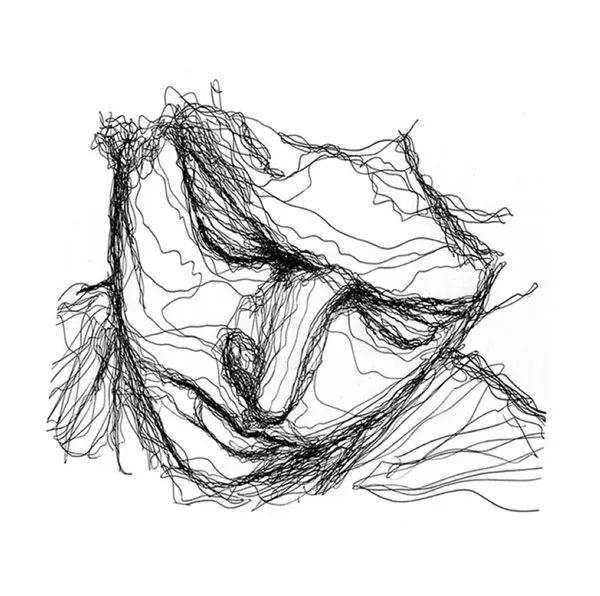
In this style, we focus only on outlines. Contour drawing stresses observation and helps you understand the structure of your subject.
Purpose: Drawing the outline or edges of an object.
You follow the visible outline of a subject. Focus is on shape and proportion, not shading. Helps train your eye to draw what you see.
Tip: Try Blind Contour Drawing (don’t look at your paper while drawing). It’s weird—but powerful for hand-eye coordination.
3. Structural Sketching
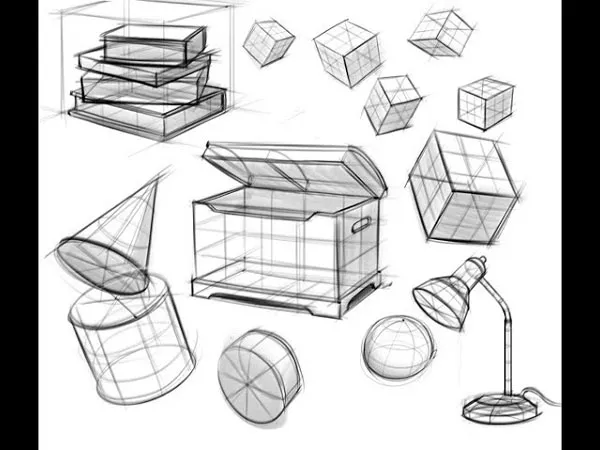
This style is more technical in nature, used in fields like architecture, engineering, and product design. These sketches focus on precision, perspective, and functionality.
Purpose: Breaking objects into 3D forms (cubes, spheres, cylinders).
Builds the foundation of realistic drawing. Helps you understand the form beneath the surface. Essential for character design, environment design, anatomy.
Think: Drawing a car using rectangles and cylinders first, then refining it.
4. Line Sketching / Line Art
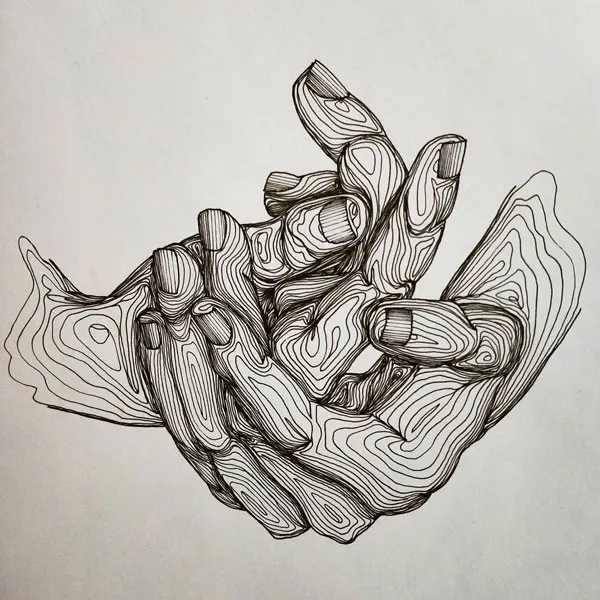
Purpose: Clear and clean outlines, often used in digital art and comics.
Focus on confident, clean lines. No shading—just clear structure. Used in comic books, animations, logo design.
Tip: Use a fine pen or digital brush to practice consistent line thickness.
5. Shading & Tonal Sketching
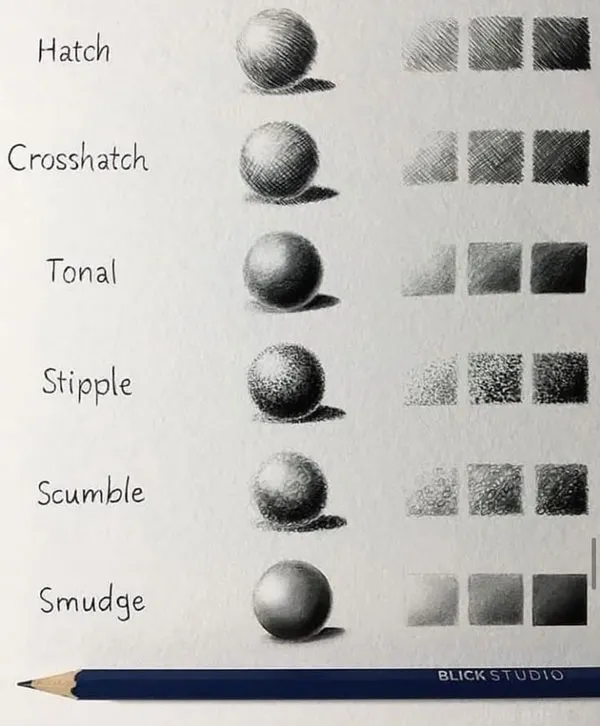
Purpose: Creating depth, light, and shadow with pencil tones.
Uses hatching, cross-hatching, smudging, or layering. Gives the illusion of volume and lighting. Key for realistic rendering and portraits.
Exercise: Sketch a simple object (like an apple) and try adding light & shadows.
6. Scribble Sketching
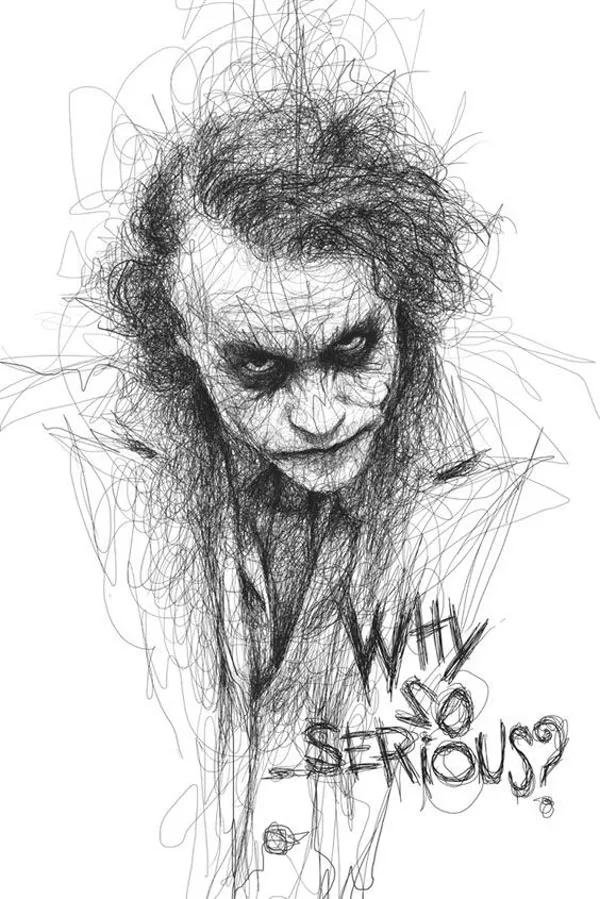
This style is loose, random, and rhythmic. Scribble sketching is a great warm-up activity and helps loosen your wrist while encouraging experimentation with form
Purpose: Loosely capturing texture or energy using scribbled lines.
Good for practice and loosening up your hand. Often used in rough thumbnails or background ideas.
Think: Drawing a bush, hair, or texture with scribbled lines.
7. Perspective Sketching
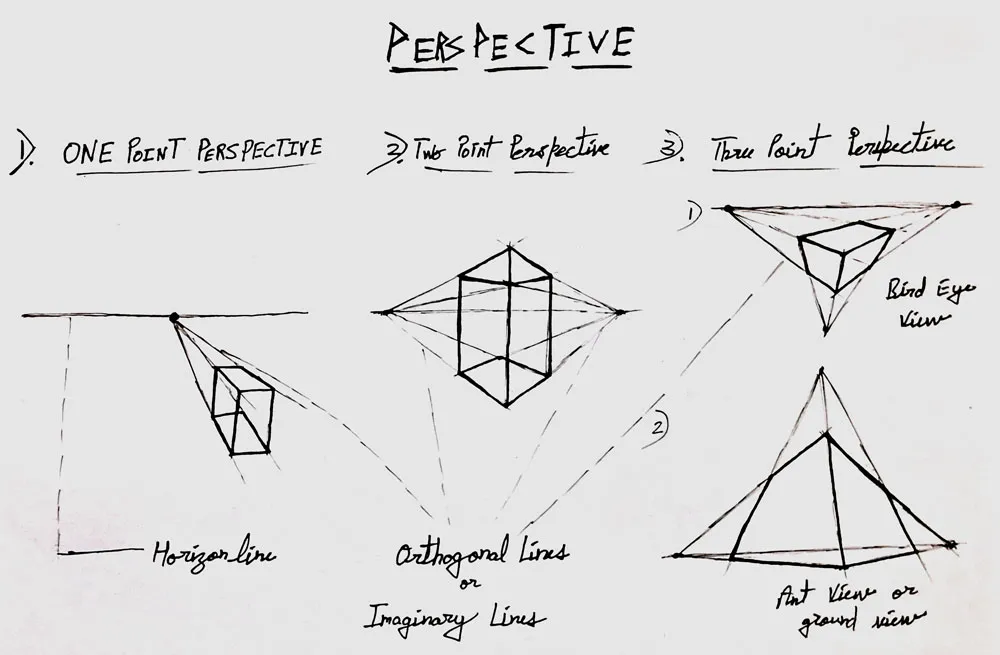
Purpose: Drawing objects in space accurately (3D effect).
Involves 1-point, 2-point, or 3-point perspective. Crucial for environment design, architecture, backgrounds. Helps sketch things in proportion and depth.
Learn basic rules: Horizon line, vanishing points, and how to draw cubes in space.
8. Thumbnail Sketching
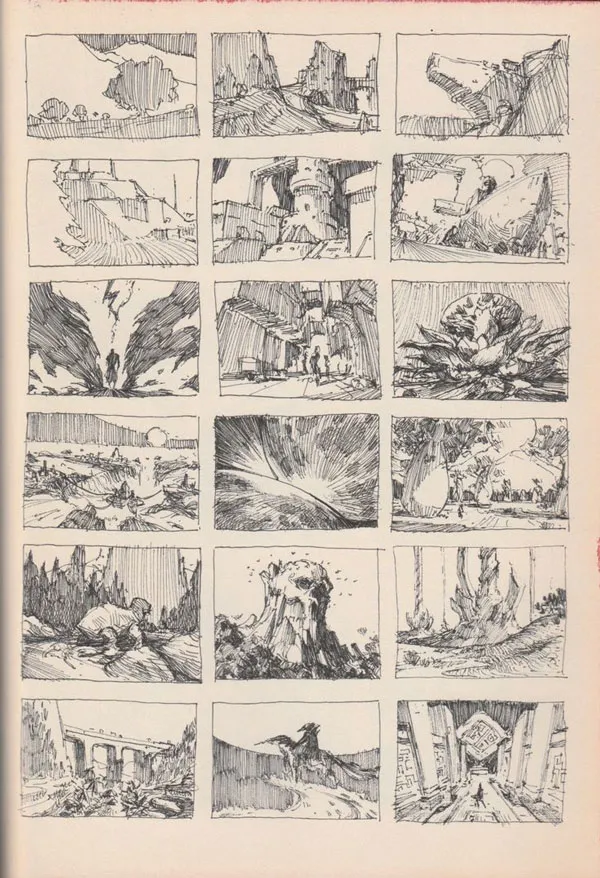
In this style, tiny sketches used for compositional planning—especially useful in storyboarding, comics and layout design.
Purpose: Small, quick idea sketches (planning stage).
Fast and tiny sketches to explore layout or idea. Used in concept art, comics, product design. No detail—just composition, shapes, and ideas.
Tip: Always sketch thumbnails before making final art—it saves time!
9. Imaginative / Concept Sketching
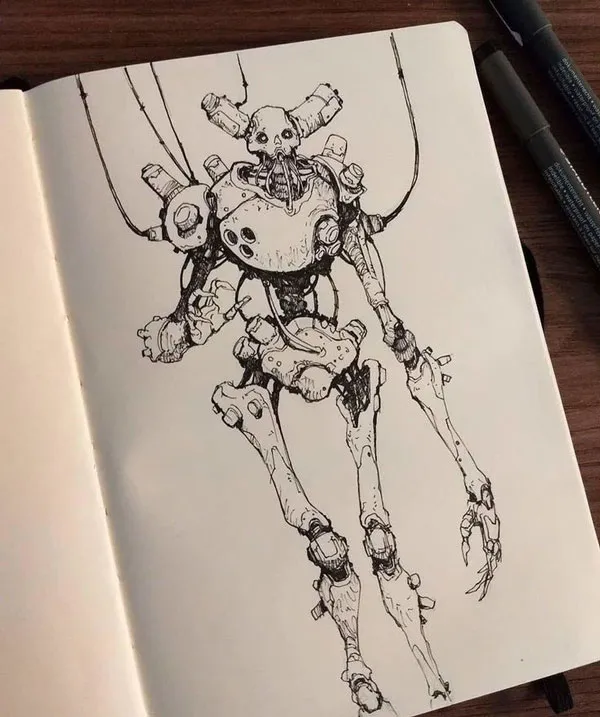
Purpose: Drawing from your imagination.
Combines gesture, structure, and line work. Essential for concept artists, game designers, filmmakers. Requires a solid foundation in all other styles.
Practice: Create your own characters, buildings, or scenes from your mind.
10. Portrait and Figure Sketching
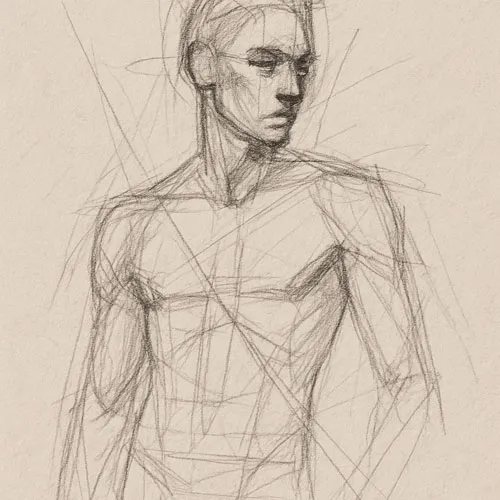
This style is aimed at capturing the likeness and posture of people. Whether from life or photos, this type strengthens observational skills and proportions.
11. Bonus: Style Fusion

Professionals often mix and match these styles depending on the purpose. For example, an animator
may start with gesture drawing, use structure to build the form, and finish with clean line art.
Related Topics:
Tools and Materials for Sketching
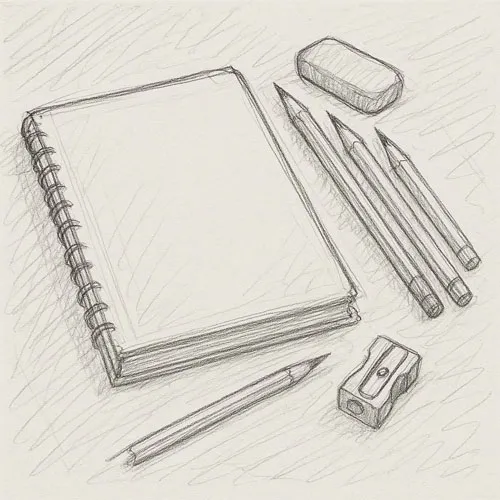
We don’t need a fancy art kit to start sketching. Just a pencil and paper will do. But having the right tools can elevate your experience.
1. Basic Tools
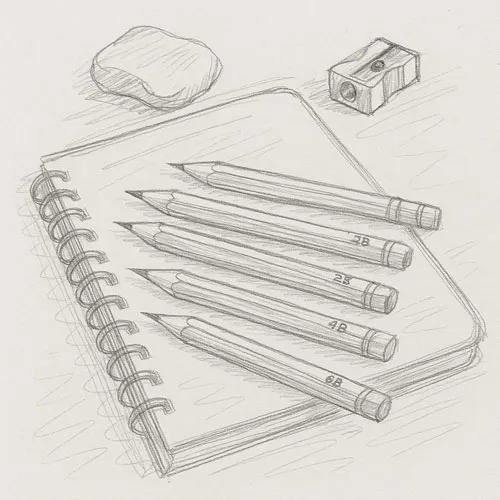
- Pencils: HB for normal, 2B–6B for dark shading
- Eraser: Kneaded erasers are great as they don’t damage your paper
- Paper: Any sketchpad will work—look for medium weight, smooth or lightly textured
- Sharpener: Keep your lines sharp and clean
2. Optional Use-Case Tools
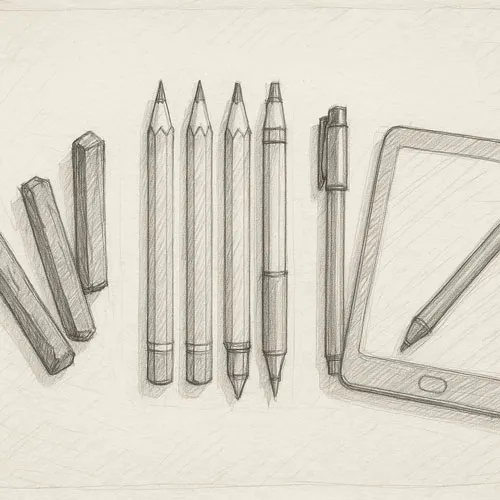
- Charcoal or Graphite Sticks: For heavy, expressive lines
- Pens and Markers: For ink sketches or urban sketching
- Colored Pencils: To add mood or warmth
- Digital Tools: iPads with Procreate, Wacom Tablets, or similar tools are now common among modern sketch artists
Related Topics:
Benefits of Sketching
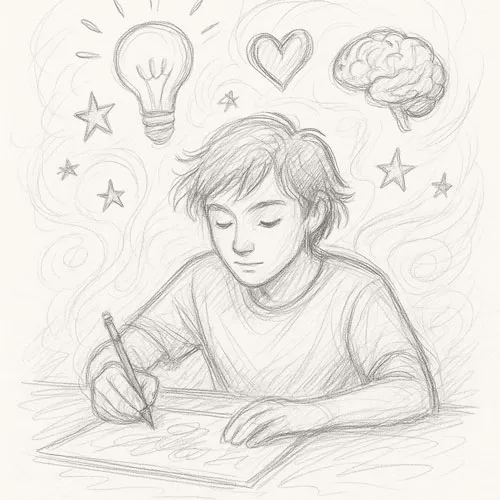
Whether we’re sketching casually or as part of our professional workflow, sketching offers a powerful range of benefits – for our creativity, cognitive development, emotional well-being and technical skills.
Far beyond, from being just a recreational activity, sketching can enhance nearly every aspect of our life including how we observe, think and create.
Let’s take a closer look at some of the key benefits of sketching in detail:
1. Enhances Focus and Observation
One of the most immediate benefits which we’ll notice about sketching is how it trains our brain to truly observe.
When we sketch anything, especially from our life, we’re not just copying what it looks like – we’re studying the angles, forms, shadows, negative space and proportions along with it.
Whether it’s the folds in clothing, the geometry of a building or the subtle play of light on a face, sketching teaches us to analyse and appreciate the visual world at a micro level.
In educational settings, observational sketching is used to:
- Improve scientific and medical students’ understanding of anatomy and biology
- Help architecture and engineering students better understand form and space
- Aid product designers in visualizing function and detail before modelling
Real-world example: Fashion designers frequently sketch garments not just for creativity, but to better understand fabric flow, drape and construction.
2. Improves Hand-Eye Coordination
Sketching refines the communication loop between our eyes, brain and hand, helping us build precise motor control.
Just like learning any sport or playing a musical instrument, sketching develops fine motor skills over time. With each stroke, our hand learns to follow our visual analysis almost subconsciously.
This benefit supports skills across a wide spectrum, including:
- Performing surgery or dental work (extreme precision)
- Operating machinery or tech tools in mechanical engineering
- Applying makeup or esthetics in cosmetology
- Writing with improved letter formation and fluidity
Exercise idea: Practice drawing simple shapes (lines, circles) for 5–10 minutes a day—this dramatically improves control and speed over time. Remember this is just beginning. After some time, we need to level up to practice drawing complex shapes.
3. Stimulates Creativity and Imagination
Sketching allows us to generate ideas quickly and visually, with zero risk. It enables us to:
- Brainstorm freely
- Explore unique concepts
- Solve design problems without verbal language
The low-commitment nature of sketching gives us the freedom to work without perfectionism, which helps unlock creative experimentation.
Whether we’re a visual artist, writer, designer or entrepreneur, sketching helps us think by doing. We can:
- Develop characters or environments for stories
- Prototype product ideas for pitches
- Build mood boards and concepts for branding
Professional crossover: UX/UI designers often begin their workflows by sketching wireframes or app flows before moving to software – because it’s quicker and taps into the creative side of the brain first.
4. Reduces Stress and Improves Mental Health
Sketching is incredibly therapeutic, even if we’re not an artist by trade. It offers a space for mindfulness – where we focus contacts, our breathing slows and time seems to fade away.
Here’s how sketching boosts emotional well-being:
- Provides a safe way to release emotions
- Offers a calming routine for anxiety and overthinking
- Helps with focus in ADHD management
- Encourages presence (similar to meditation or yoga)
It’s easy to feel intimidated by art but when the intention is to express rather than impress, sketching can be a deeply personal act of self-care.
Try this: Keep a small pocket sketchbook and pencil with you. Take 5-minute sketch breaks—at lunch, waiting in line or before bed. Think of it as a mental reset.
5. Increases Memory and Retention
Amazingly, research shows that sketching something helps us remember it better than just writing it down or reading it. This is especially helpful in academic or professional fields where recall is important.
Studies have found that when students’ sketch diagrams, outlines or maps of concepts:
- They reinforce learning
- Boost visual memory
- Engage both hemispheres of the brain
It’s called “The Drawing Effect”, and it essentially improves how information is encoded in memory through visual experiences.
This is leveraged in:
- Mind mapping
- Note-taking during lectures
- Studying complex systems or processes (scientific, technical or medical)
Memory trick: Sketch out what you want to remember in quick stick-figure iconography or chart-like doodles. You’ll recall it more easily later—even from minimal visual cues.
6. Fosters Discipline and Patience
Learning to sketch, requires consistency, patience and a willingness to embrace imperfection. There’s a journey embedded in every sketchbook—filled with progress, trial-and-error and experimentation.
The act of sketching teaches the artist:
- To observe without judgment
- To persevere until it “clicks”
- That failure is part of the growth process
- That mastery is built, not given
This character development extends into other areas of life—discipline in work, resilience in relationships and patience in learning any craft or skill.
Artist truth: Great sketch artists didn’t get there by being perfect from day one. They just kept showing up—line by line, page by page.
7. Supports Visual Thinking and Communication
Sketching helps us to clarify complex ideas quickly, which is why it’s used in so many industries beyond fine art. We don’t have to be “artistic” to use sketching as a problem-solving or storytelling tool.
In fields like:
- Product development: Sketches explain concepts before 3D modelling
- Education: Teachers and tutors sketch to explain processes
- Business: CEOs often whiteboard ideas in sketch form to spark innovation
- Therapy: Clients and therapists use drawing as non-verbal communication
Visual communication is faster, often more impactful and transcends language barriers. A quick sketch can represent a full concept in ways that words may not capture.
Real-world case: Architects pitch house remodels using loose concept sketches to make complex ideas instantly understandable to clients before diving into technical plans.
8. Encourages Growth through Repetition
Sketching promotes progress through repetition rather than perfection. When we sketch regularly, even small things, we build a personalized visual library in our head, allowing us to draw faster and smarter over time.
Repetition enables:
- Line confidence
- Increased understanding of form and anatomy
- Development of style and voice
- Better use of negative space and composition
By making sketching part of our daily or weekly routine, we’ll begin to notice automatic improvements, even when it feels like we’re not progressing.
Creative stimuli: Choose one object (like a fork or your hand) and sketch it 20 different times over a week, from different angles. You’ll learn how to see it in ways you hadn’t before.
9. Builds Self-Awareness and Personal Style
One of the most overlooked gifts of sketching is self-awareness. As we explore our own lines, our ideas, our visual processing, we’re confronted with what fascinates us, frustrates us and defines our uniqueness as a creator.
Sketchbooks are more than collections of drawings—they’re intimate journals of growth, daydreams, questions and revelations. Over time, we begin to see patterns in how we draw:
- Our preferred lines and angles
- The subjects we return to
- The emotions our work emits
This becomes our personal style, not one we copy from others, but one that evolves uniquely out of our consistent, inquisitive practice.
Pro tip: Don’t aim to “find your style.” Keep sketching. It will find you.
10. It’s Fun, Accessible, and Rewarding
Last but not least, sketching is FUN. We don’t need expensive tools. We don’t need training. We just need 10 minutes, a pencil and curiosity. The joy of creating something from nothing, even if it’s flawed or funny—is nourishing in unexpected ways.
Sketching reconnects us to:
- Playfulness
- Imagination
- Wonder
- Joy of expressing freely without critique
It’s tactile. It’s mentally engaging. It’s emotionally satisfying. And if we make it part of our life, we might even find that it’s something we didn’t know we were missing.
Suggestion: Set a weekly “sketch date” with yourself or a friend. Make it low-pressure. A shared creative ritual can keep inspiration alive while deepening your appreciation for the process.
Related Topics:
Conclusion: The First Step Into the Sketching World
Sketching is more than just drawing—it’s the visual language of ideas, imagination, and observation. Whether you’re aiming to be a designer, animator, architect, or just want to express your creativity, understanding these essential sketching styles will lay a strong foundation for your journey ahead.
We’ve only just scratched the surface.
In the next article, we’ll dive into the essential sketching tools you need and explore the best beginner-to-pro products to help you sketch with confidence and clarity.
Stay tuned, and keep your pencils moving!
Related Topics:
- Check Spelling in Photoshop
- Search in Photoshop
- Fade Command in Edit menu in Photoshop
- How to enlarge an image in Photoshop
- Photoshop Gold Text Effect
- 5 Types of Masking in Photoshop
- Step by Step guide for Retro 3D Movie Effect in Photoshop
- Starting CorelDRAW
- How to Add Falling Snow in Photoshop
- How to Create Silver Metallic Effect in Illustrator